 ▶
▶
 ▶
▶Wedding Budget Planner
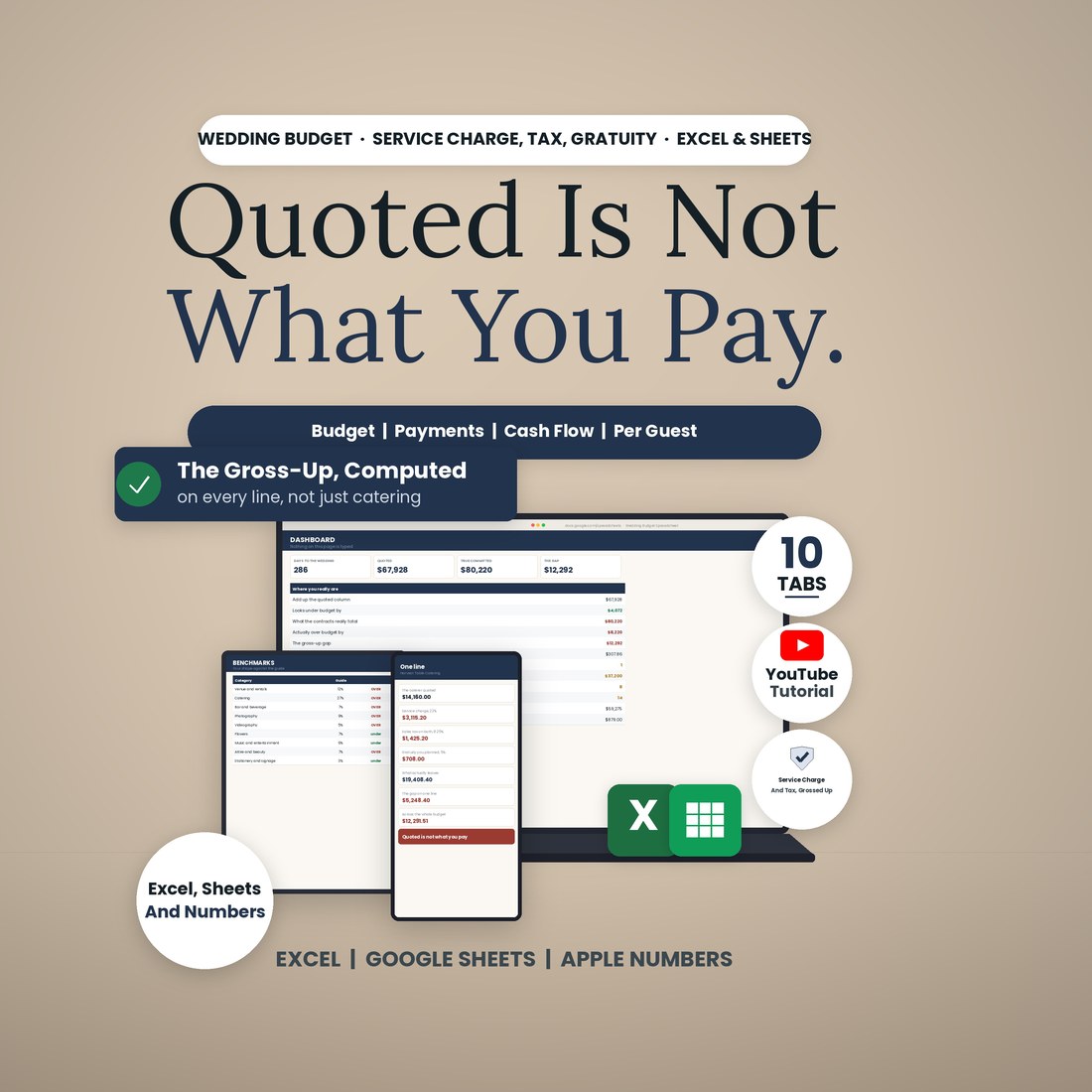
Quoted is not what you pay. This one grosses up every line.
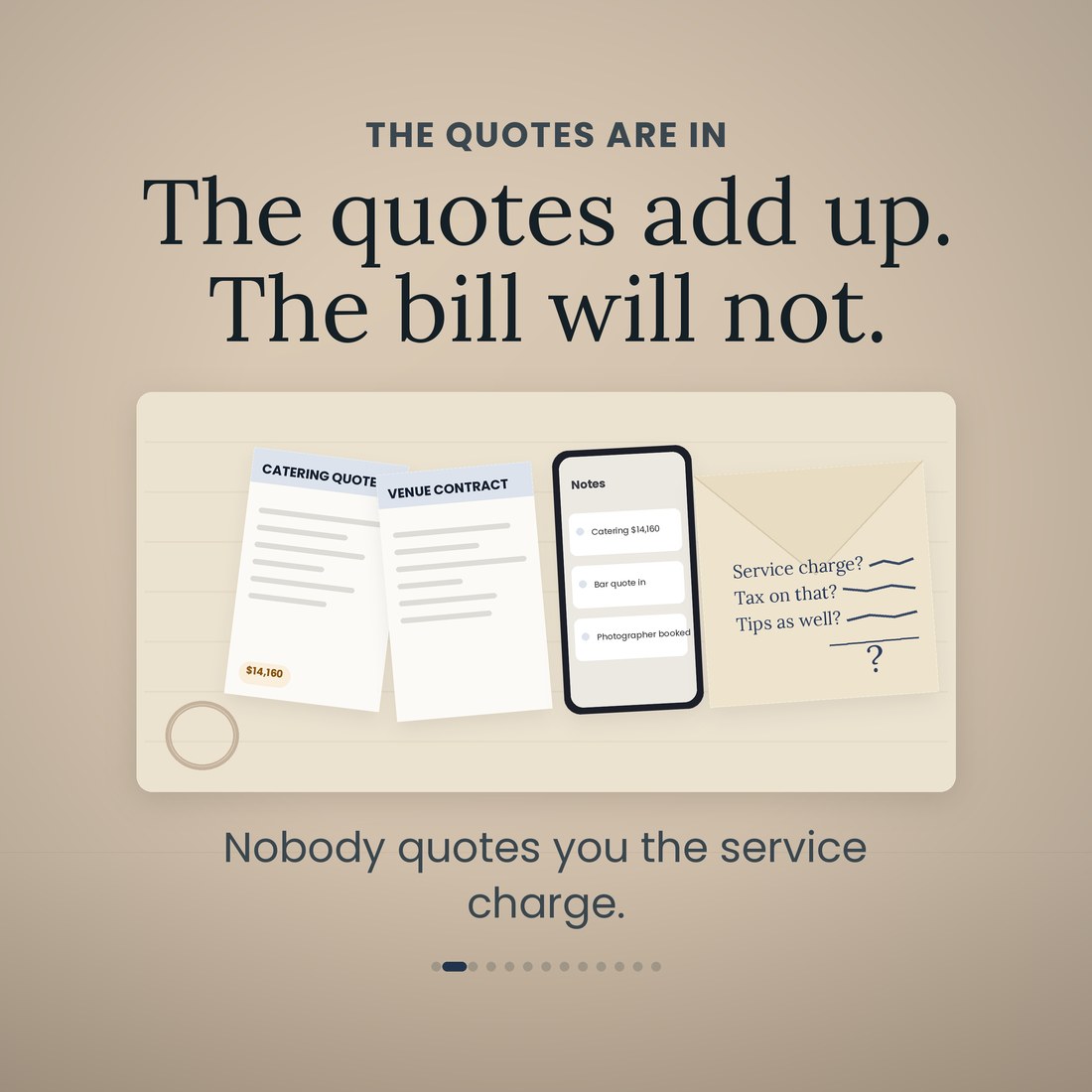
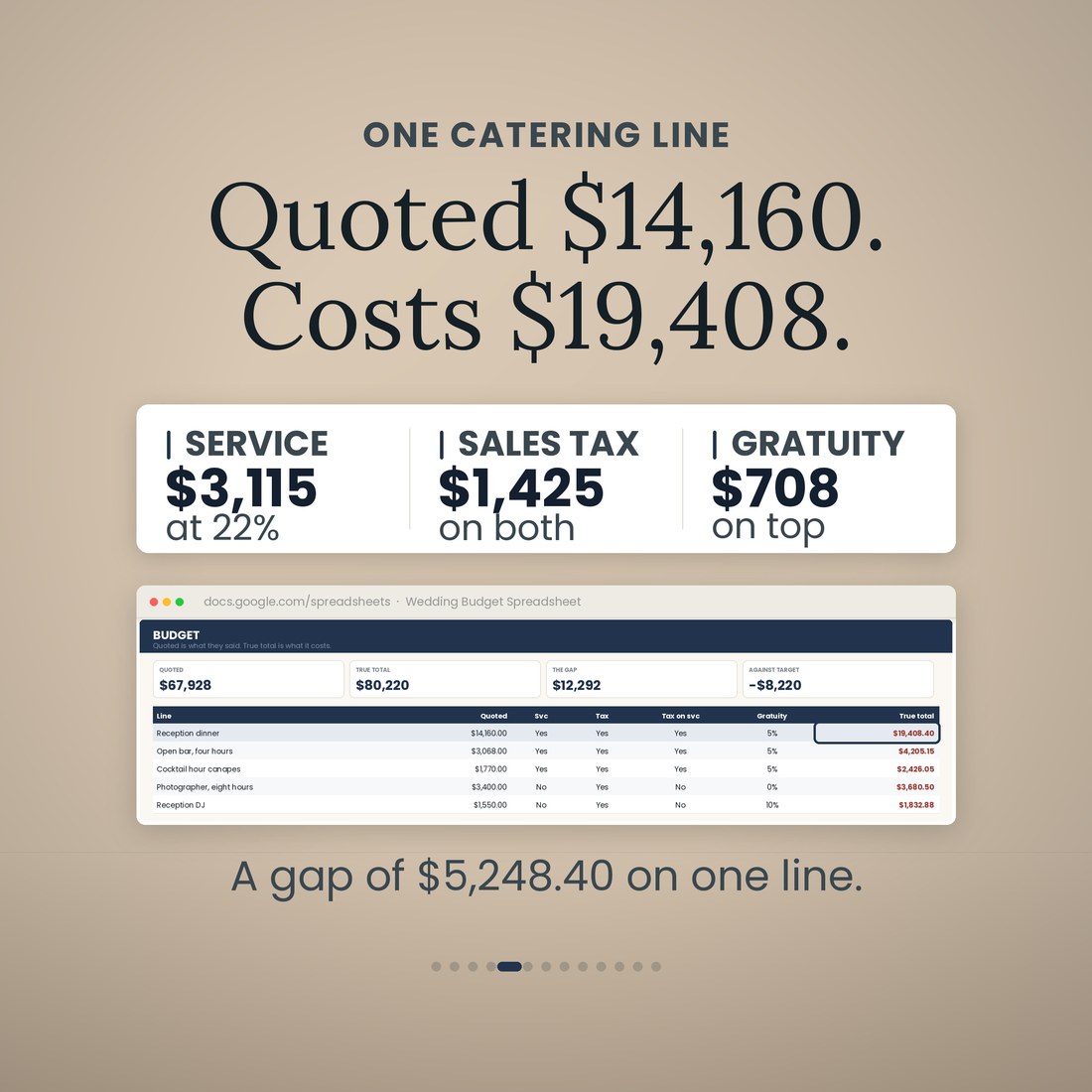
Most wedding budgets are wrong in the same direction, for the same reason: they add up what the vendors quoted. Vendors quote before the mandatory service charge, before the sales tax that in most states is charged on that service charge as well as on the food, and before the gratuity you meant to hand out on top. So the spreadsheet says you are under budget right up until the final invoices land, and then it says something else. This file grosses up every line as you enter it. A catering quote of $14,160.00 becomes $3,115.20 of service charge, $1,425.20 of sales tax charged on the food and the service charge together, and $708.00 of budgeted gratuity — $19,408.40 out the door, and a gap of $5,248.40 on that one line.
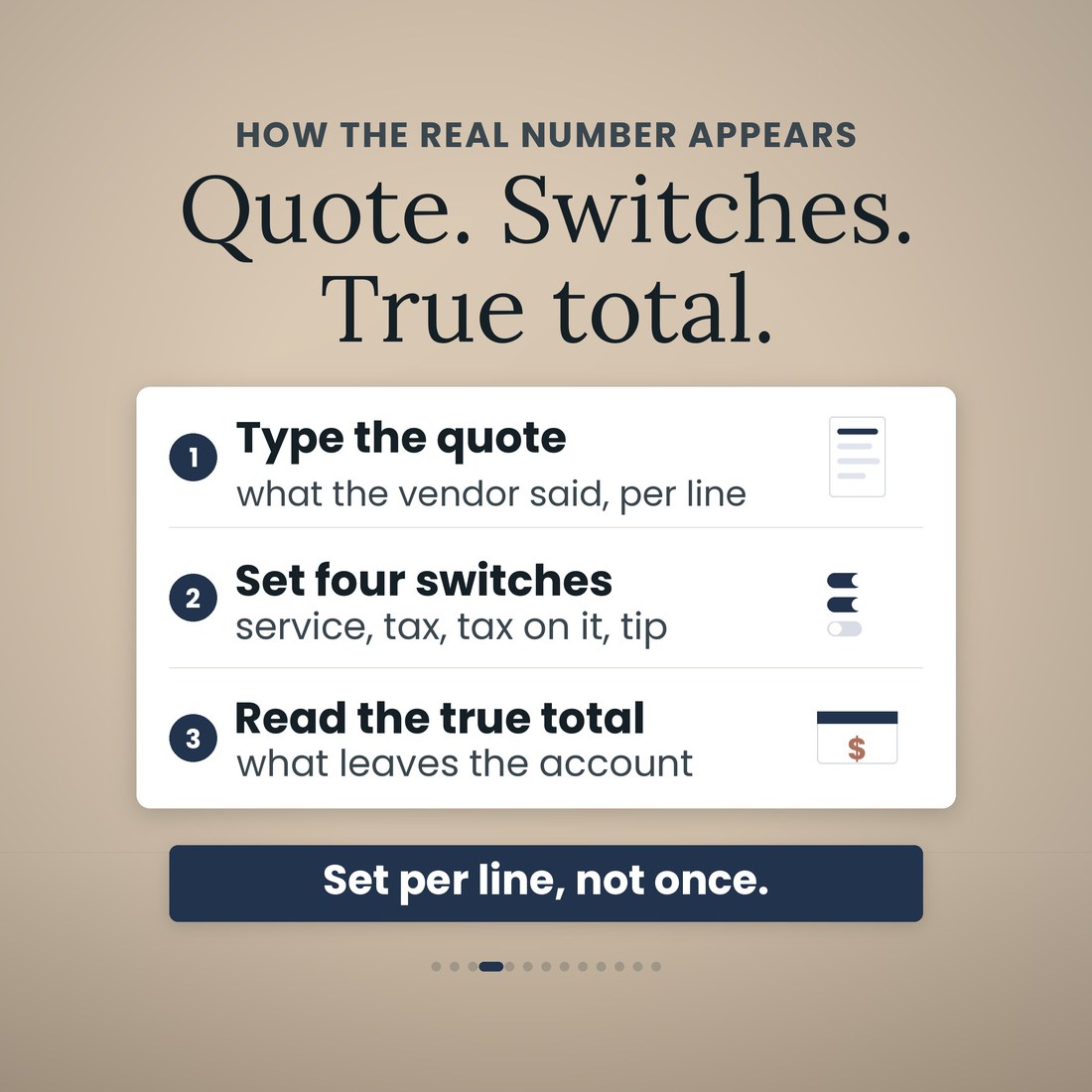
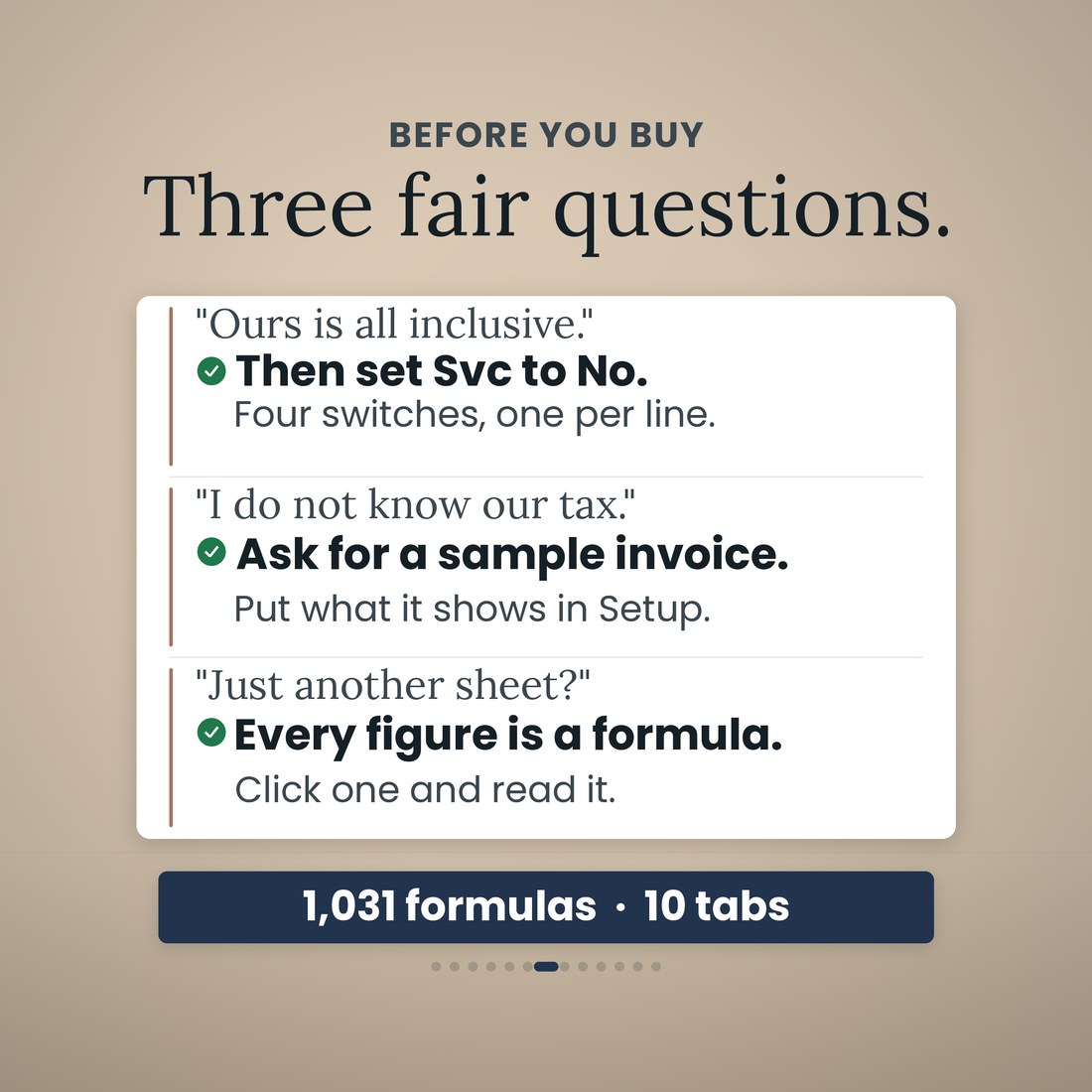
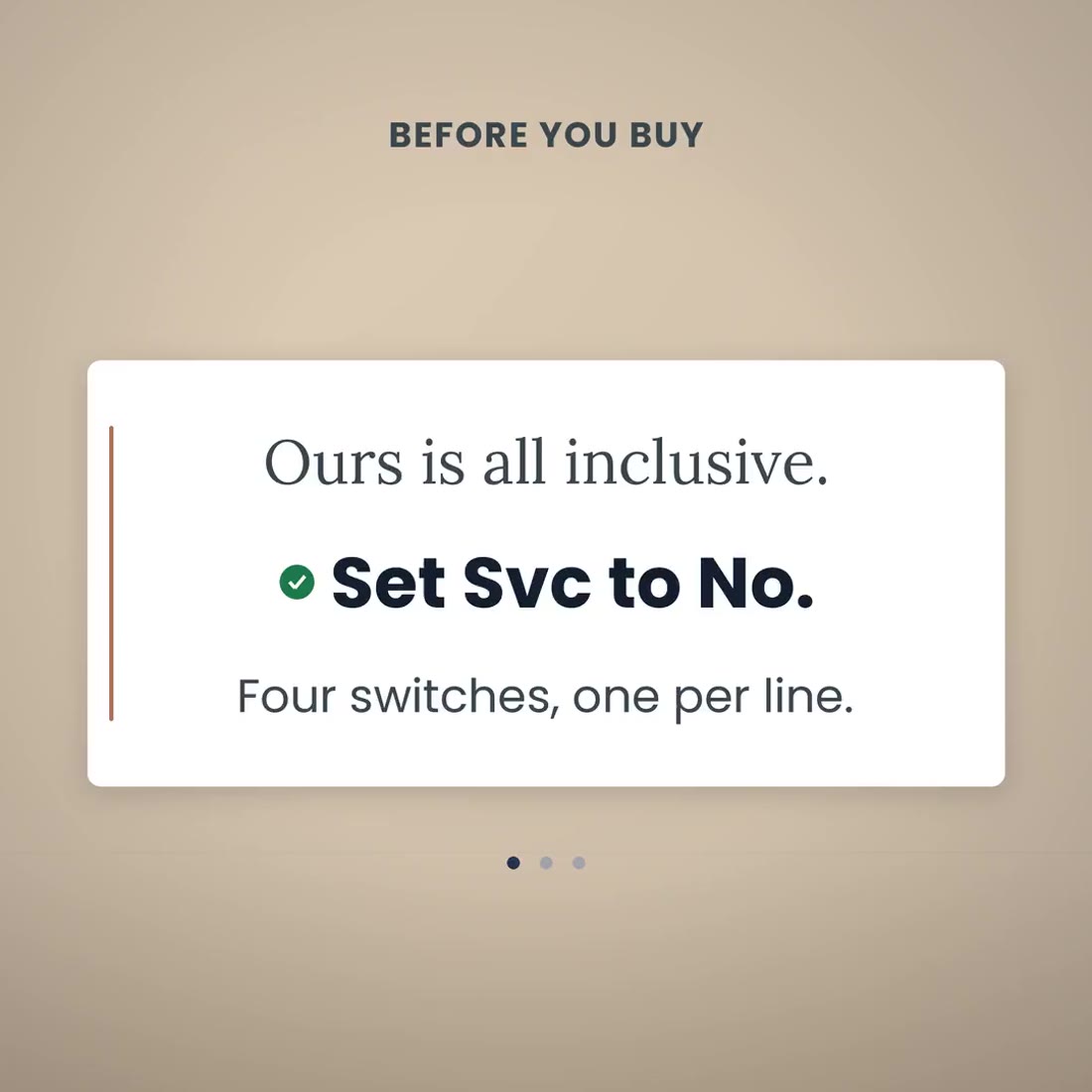
- Four switches on every line: Svc, Tax, Tax-on-svc and Gratuity, set per line rather than once for the whole file, because a caterer is not a florist. Turn the service charge off on one line and the same $14,160.00 quote reports $16,036.20 instead of $19,408.40 — the file shows you the difference rather than assuming it
- The tax on the service charge, which is the part almost every template misses. In most states the sales tax is charged on the mandatory service charge as well as on the food, so the sample's $14,160.00 catering line carries $1,425.20 of tax rather than the $1,168.20 you get by taxing the food alone
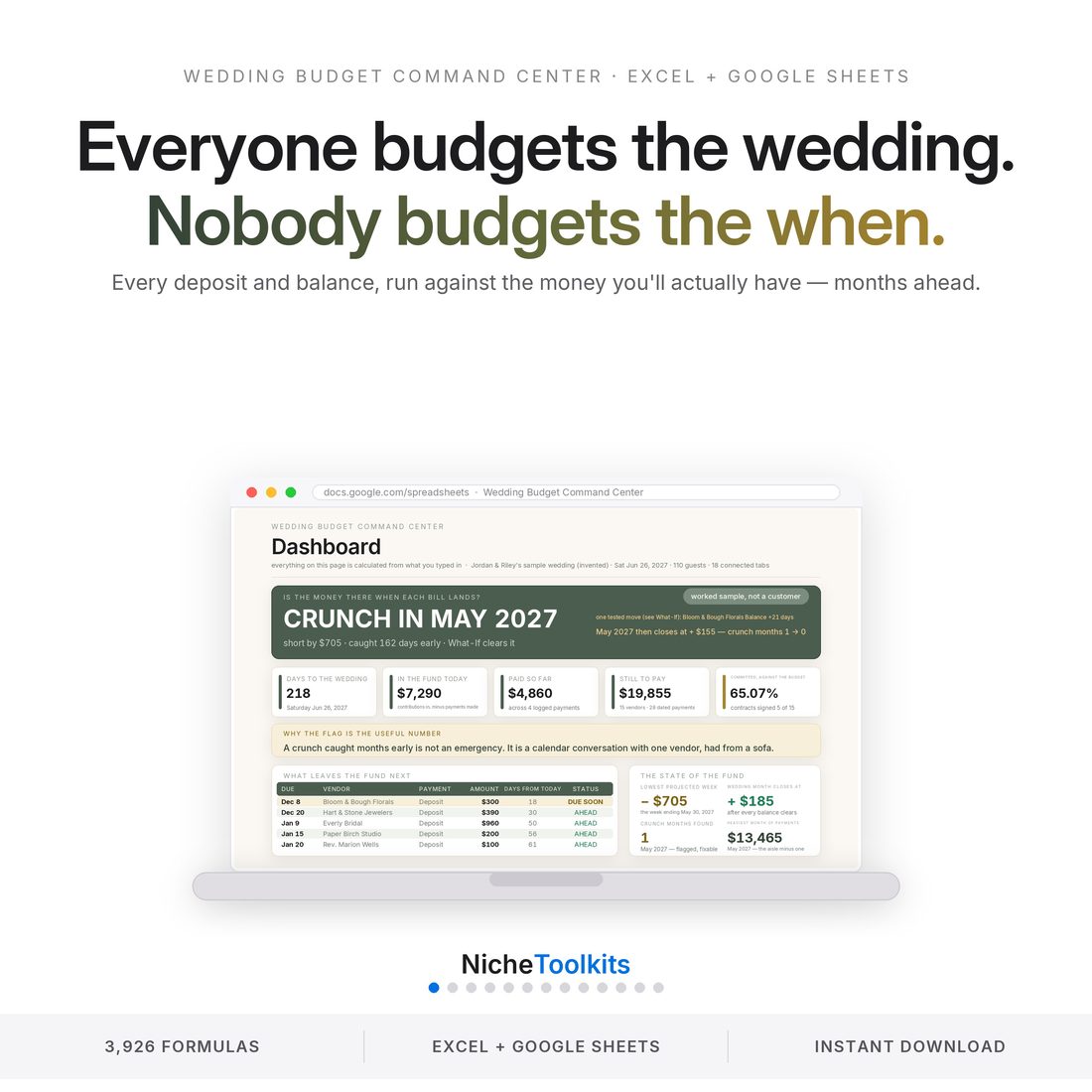
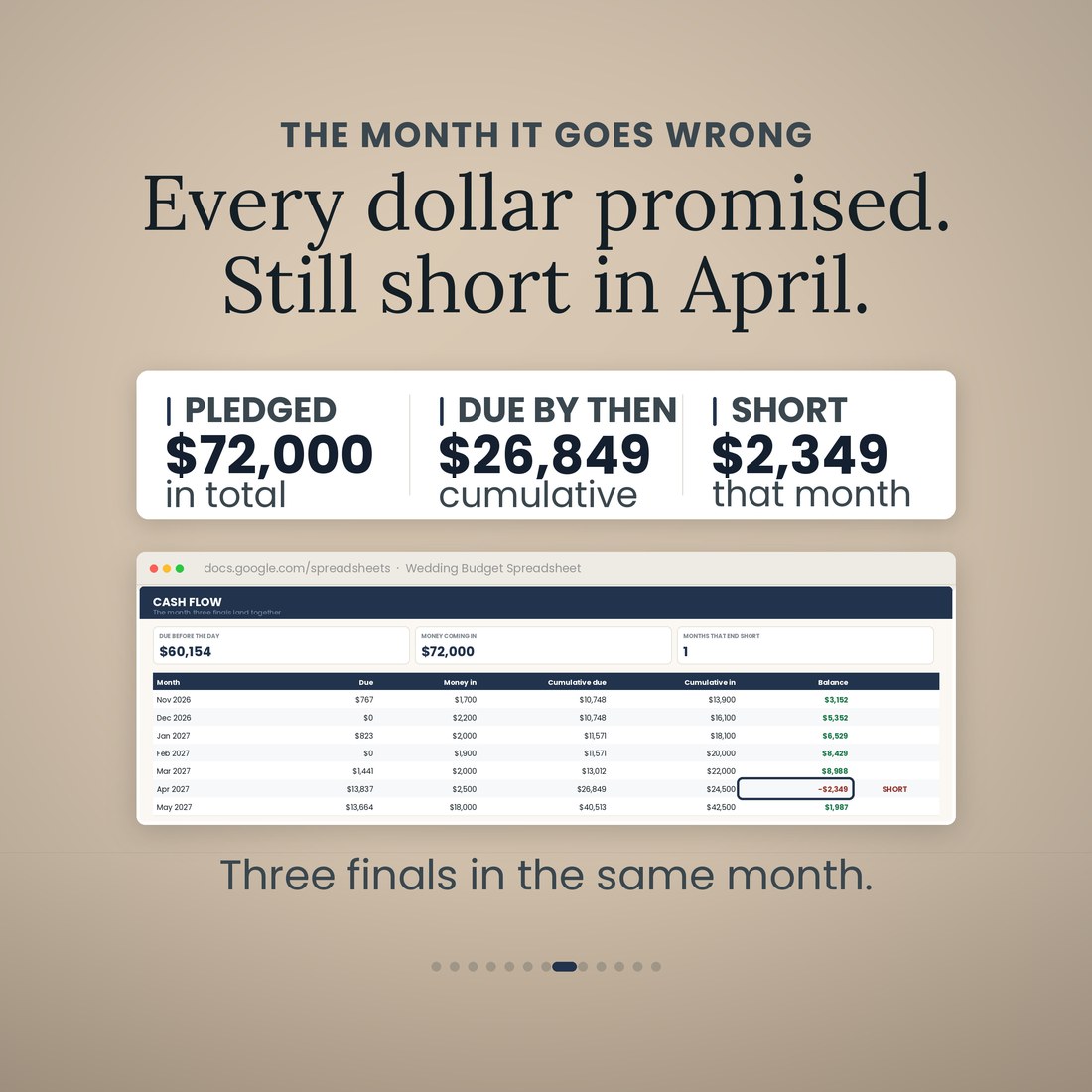
- Cash Flow month by month to the wedding, with payments due reading themselves off the Payments tab and only the money actually arriving typed by you. The page flags the month the running balance goes negative — in the sample every dollar of the $72,000.00 is pledged and April 2027 still ends $2,349.00 short, because three finals land in the same month
- Per Guest splits the budget into what scales with the headcount and what does not — $36,327.58 variable against $43,891.93 fixed in the sample — prices a chair at $307.86, and then puts a dollar figure on the cut list, so cutting fourteen names is $4,310.05 rather than a feeling
- Contributors, Benchmarks and Vendors: what each person pledged against the true cost of the lines they were actually assigned, your shape against a rule of thumb you can edit, and 22 vendor contracts with deposits, balance dates and the cancellation terms people wish they had written down
Overview
Quoted is not what you pay. This one grosses up every line.
Most wedding budgets are wrong in the same direction, for the same reason: they add up what the vendors quoted. Vendors quote before the mandatory service charge, before the sales tax that in most states is charged on that service charge as well as on the food, and before the gratuity you meant to hand out on top. So the spreadsheet says you are under budget right up until the final invoices land, and then it says something else. This file grosses up every line as you enter it. A catering quote of $14,160.00 becomes $3,115.20 of service charge, $1,425.20 of sales tax charged on the food and the service charge together, and $708.00 of budgeted gratuity — $19,408.40 out the door, and a gap of $5,248.40 on that one line.
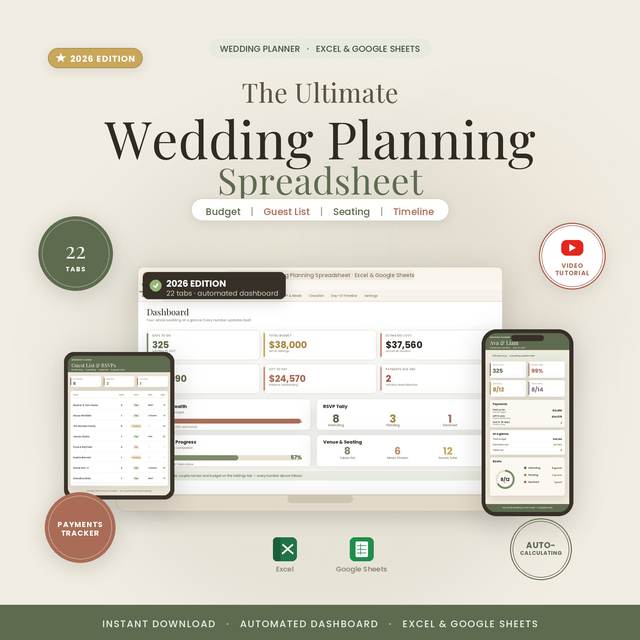
It is one workbook with 10 tabs and 1,031 live formulas, and it opens the same way in Microsoft Excel, Google Sheets and Apple Numbers because every formula uses the portable function set — no macros, no add-ons, no account and nothing to install. You type in the cream cells only: your date, guest count and the three rates once, then a quote per line with its four switches, your payments as they are agreed, and the money as it actually arrives. The true total, the gap, the tax on the service charge, the running cash balance, the cost per guest and what a cut is worth are all read, never typed. A worked sample ships inside — Alina Reyes and Jordan Pike, 118 guests at a barn outside Fort Collins, Colorado in June 2027, 82 budget lines in 15 categories, 22 vendors, 31 scheduled payments and 18 months of cash flow — so every tab has something to show on open. Type over any of it and the formulas stay.
What's Included
One workbook, 10 tabs, in four color editions:
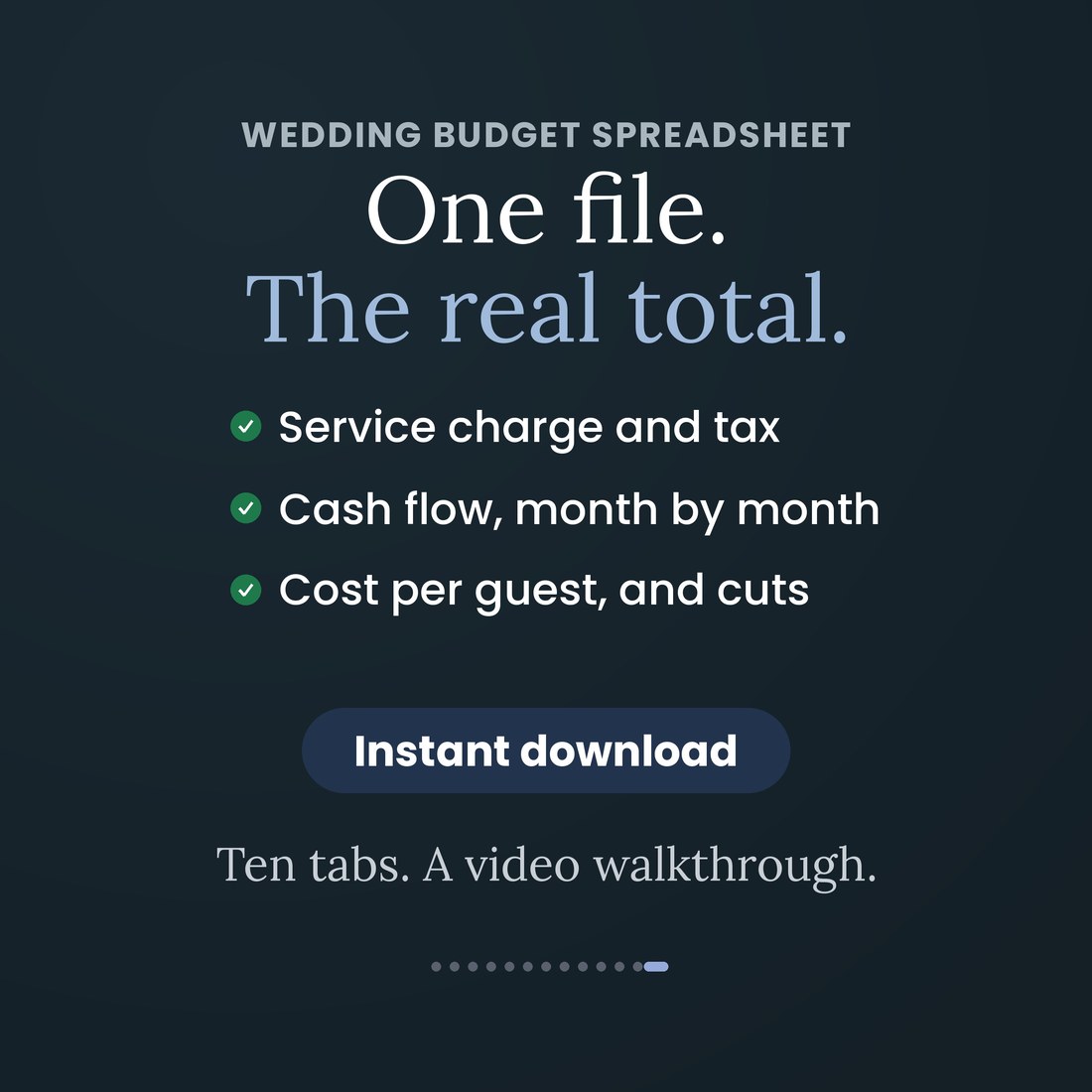
- Wedding-Budget-Spreadsheet.xlsx: the 10-tab workbook with 1,031 formulas, opening in Microsoft Excel, Google Sheets and Apple Numbers
- The same workbook in four color editions — Colorful, Light, Dark and Editorial — every one doing the same arithmetic
- A worked sample book inside: 118 guests at a barn outside Fort Collins, Colorado in June 2027, 82 budget lines in 15 categories, 22 vendors, 31 payments and 18 months of cash flow, so every tab works on open
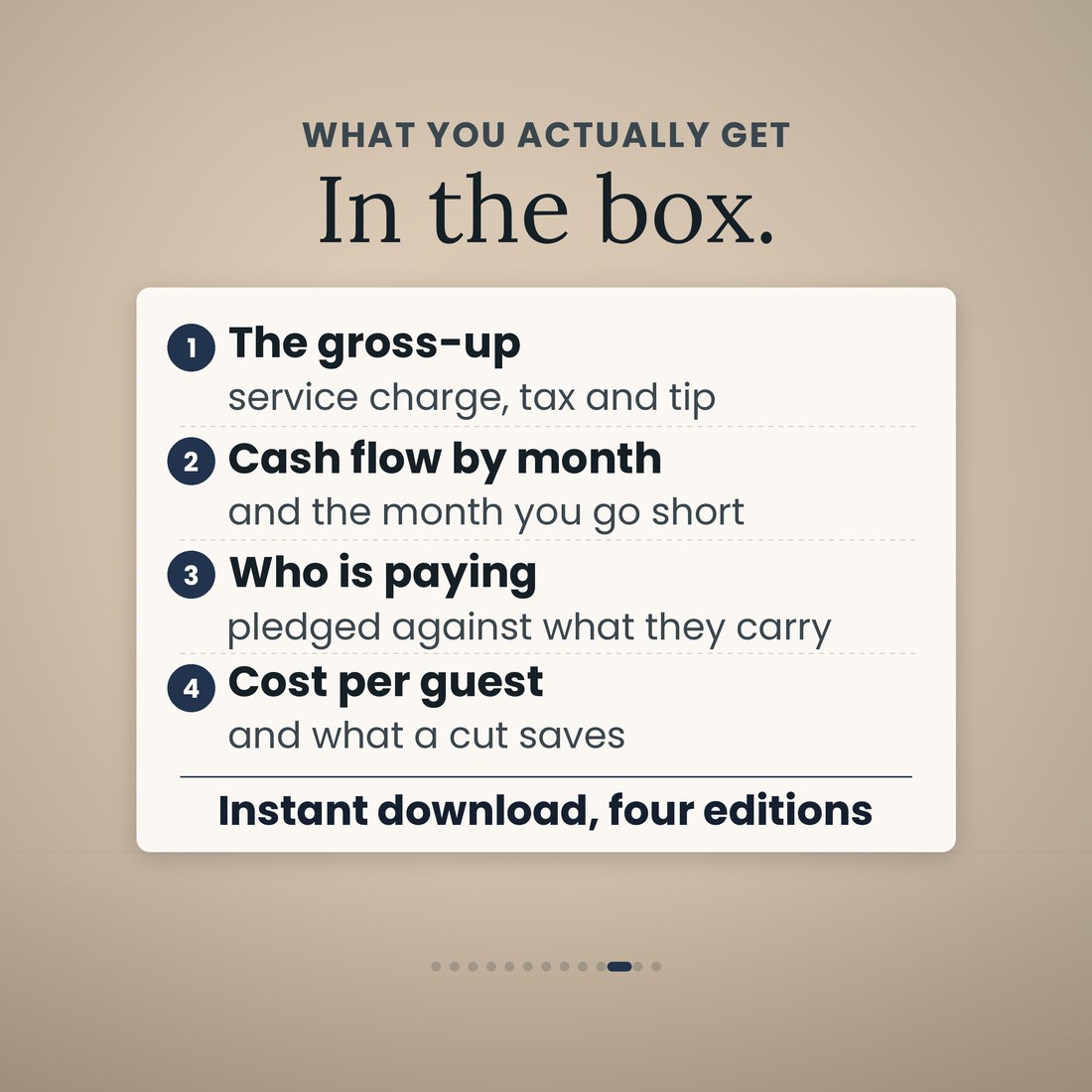
- The gross-up itself: four switches per line that add the service charge, the sales tax charged on it and the gratuity, and a true total you can hand to whoever is paying
- A full narrated video walkthrough on YouTube, every screen the real file, linked in the workbook and on your confirmation page
- Five .xlsx files in one ZIP, instant download. Nothing is shipped and there is nothing to install
Key Benefits
Why this one
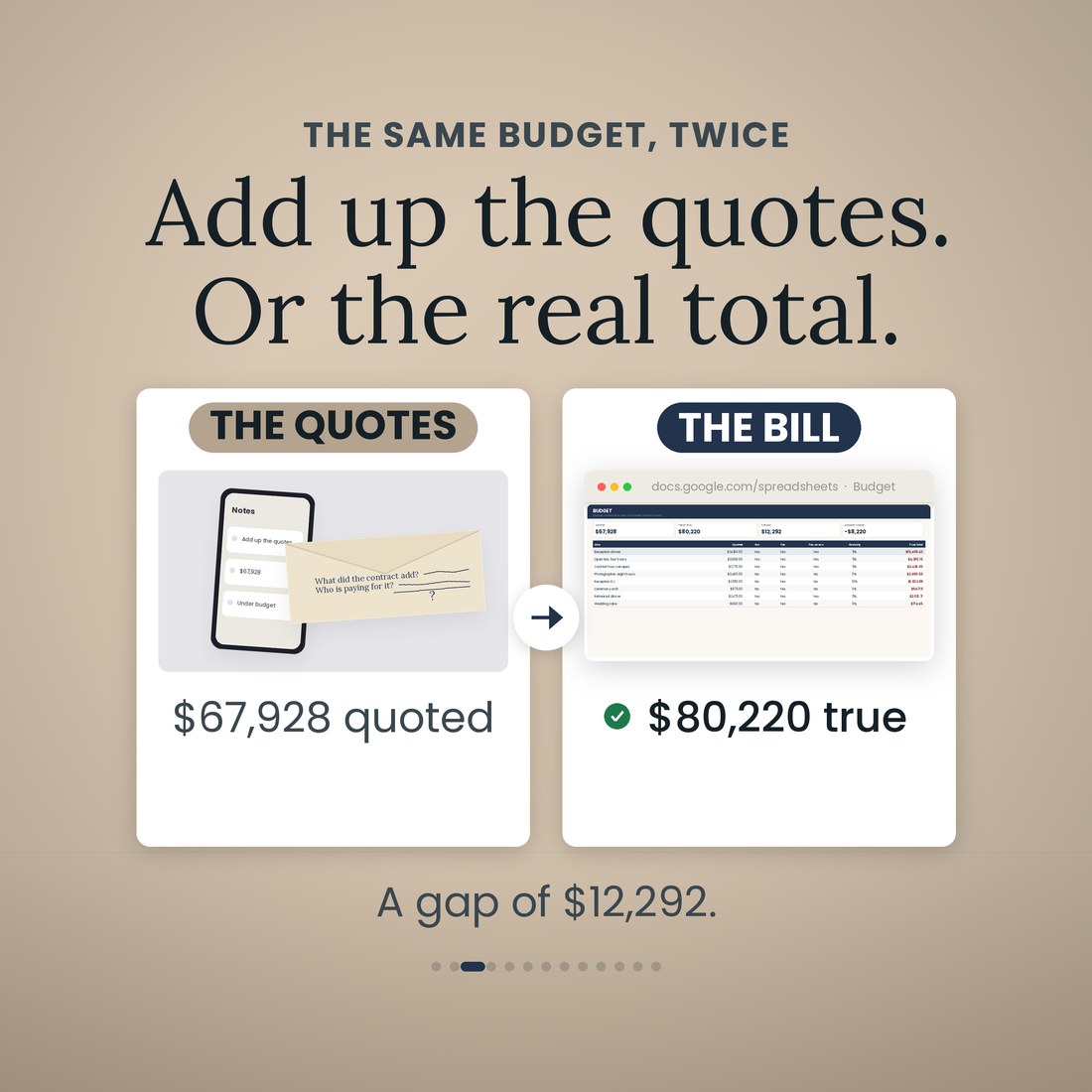
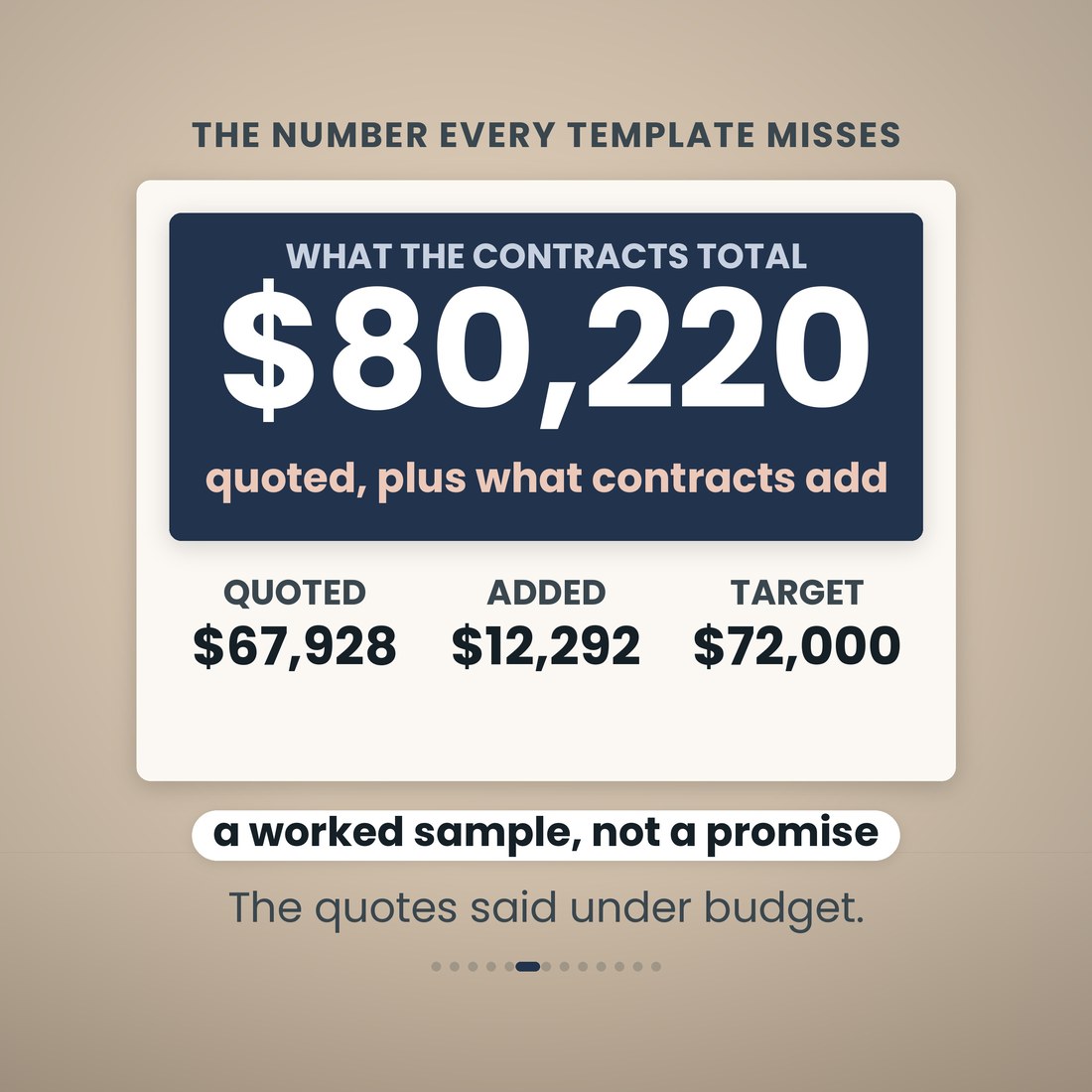
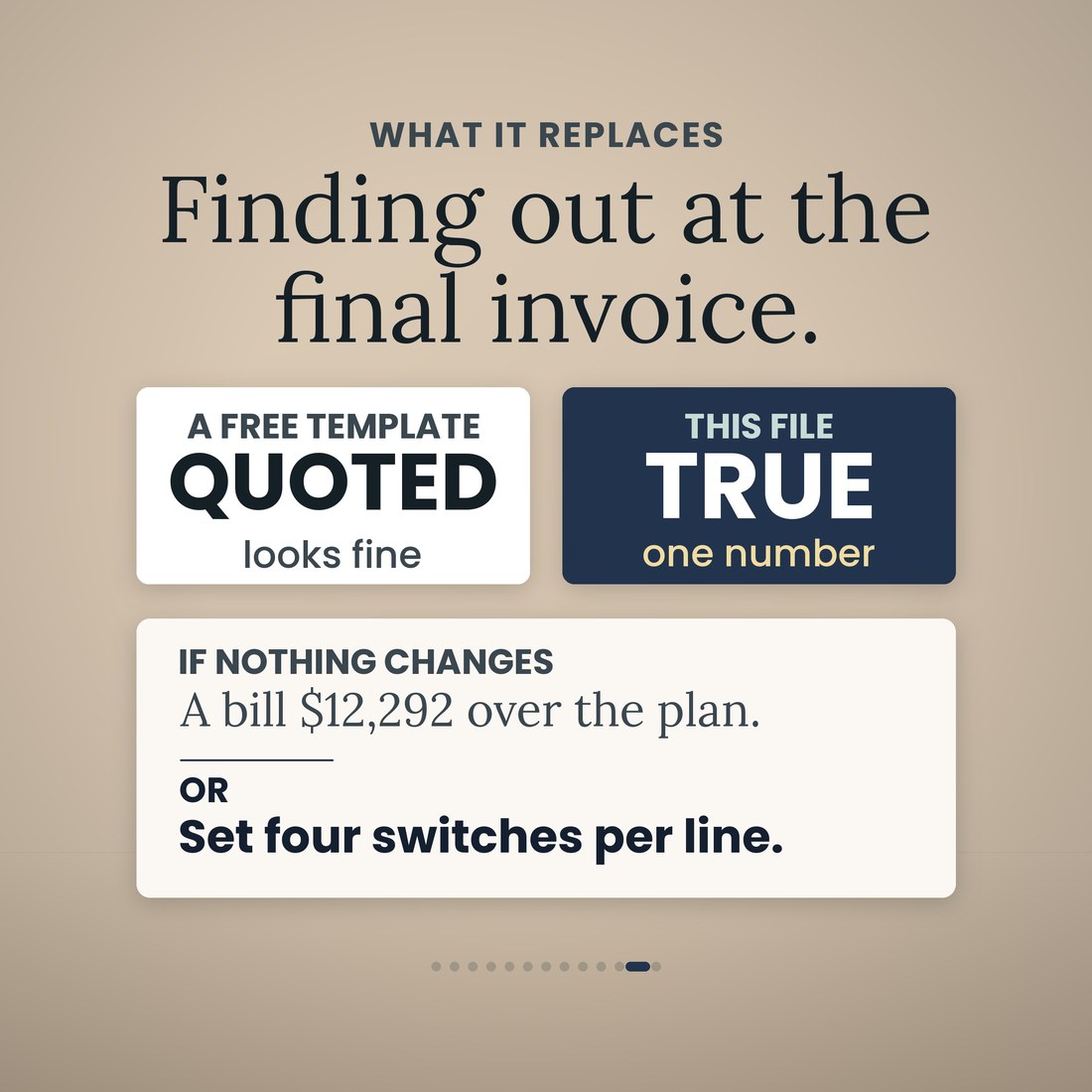
Across the worked sample the quoted column totals $67,928.00 and the true column $80,219.51. That $12,291.51 is the difference between looking $4,072.00 under a $72,000.00 budget and actually being $8,219.51 over it. It is not a rounding error and it is not bad luck; it is the same three charges, missing from every line.
A global service-charge percentage is worse than none, because it quietly adds twenty-two percent to your photographer. Every line here carries its own four switches, so the reception dinner grosses up and the dress does not. Turning the service charge off on the sample's catering line drops it from $19,408.40 to $16,036.20 — the file shows the difference rather than deciding for you.
In most states the sales tax applies to the mandatory service charge as well as to the food. On the sample's $14,160.00 catering line that is $1,425.20 of tax rather than $1,168.20 — $257.00 on one line, from a checkbox. Whether it applies where you are is a question for your venue's sample invoice, which is exactly why it is a switch.
Cash Flow runs month by month to the wedding. Payments due read themselves off the Payments tab; you only type the money as it actually arrives. In the sample all $72,000.00 is pledged, $26,849.00 is cumulatively due by April 2027, and the month still ends $2,349.00 short because three finals land together. Knowing that in advance is a phone call, not a crisis.
Per Guest splits the budget into what scales with headcount and what does not, then prices a chair at $307.86 in the sample. So cutting fourteen names is $4,310.05, and the conversation about the guest list stops being about feelings. Contributors does the same job for people: what each one pledged against the true cost of the lines they were actually assigned, red when somebody has been handed more wedding than they offered to pay for.
Microsoft Excel, Google Sheets and Apple Numbers. Every formula uses the portable function set, and the workbook was recalculated in LibreOffice and then recomputed independently before shipping — 1,031 formulas and 58,929 checks across the shipping gates, zero failures. No add-ins, no macros, no login, nothing to connect and nothing to subscribe to.
Who It's For
Built for
- Couples who have started collecting quotes and want to know what the final invoices will actually say
- Anyone whose venue or caterer charges a mandatory service charge, which is most venues and nearly every caterer
- Couples with more than one person contributing, who need a clean answer to who is paying for what and whether it still adds up
- Anyone who has been told they are under budget by a spreadsheet and does not entirely believe it
How It Works
Up and running in minutes
Your wedding date, how many people you expect, and the service charge, sales tax and gratuity percentages you are working to. Once, on Setup. Your venue's sample final invoice is the best place to get them.
82 lines in 15 categories are already laid out. Put the number the vendor gave you in the quoted column — the number before anything is added, which is the number they gave you.
Svc, Tax, Tax-on-svc and Gratuity. The true total appears beside the quote, and the gap with it. Set them line by line; the caterer and the florist do not get the same treatment.
Deposits and finals with due dates, method and the card or wire fee on top. Then, on Cash Flow, type only the money as it actually arrives — the page tells you which month goes negative.
What you are truly committed to against your target, what a chair costs, what a cut is worth, and whether anyone has been assigned more of the wedding than they pledged to cover.
Why It's Different
Not another template
Every free wedding budget template adds up the quotes. That is the entire problem, because a quote is the number before the mandatory service charge, before the sales tax that in most states is charged on that service charge as well as on the food, and before the gratuity. This one grosses up each line with four switches of its own — Svc, Tax, Tax-on-svc and Gratuity — and the switches are per line rather than global, because a global percentage quietly adds twenty-two percent to your photographer. On the worked sample a $14,160.00 catering quote becomes $3,115.20 of service charge, $1,425.20 of sales tax on the food and the service charge together, and $708.00 of budgeted gratuity: $19,408.40 out the door, a gap of $5,248.40 on one line. Across all 82 lines, $67,928.00 quoted is $80,219.51 true, which is the difference between looking $4,072.00 under budget and being $8,219.51 over it. From there the file does the three things a budget page cannot do on its own. Cash Flow runs month by month with payments due reading themselves off the Payments tab, and flags the month the running balance goes negative — in the sample every dollar is pledged and April 2027 is still $2,349.00 short because three finals land together. Per Guest separates what scales with headcount from what does not, prices a chair at $307.86 and puts $4,310.05 on a fourteen-name cut. Contributors compares what each person pledged against the true cost of the lines they were actually assigned. It is honest about its limits. Whether a mandatory service charge is taxable is decided by your state, and the treatment of a voluntary tip is usually different from a compulsory charge. Nothing here is tax advice: ask your venue for a sample final invoice, put the rates it shows into Setup, and set the switches to match.
Delivery & Compatibility
Instant, and it opens in what you already use
As soon as your order is complete you get instant access to download the ZIP, so you can put your real rates into Setup tonight and find out what your current quotes actually total.
Five .xlsx workbooks (Wedding-Budget-Spreadsheet.xlsx plus the Colorful, Light, Dark and Editorial editions) delivered as one ZIP, instant download. Opens in Microsoft Excel, Google Sheets and Apple Numbers using the portable function set only — no add-ins, no macros, no login and nothing to install. The file ships with a worked sample book so every screen works on open; the images and the video show that sample. The service charge, sales tax and gratuity rates and the benchmark percentages all sit in editable cells for you to set from your own contracts. This is a digital download; nothing is shipped.
FAQ
Questions, answered
What is a service charge, and is it the same as a tip?
A service charge is a mandatory percentage a venue or caterer adds to your bill, commonly around twenty percent, and it is not a tip. It usually belongs to the house rather than to the staff, which is why many couples budget a gratuity on top of it. Both are switches here, set per line, so you can model it either way.
Why does the file tax the service charge?
Because in most states the sales tax applies to a mandatory service charge as well as to the food, and that is the charge almost every template forgets. On the sample's catering line it is $1,425.20 of tax instead of $1,168.20. Whether it applies where you are is your state's call, so it is a switch you set rather than a rule baked in.
How do I find out my real rates?
Ask your venue or caterer for a sample final invoice, not a quote. It will show the service charge percentage and how the tax is applied. Put those numbers into Setup and set the switches to match, and the whole file is working from your contracts rather than an average.
What are the ten tabs?
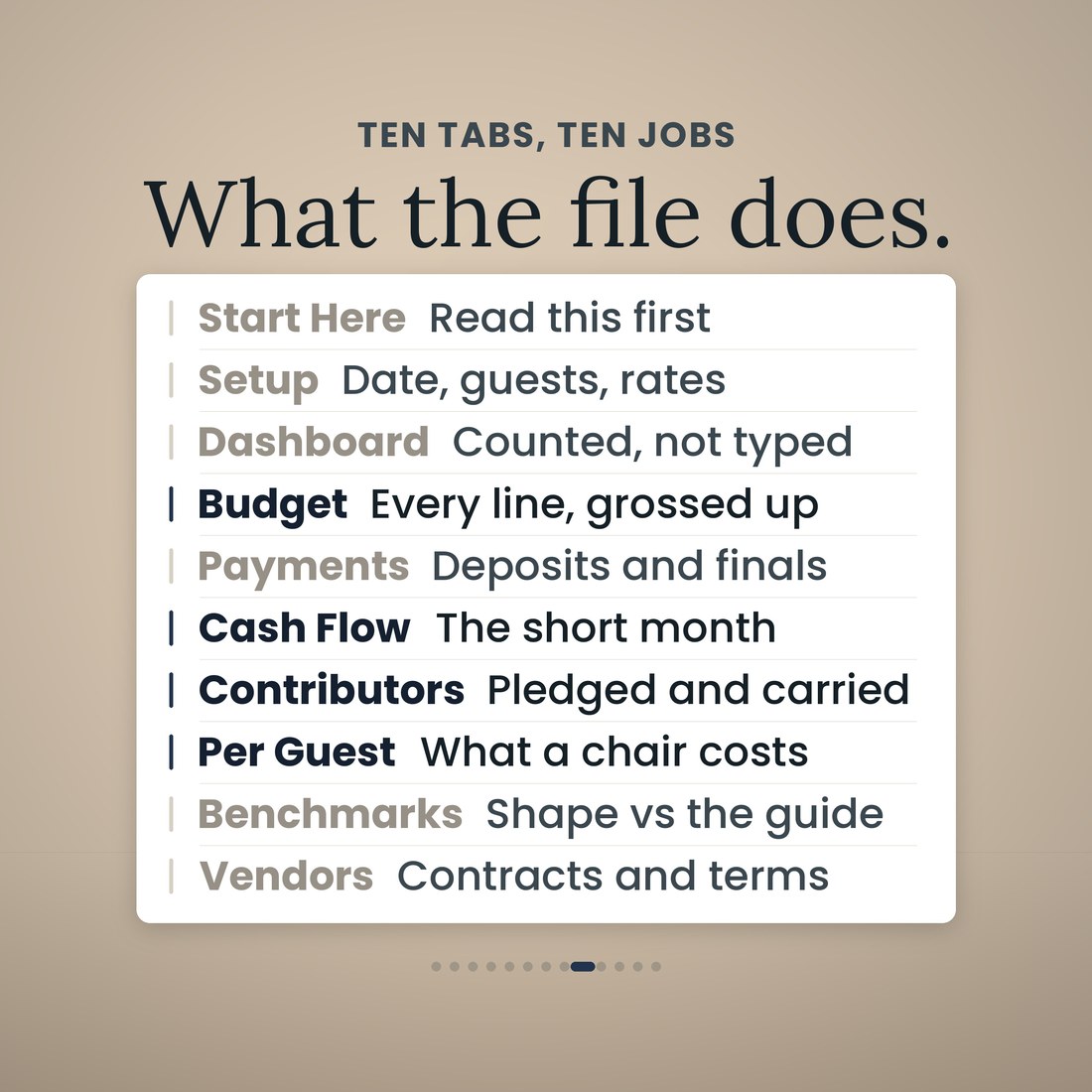
Start Here; Setup; Dashboard; Budget; Payments; Cash Flow; Contributors; Per Guest; Benchmarks; and Vendors. Each one does a single job.
We already have a budget in a free template. Do we start over?
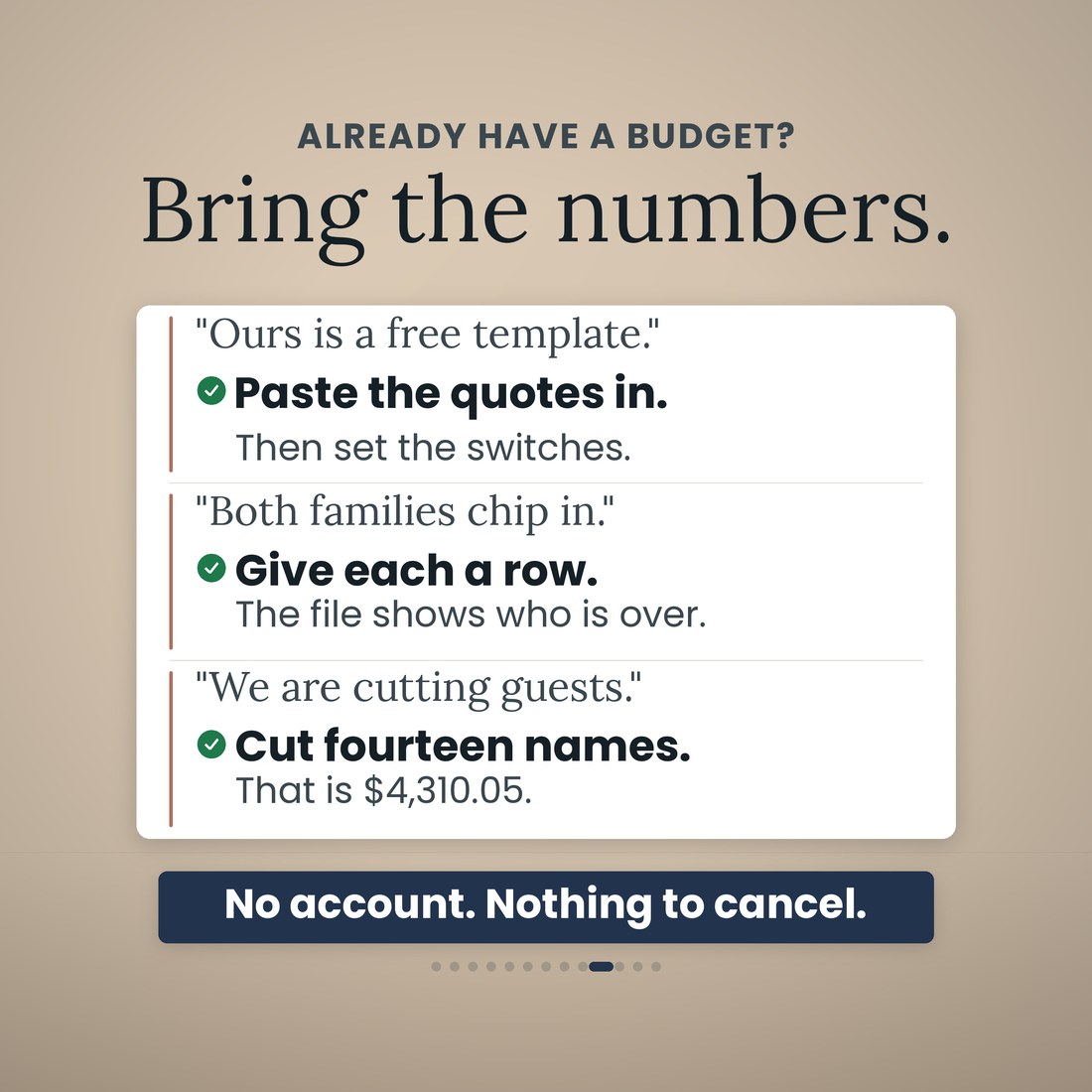
No. Paste your numbers into the quoted column and then set the switches. That is the part your current template is missing, and it takes an evening.
Both families are chipping in. Does it handle that?
Contributors gives each person a row, records what they pledged, and compares it against the true cost of the lines they were actually assigned. When a difference goes red, somebody has been given more of the wedding than they offered to pay for.
Can it tell us what cutting the guest list is worth?
Yes. Per Guest splits the budget into what scales with headcount and what does not, so it can price a chair — $307.86 in the sample — and put a figure on the cut list. Fourteen names is $4,310.05 there.
What is the difference between the four color editions?
Only the look. Colorful, Light, Dark and Editorial are the same 10-tab workbook with the same formulas in a different palette, and all four ship in the download.
Is this tax advice?
No. It is a budgeting tool that grosses up the quotes you enter using rates and switches you set. Whether a mandatory service charge is taxable is decided by your state, and the treatment of a voluntary tip is usually different from a compulsory charge. Your venue's sample final invoice, and your own advisor, are the authorities here.
For personal use. A budgeting tool that grosses up the quotes, rates and switches you enter; not tax, legal or accounting advice. Whether a mandatory service charge is taxable is decided by your state and the treatment of a voluntary tip usually differs from a compulsory charge, so the rates and switches are yours to set from your own contracts and your venue's sample final invoice. © 2026 NicheToolkitHub — no resale or redistribution.