 ▶
▶
 ▶
▶Home Maintenance Command Center
Your house is telling you what it needs. This is where you write it down.
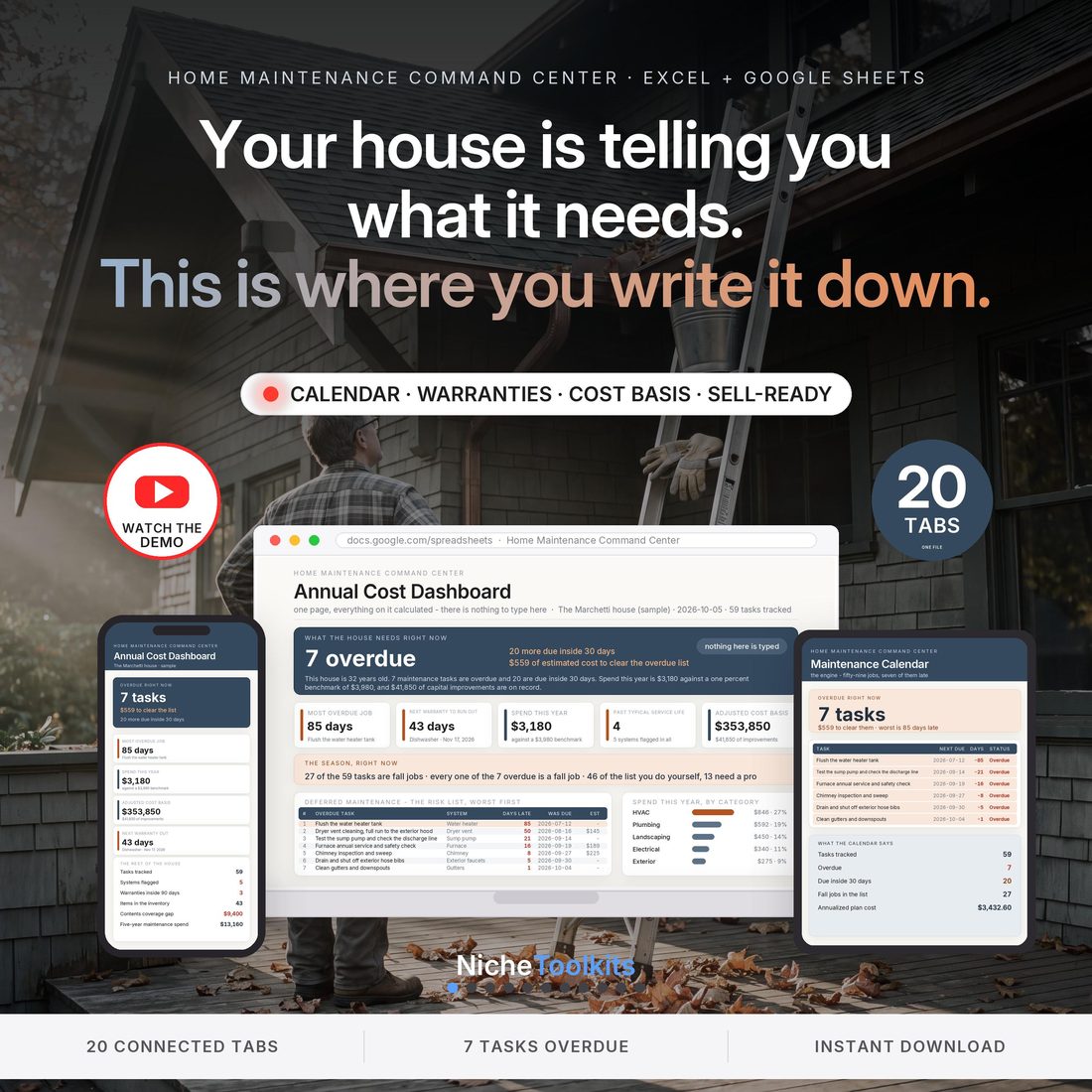
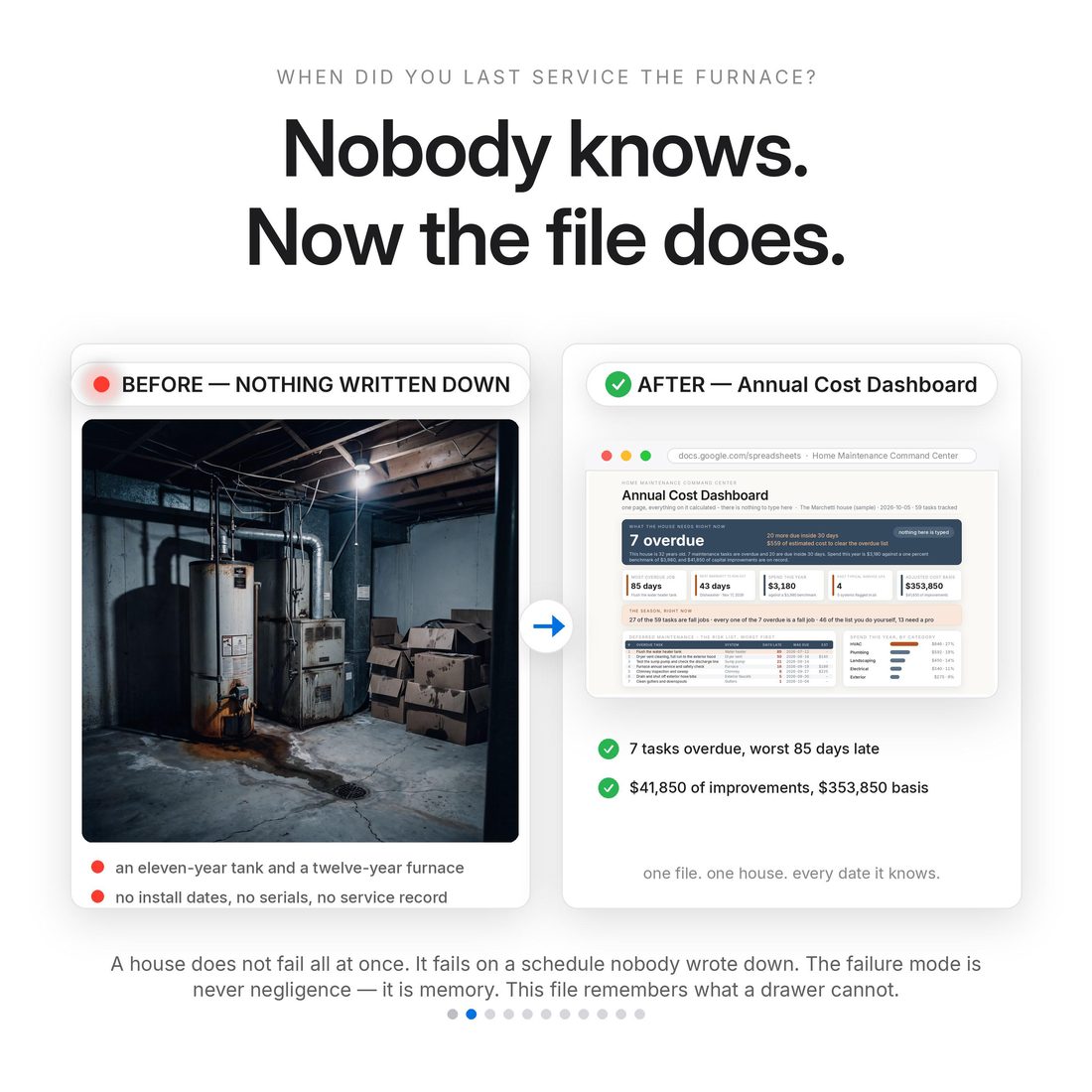
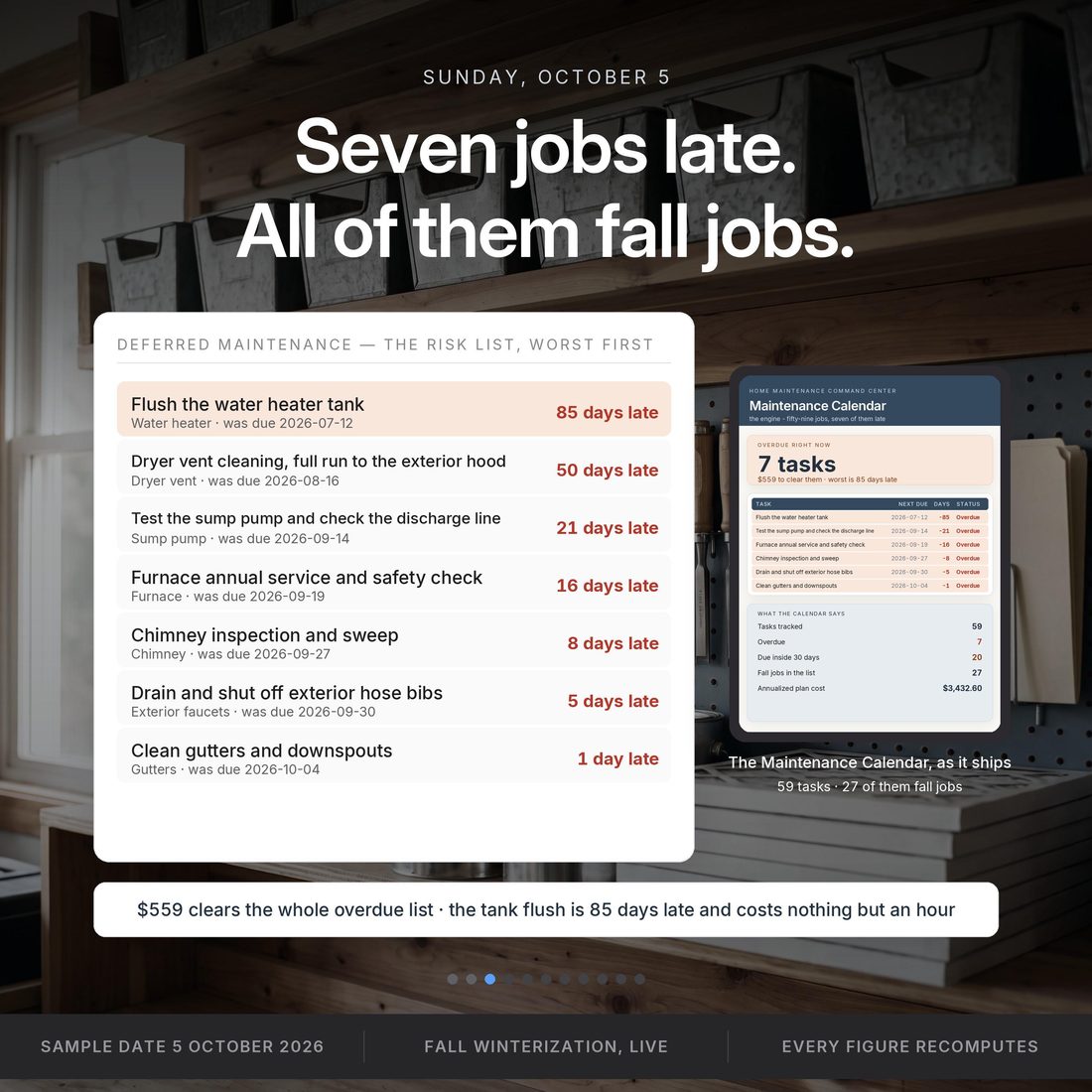
A house does not fail all at once. It fails in small, cheap, ignorable ways on a schedule nobody wrote down. The failure mode is never negligence — it is memory: nobody remembers how old the water heater is, and nobody can find the dishwasher's model number at the moment it floods. This 20-tab workbook is where the schedule lives. Enter when you last did a job and how often it needs doing, and the file works out the next due date, the days remaining and whether it reads overdue, due soon, scheduled or done. In the included sample house, 59 recurring tasks annualize to $3,432.60, seven of them are already overdue, and the worst is named and dated: flush the water heater tank, 85 days late, inside $559 of overdue work.
- Maintenance Calendar — 59 pre-loaded tasks with calculated next-due dates, days until, a status ladder and an overdue rank
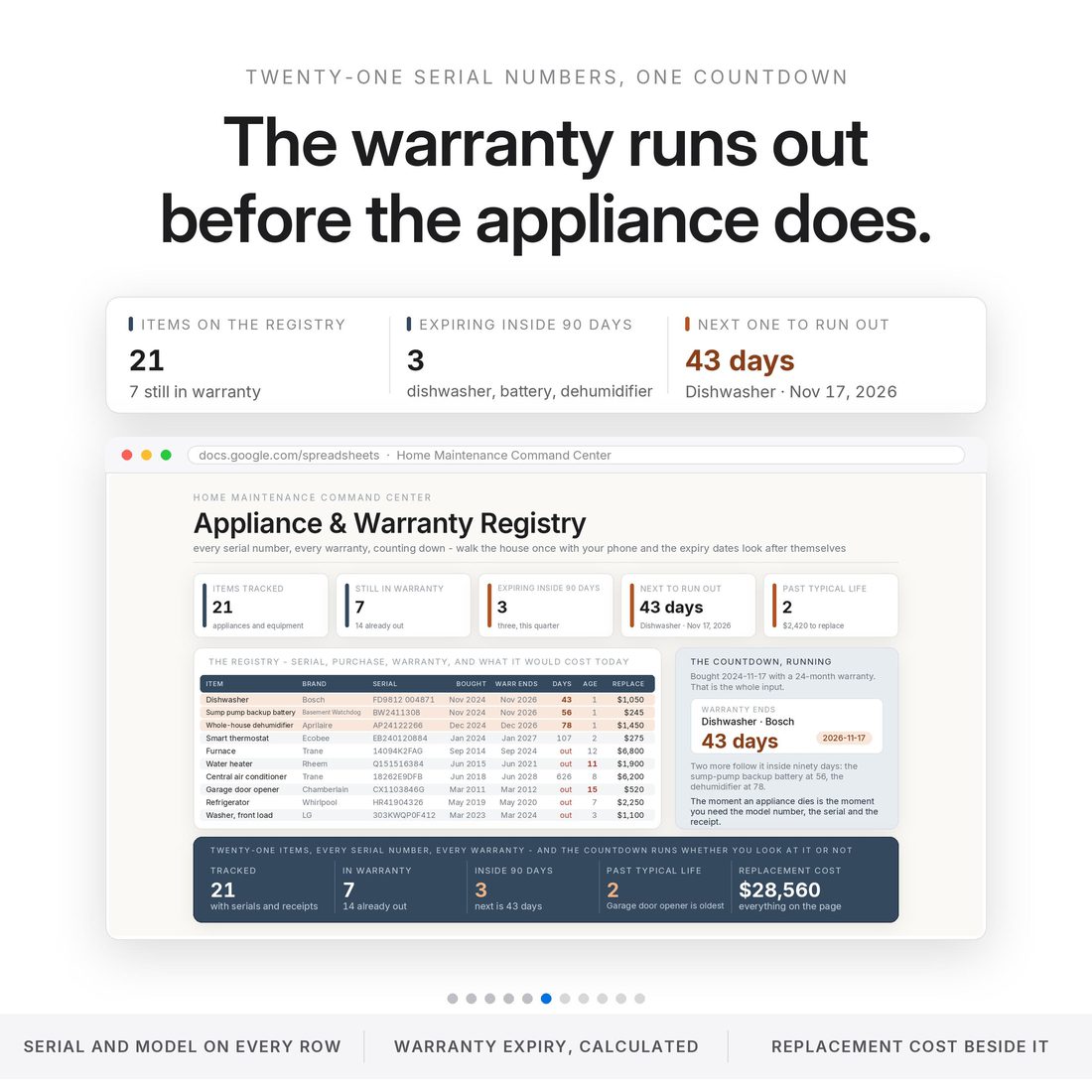
- Appliance & Warranty Registry — 21 appliances and systems with model and serial numbers and a real countdown to every warranty expiry; the sample's next one is the dishwasher, in 43 days
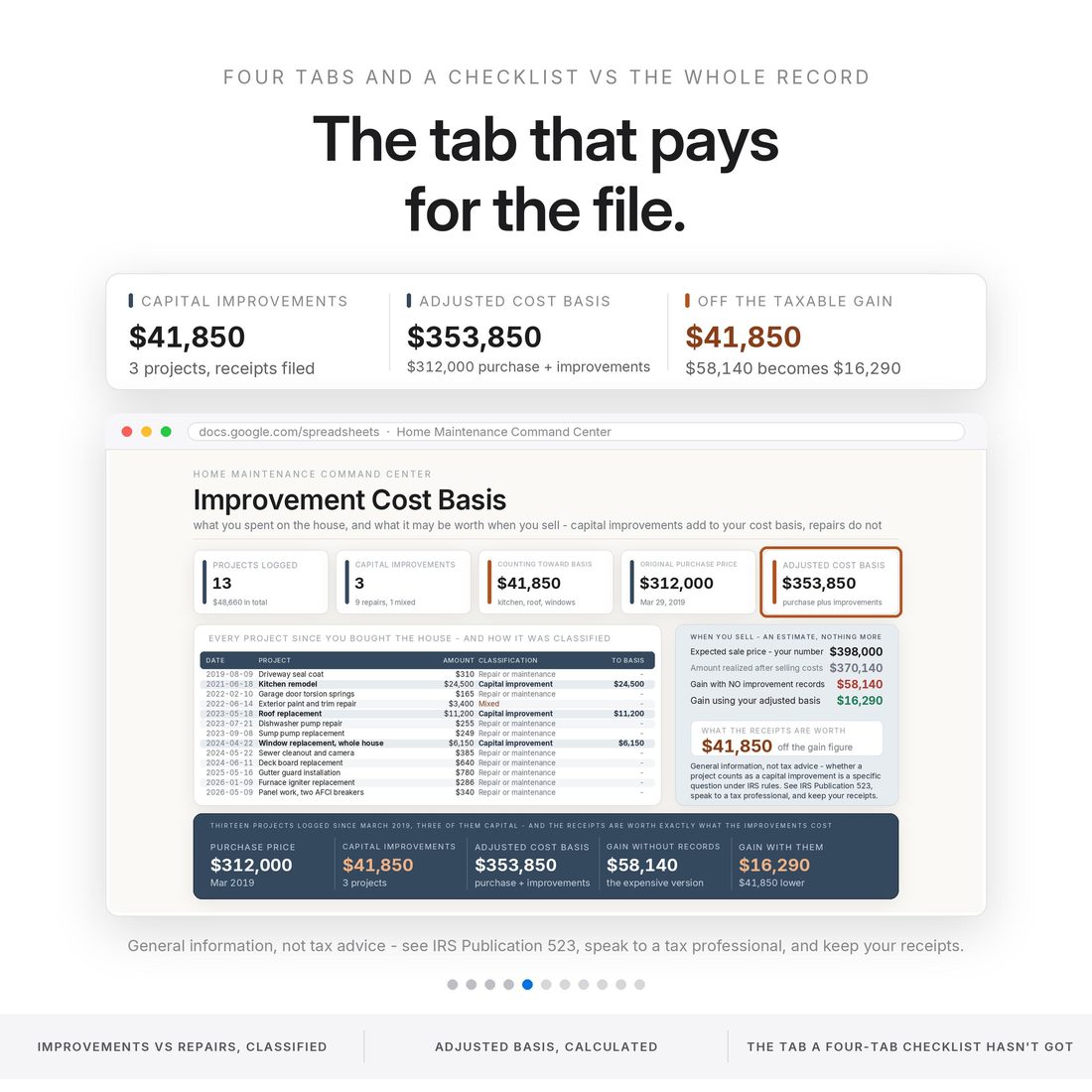
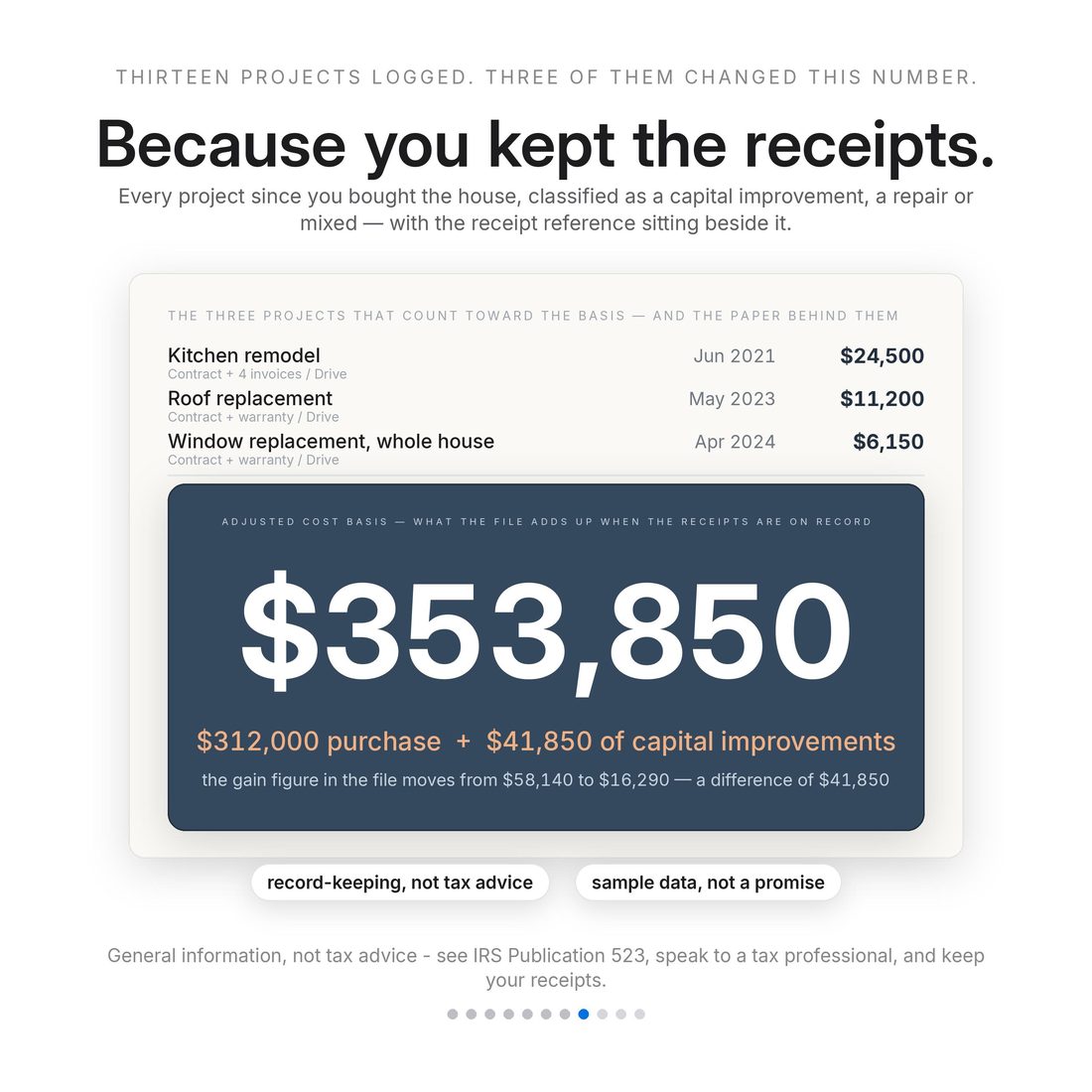
- Improvement Cost Basis — 13 logged projects and $41,850 documented, carrying a $312,000 purchase to a $353,850 adjusted cost basis
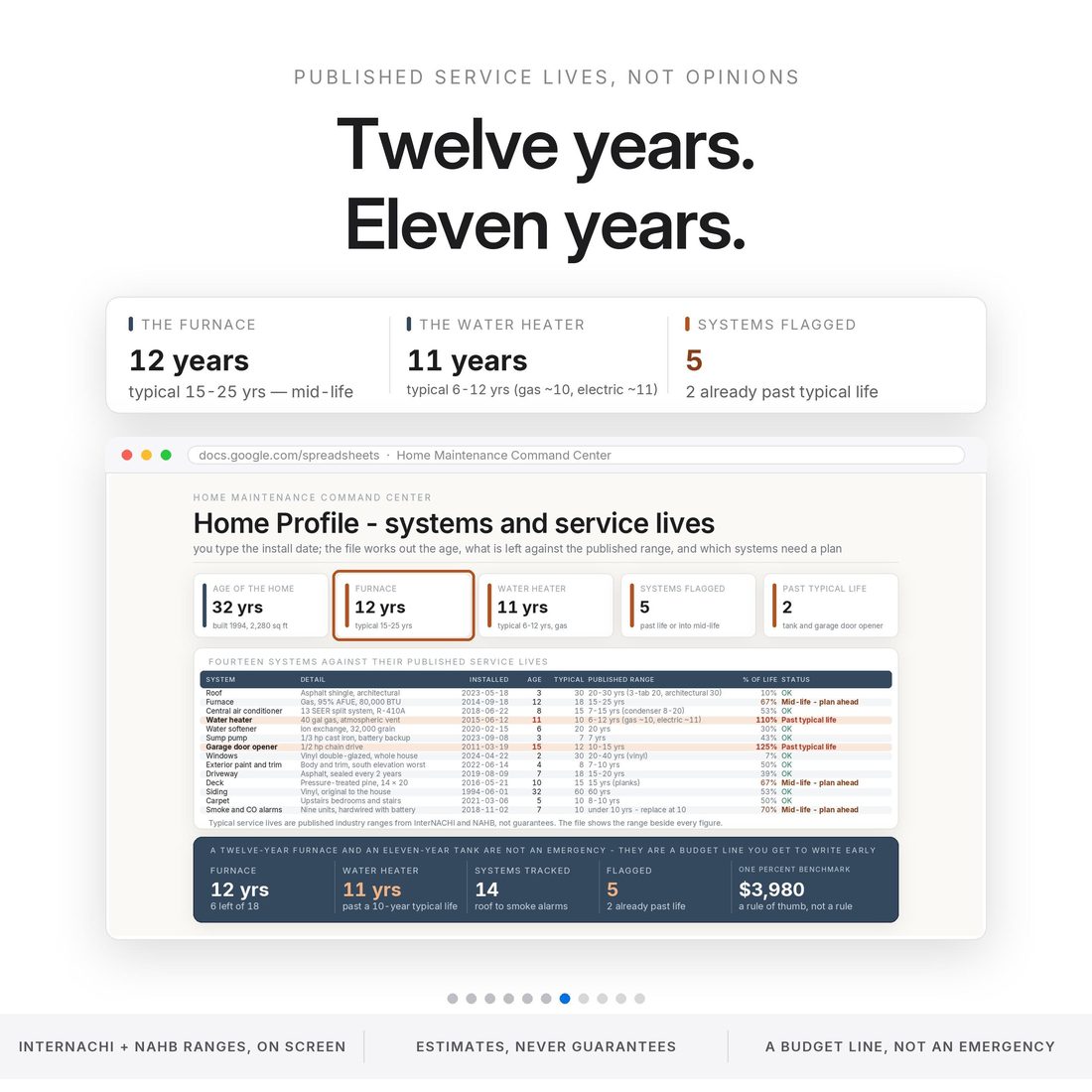
- Service lives as published ranges with the source on screen — 14 systems measured, 5 flagged past life, including an 11-year water heater
- Home Inventory (Insurance) — 43 items at $96,400 replacement value against an $87,000 contents limit, a $9,400 shortfall named
Overview
Your house is telling you what it needs. This is where you write it down.
A house does not fail all at once. It fails in small, cheap, ignorable ways on a schedule nobody wrote down. The failure mode is never negligence — it is memory: nobody remembers how old the water heater is, and nobody can find the dishwasher's model number at the moment it floods. This 20-tab workbook is where the schedule lives. Enter when you last did a job and how often it needs doing, and the file works out the next due date, the days remaining and whether it reads overdue, due soon, scheduled or done. In the included sample house, 59 recurring tasks annualize to $3,432.60, seven of them are already overdue, and the worst is named and dated: flush the water heater tank, 85 days late, inside $559 of overdue work.
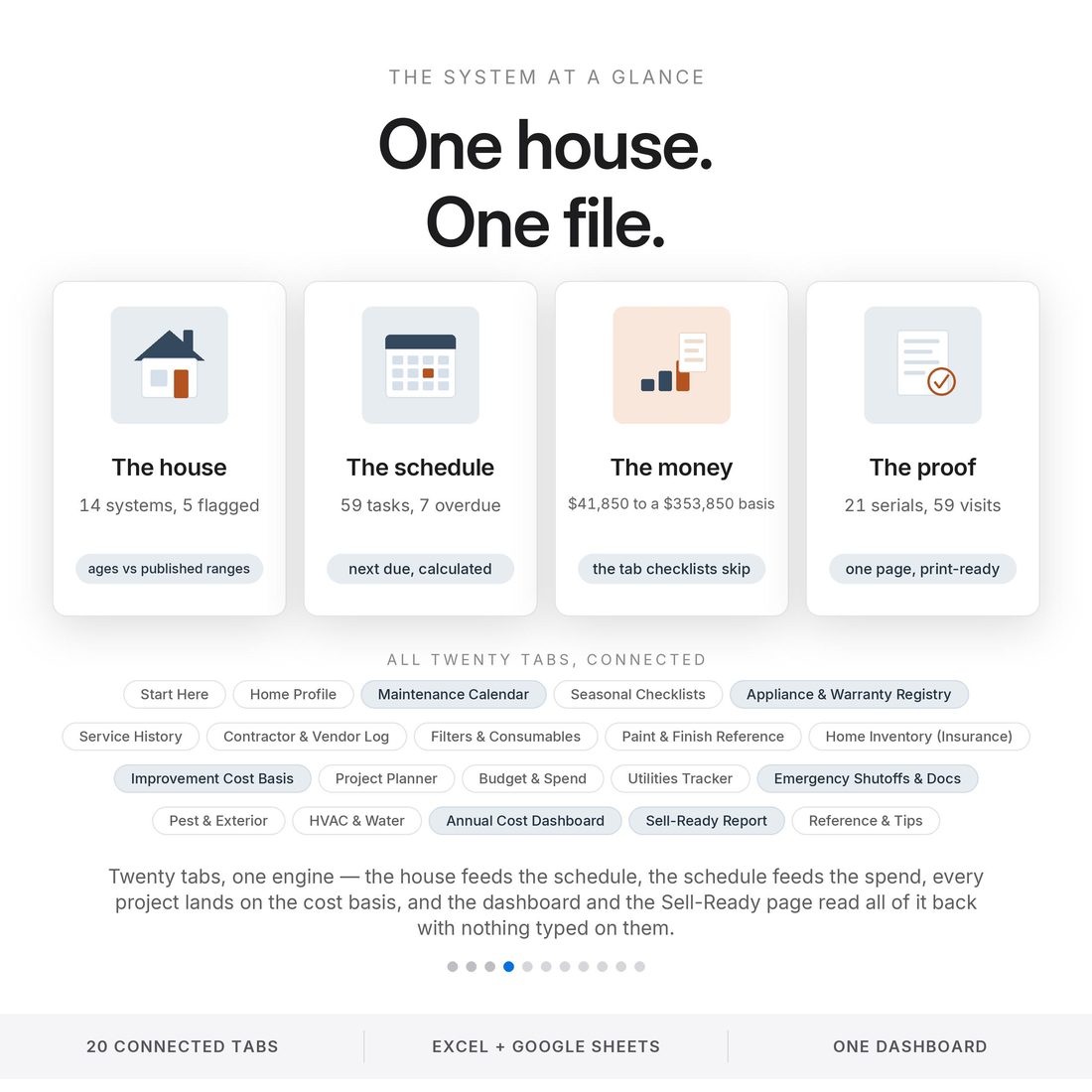
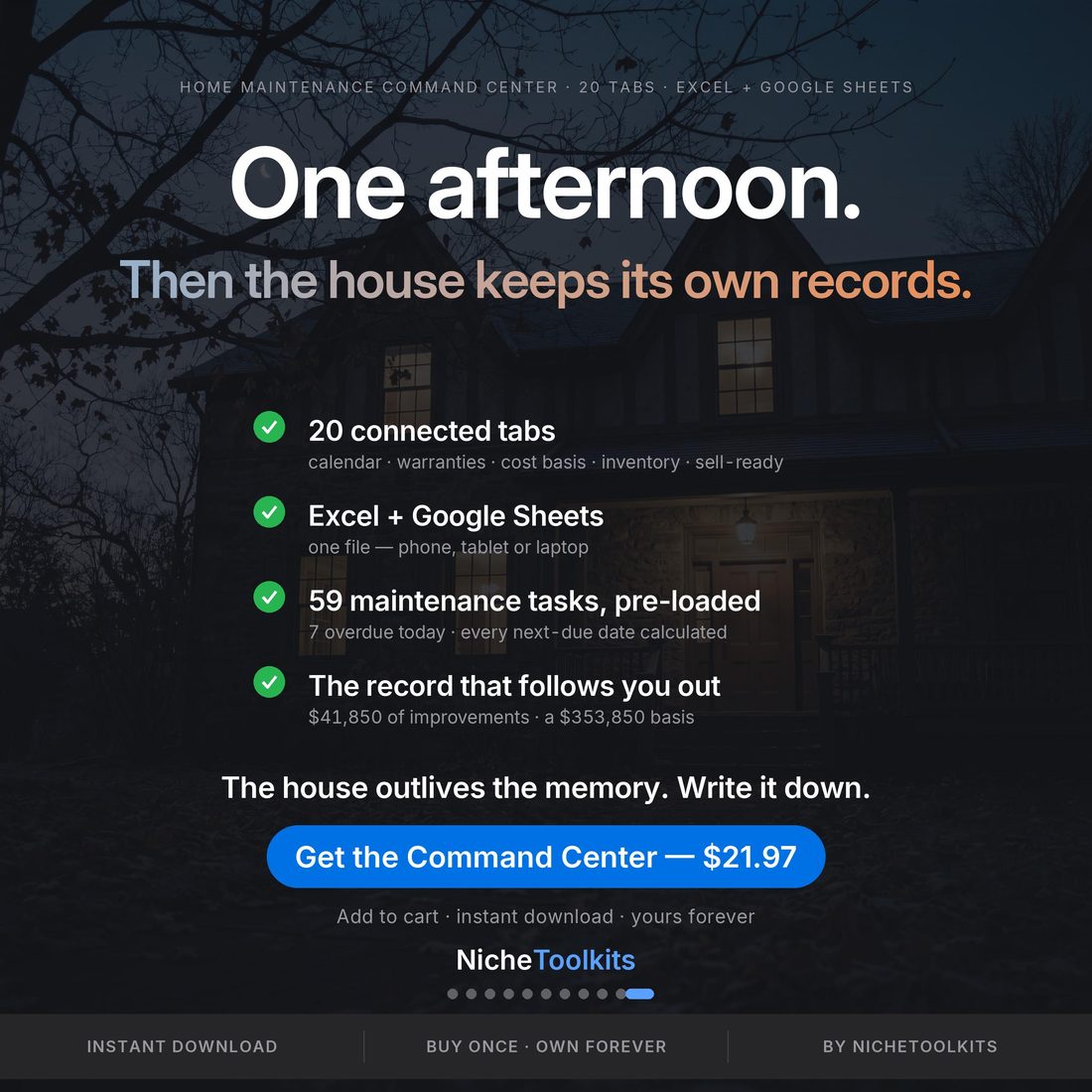
Two of the tabs only pay off years later, which is precisely why they so rarely get built. The Improvement Cost Basis record carries $41,850 of documented projects onto a $312,000 purchase, and the Sell-Ready Report prints the house, the systems and the improvements with nothing typed. 59 maintenance tasks ship pre-loaded, so the first afternoon is filling in dates rather than inventing a list.
What's Included
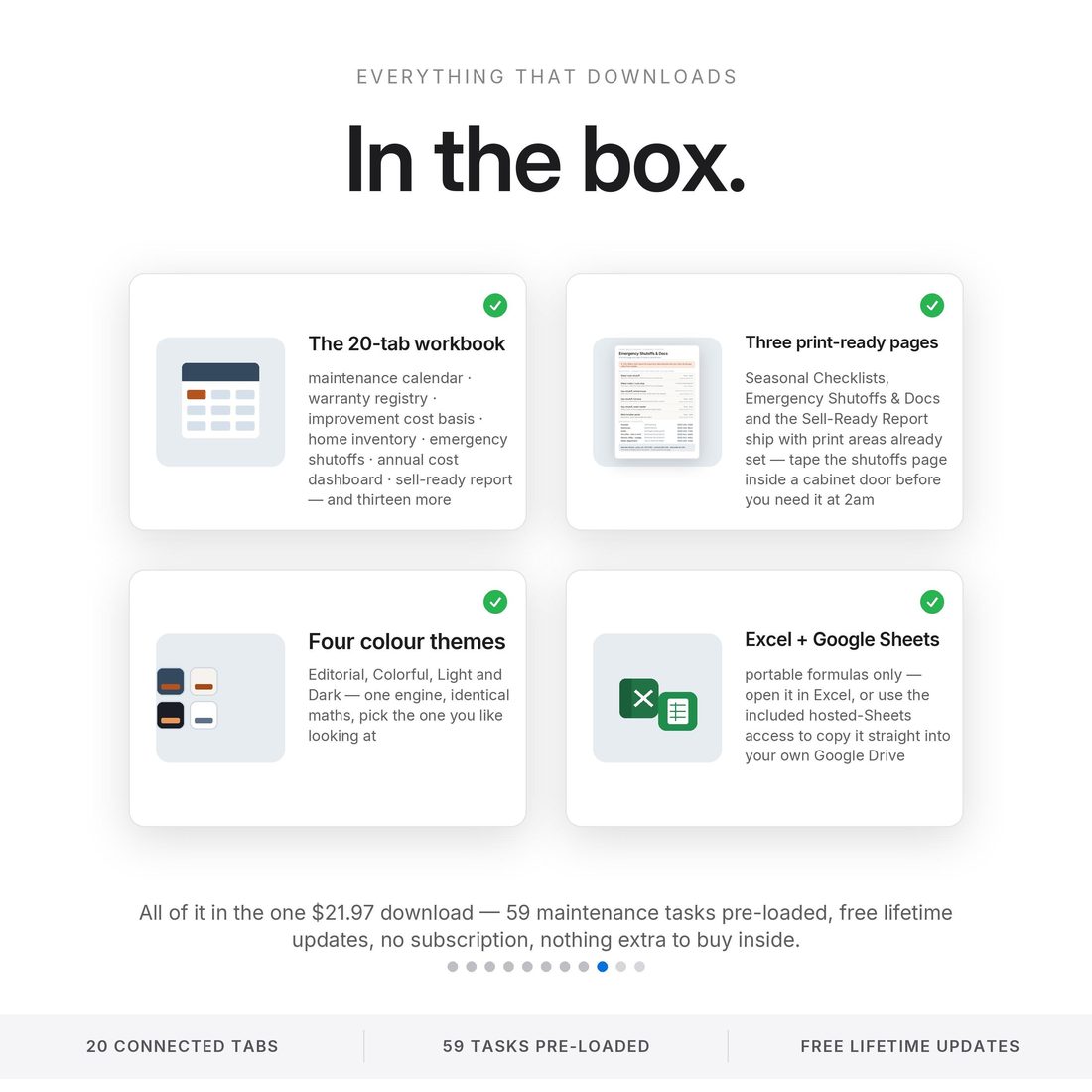
20 connected tabs:
- Four full themes — Editorial, Colorful, Light and Dark (.xlsx), the same complete engine in each
- Quick-Start-Guide.pdf — start to finish in minutes
- ACCESS-YOUR-TEMPLATE.pdf — one click opens your own copy in Google Sheets
- README and LICENSE — delivered as one ZIP, instant download
Key Benefits
Why this one
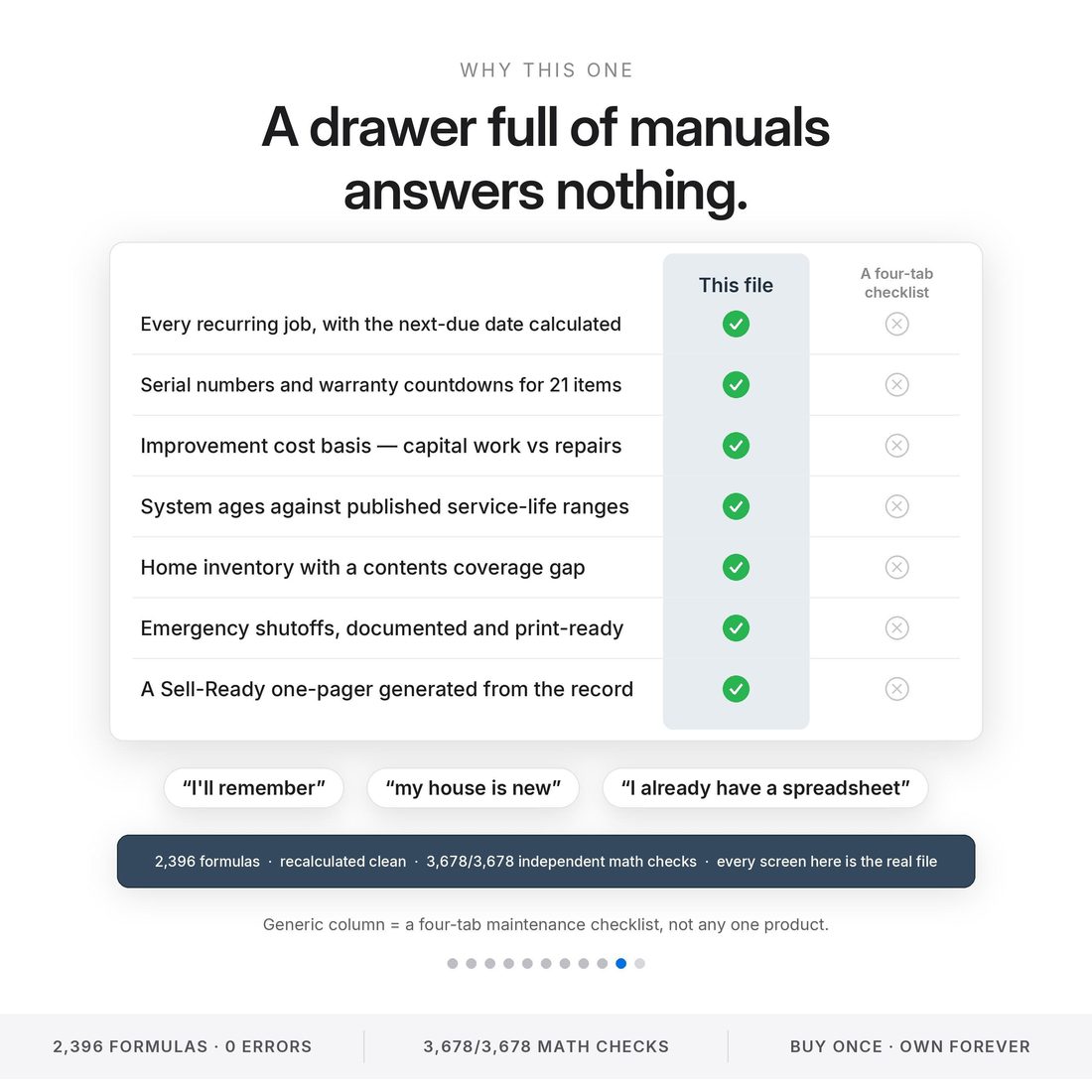
Seven tasks already late in the sample and $559 of work sitting in the overdue column, with flush the water heater tank — 85 days late — at the top of the rank.
21 appliances and systems in the registry, 7 still in warranty and 3 expiring inside 90 days. The next is the dishwasher, in 43 days.
14 systems measured against published service-life ranges with the source named on screen: a 12-year furnace, an 11-year water heater already past its typical life, a 3-year roof, 5 flagged in total.
13 logged projects and $41,850 of documented improvements, 3 of them capital and the largest a $24,500 kitchen remodel, carrying a $312,000 purchase to a $353,850 adjusted cost basis.
$3,180 this year against a $3,980 rule-of-thumb benchmark labeled as such — 0.799% of the home's value — with HVAC the top category at $846, and $13,160 over five years.
20 tabs · 2,396 formulas · 3,678 of 3,678 independent math checks · 79,424 cells scanned, 0 error cells. Every screen in these images is the real file.
Who It's For
Built for
- The homeowner who has worked out that the drawer of manuals is not a system
- New owners in their first fall, learning what a house actually asks for
- Owners of a house old enough to need a plan rather than a hope
- Anyone who has stood in front of an appliance trying to remember the year they bought it
How It Works
Up and running in minutes
The ACCESS-YOUR-TEMPLATE.pdf in your download opens your own copy in Google Sheets with one click
Type today's date into the one cream cell at the top of Home Profile — or type =TODAY() and the whole file goes live and stays live
The house itself and your system install dates, so every system reads its age against a published service life
Put in when you last did each of the 59 tasks. The next-due dates, the days until and the status ladder fill themselves
Service History, warranties, filters and improvements — after that the Annual Cost Dashboard and the Sell-Ready Report need nothing typed
Why It's Different
Not another template
The category standard is a four-tab file and a printable seasonal checklist. This one is built to be kept: every date calculates, every system is measured against a published range with a source named on screen, every dollar lands in a category. Two of the tabs — the cost basis and the sell-ready report — only pay off years later, which is precisely why they so rarely get built. And it is not an app: no notification, no login, no subscription. It is a spreadsheet you open, and it will still open in ten years.
Delivery & Compatibility
Instant, and works with what you use
As soon as your order is complete you get instant access to download your files. Prefer Google Sheets for real-time updates and dropdowns? It's fully optimized. More comfortable in Excel? It works just as well.
Built and tested in the latest Excel (Office 365). On Mac we recommend the Google Sheets version — the template is not compatible with Apple Numbers. Available in English. The template ships with sample data so every screen works on open; clear it whenever you're ready. The images and video show that sample data to demonstrate how it looks in use.
FAQ
Questions, answered
Does it work in Google Sheets?
Yes — one click. The link in your download opens Google's own Make a copy page and the copy lands in your Drive with every formula live. The .xlsx works in Excel too. No add-ons, no macros, no subscription.
How does it know when something is due?
You put in when you last did the job and the interval. The file works out when it is next due, how many days that is, and whether it reads overdue, due soon, scheduled or done. Nothing is a static tick box. If your first pass shows a page of red, that is normal, and it is the file working.
Will it remind me?
No. It does not remind you and it is not an app — no notification, no login, no subscription. It is a spreadsheet you open, and it will still open in ten years.
Is the cost-basis tab tax advice?
No. It is record-keeping: capital improvements separated from repairs, an adjusted cost basis, and an estimate that shows the difference the records make. Whether a project counts as a capital improvement is a specific question under IRS rules — see IRS Publication 523, Selling Your Home, and speak to a tax professional. Keep your receipts.
Where do the service lives come from?
Published industry ranges with the source named on screen, drawn from the InterNACHI life-expectancy chart and cross-checked against the NAHB study, with a 34-row table on Reference & Tips. They are estimates, not guarantees: a well-maintained system can outlive the range, and a neglected one will not reach it.
Can I get a refund on a digital download?
Because delivery is instant, all sales are final — but message us with any issue and we'll make it right.
This is an organizational tool, not a home inspection, and not legal, insurance, tax or financial advice. All records shown are demonstration data — the Marchetti house is a fictional persona, not a customer — and every figure is computed by the file itself. The Improvement Cost Basis tab is record-keeping; see IRS Publication 523, Selling Your Home, as further reading and speak to a tax professional about your own situation. The Home Inventory is a personal record, not an insurance valuation or an appraisal. Typical service lives are published industry estimates attributed to the InterNACHI life-expectancy chart and the NAHB study, not guarantees. For personal use only. © 2026 NicheToolkitHub — no resale or redistribution.