 ▶
▶
 ▶
▶The Small Business Planner
Which of your offers is losing you money?
Not which offer you like selling. Which one, after you count what it costs to deliver and the hours it actually takes, pays you less per hour than everything else. Most owners cannot answer that, and the answer is usually sitting in the offer they are proudest of. This planner is built to make you answer it, and then to make the rest of the year point at that answer.
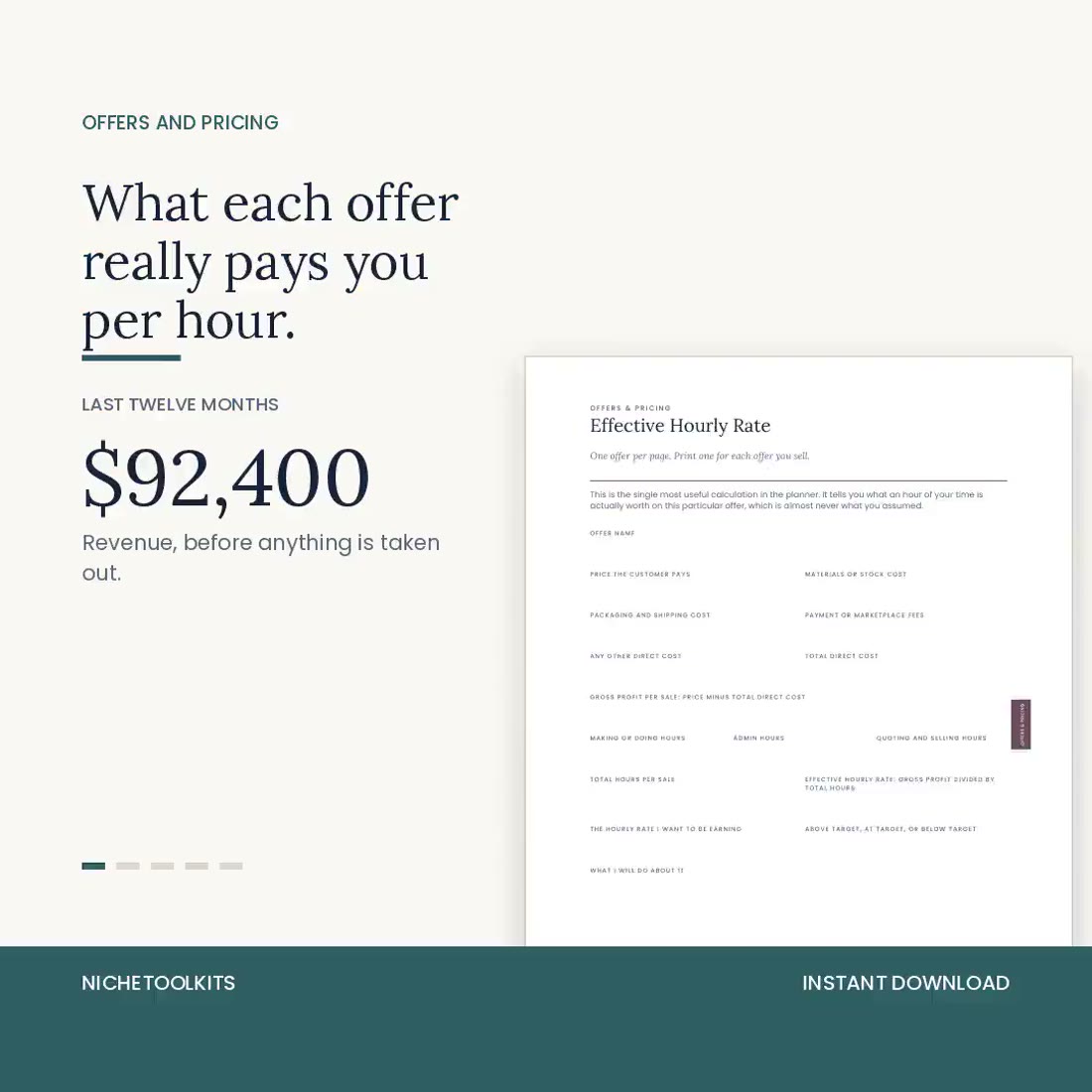
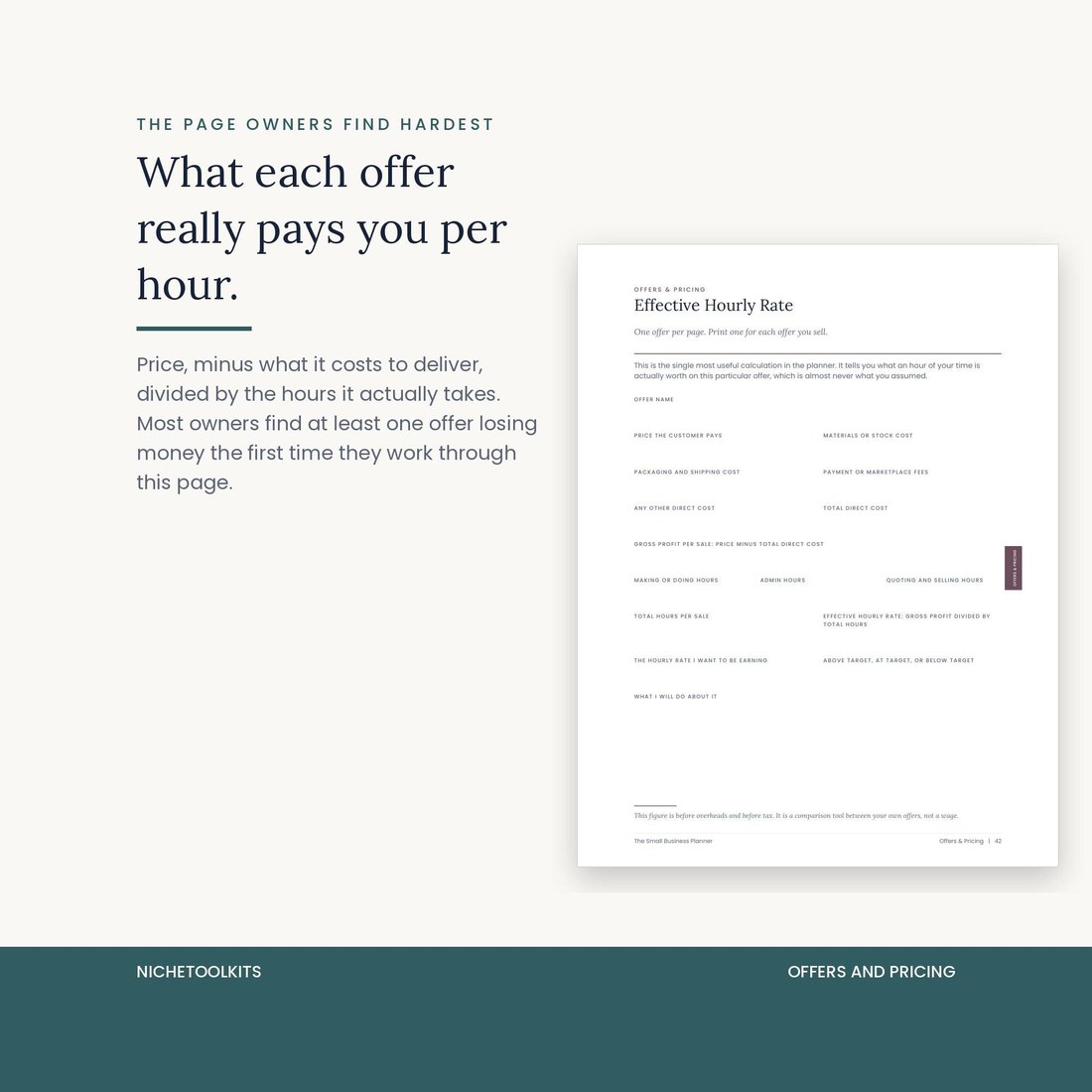
- The Effective Hourly Rate page: price, minus what it costs you to deliver, divided by the hours it actually takes. Most owners find at least one offer quietly losing money the first time they work through it
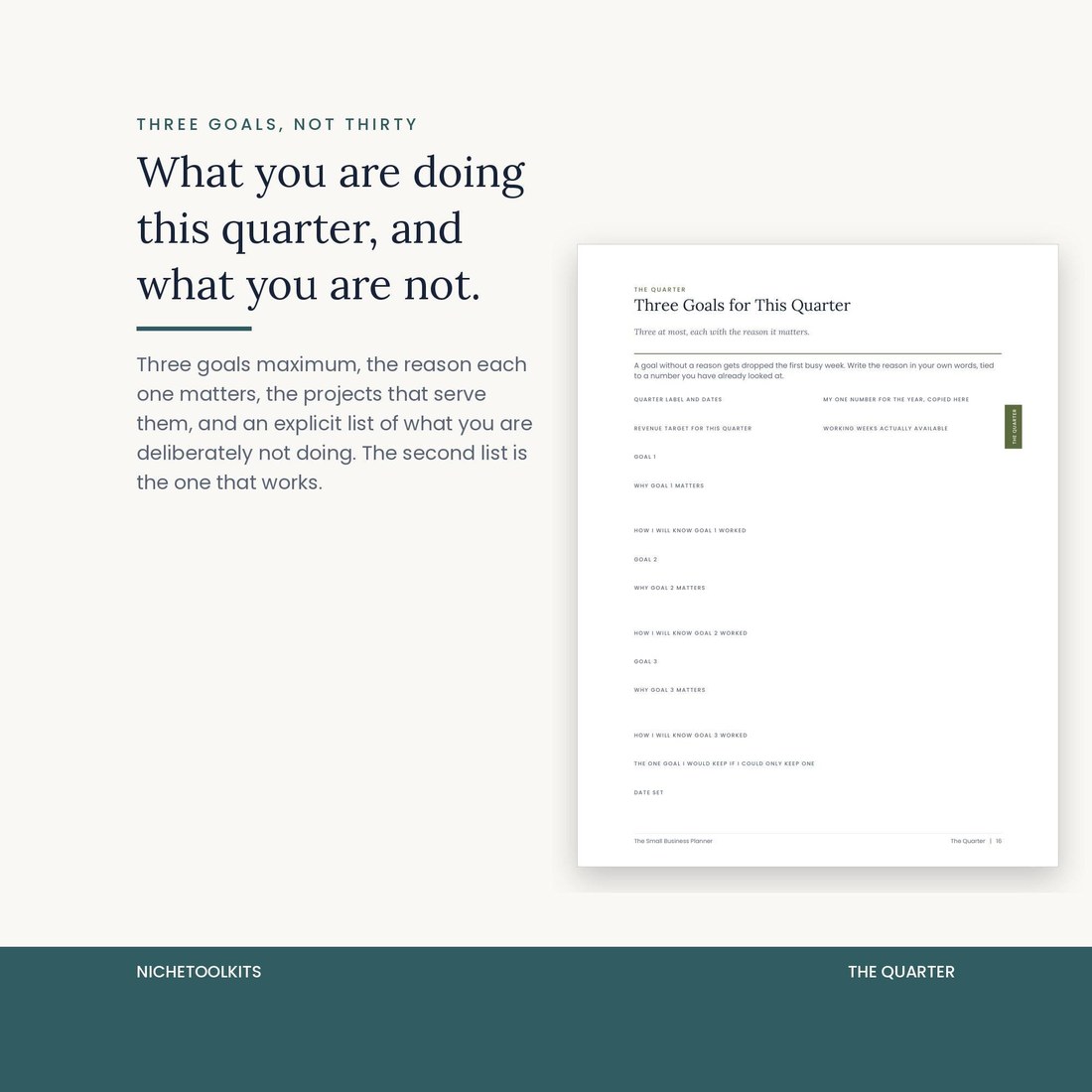
- Quarterly rhythm, because a year is too far away to steer and a week is too short to matter. Three goals maximum, the projects that serve them, and an explicit page listing what you are deliberately not doing
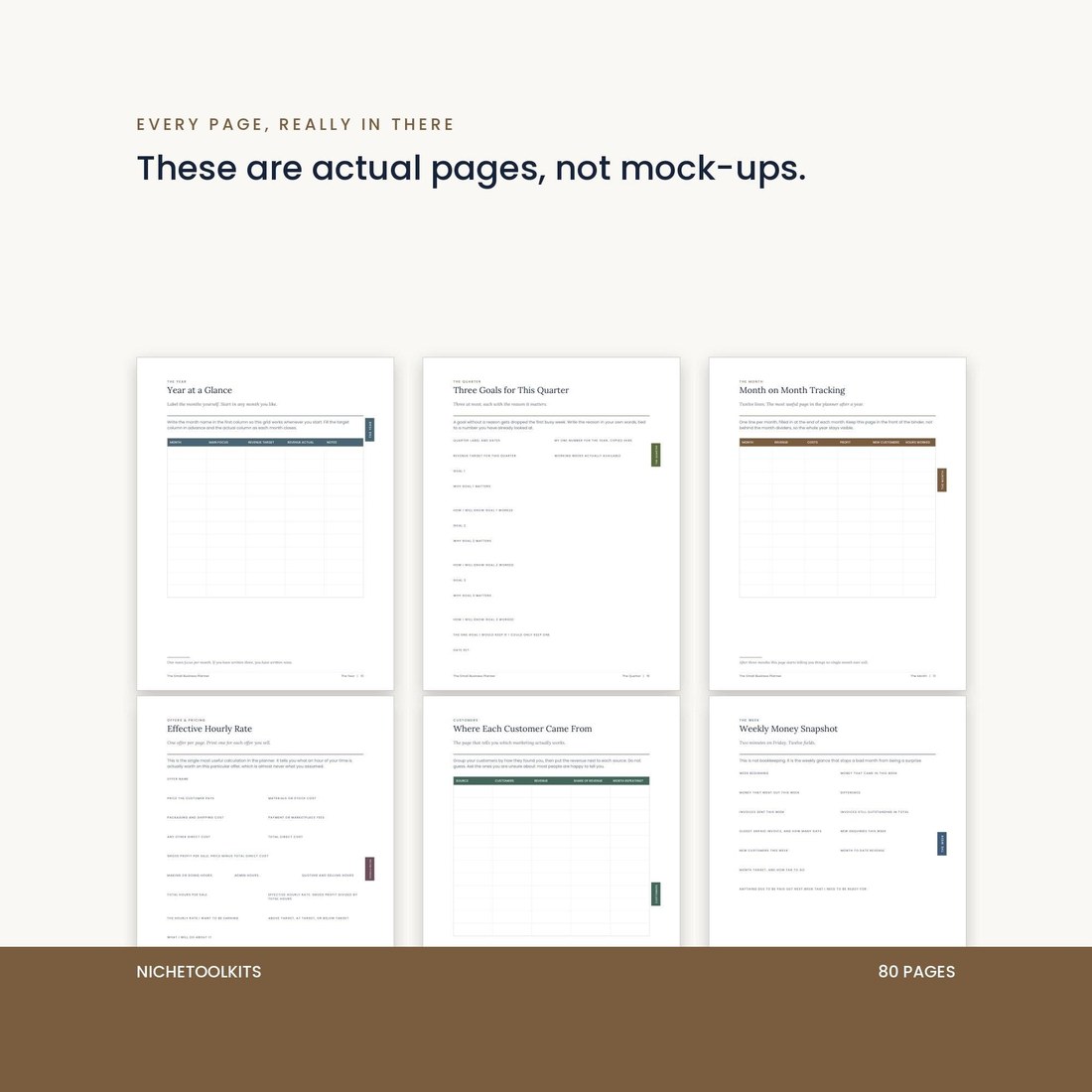
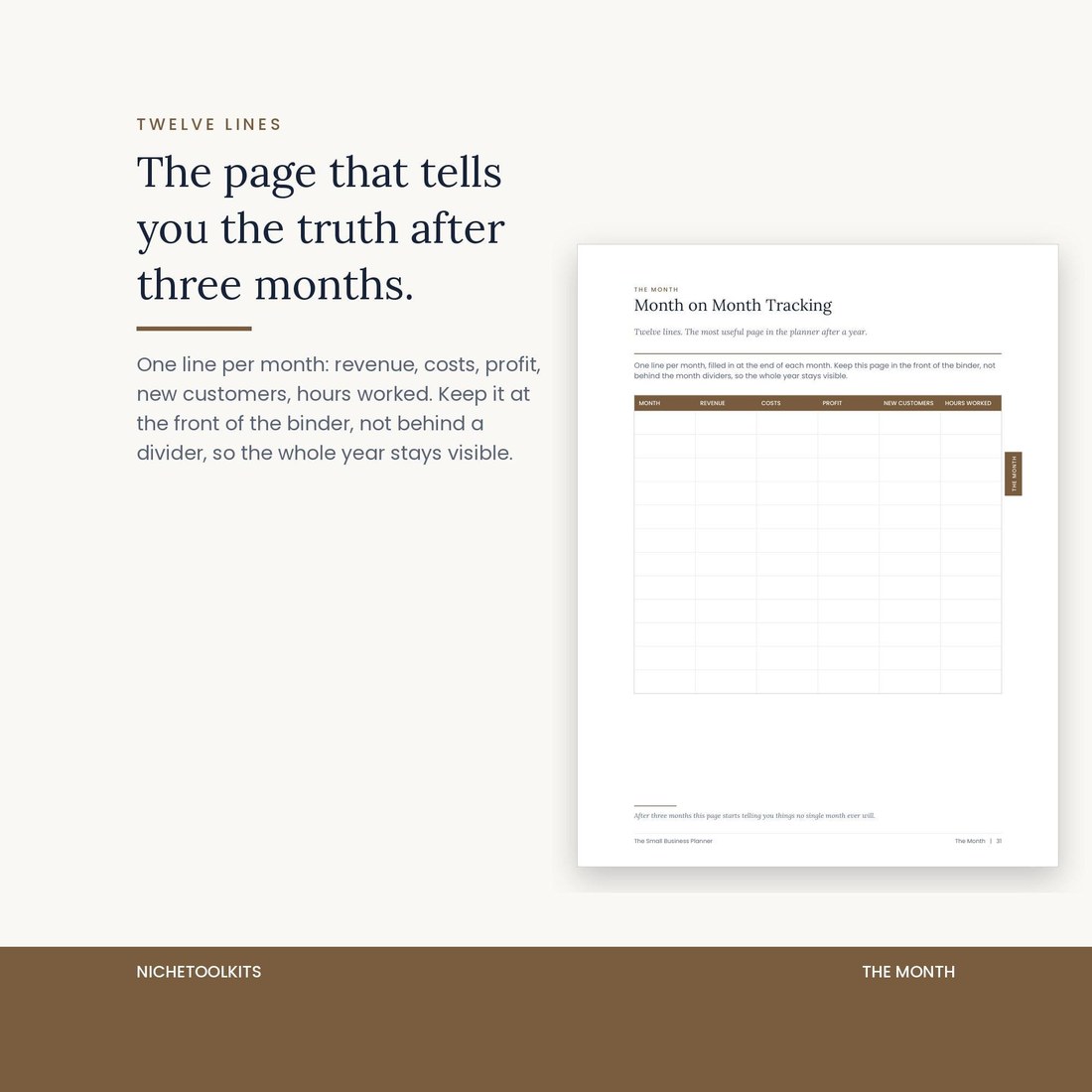
- Month on Month Tracking is twelve lines and nothing else: revenue, costs, profit, new customers, hours worked. After three months it starts telling you things no single month ever will
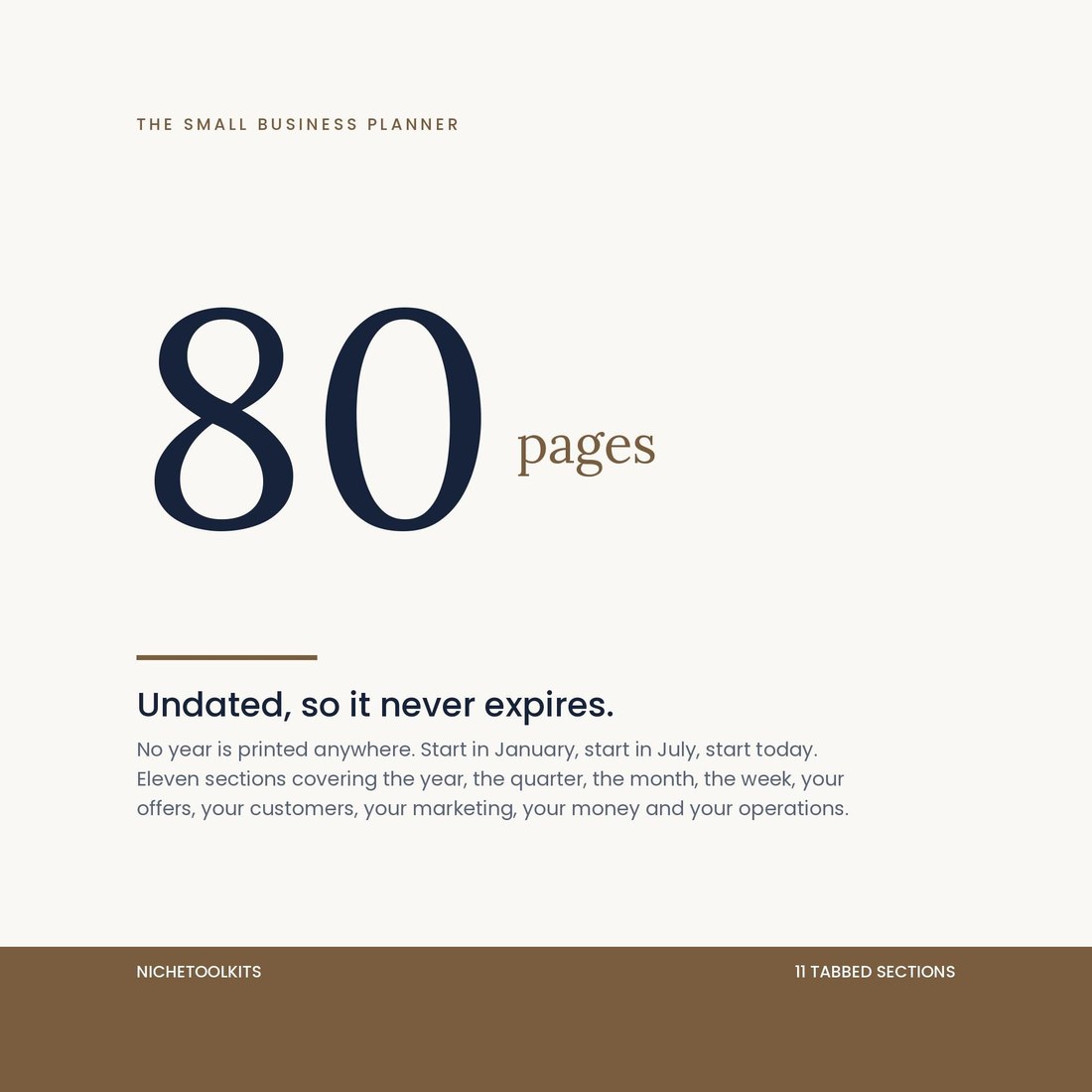
- Completely undated. No year printed anywhere, so start in January, start in July, or start today, and the same file is still current next year
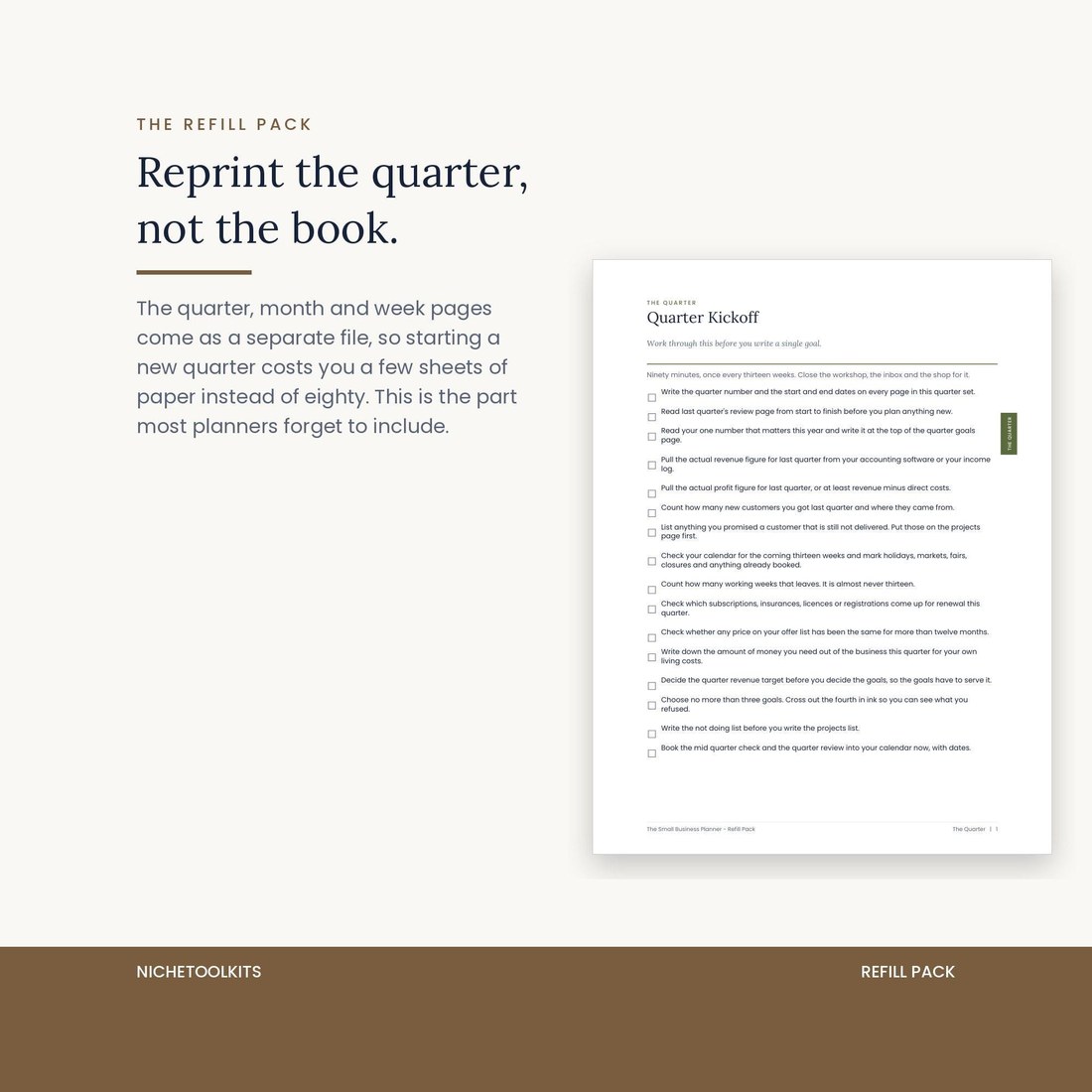
- A refill pack of the quarter, month and week pages ships as a separate file, so beginning a new quarter costs you a few sheets of paper instead of reprinting eighty
Overview
Which of your offers is losing you money?
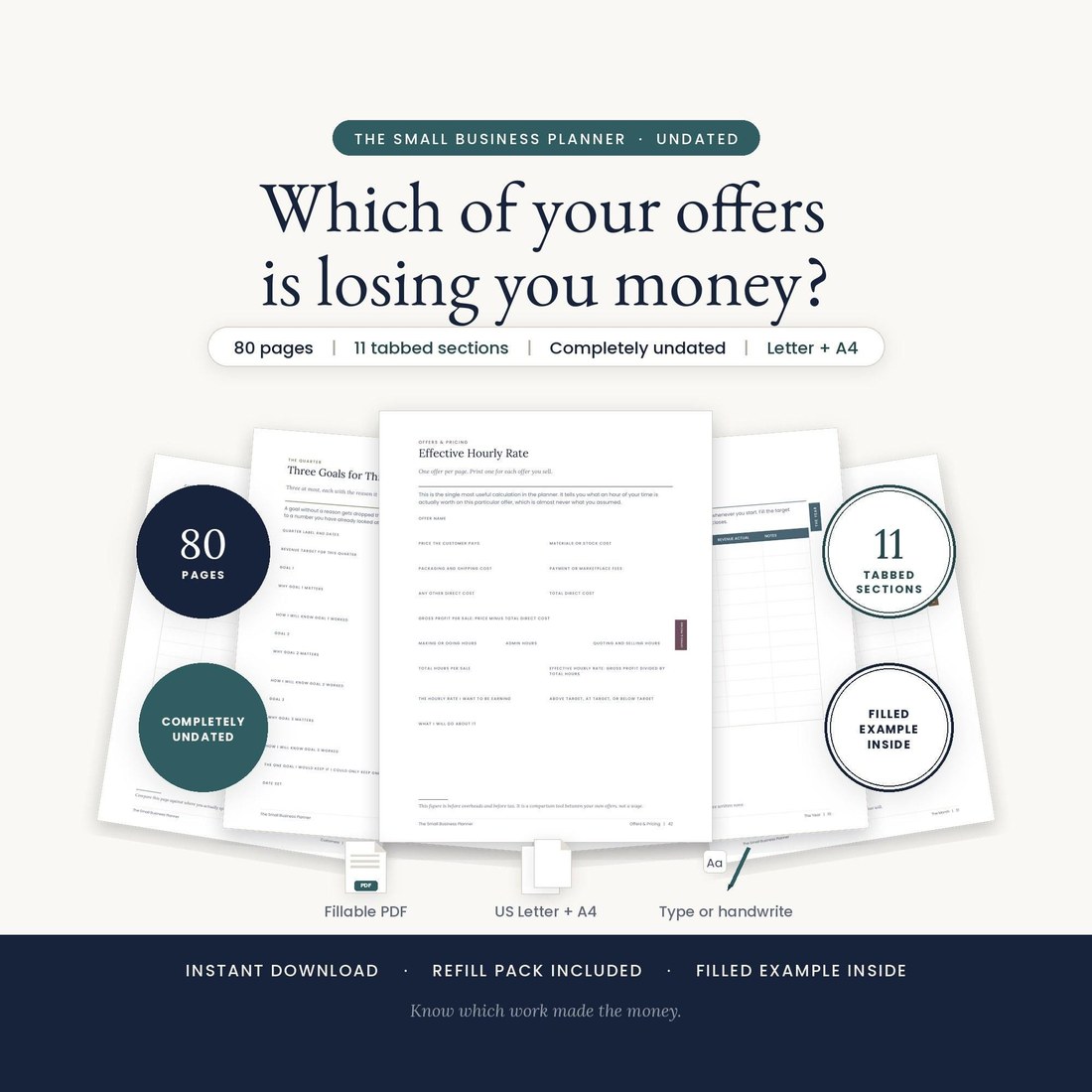
Not which offer you like selling. Which one, after you count what it costs to deliver and the hours it actually takes, pays you less per hour than everything else. Most owners cannot answer that, and the answer is usually sitting in the offer they are proudest of. This planner is built to make you answer it, and then to make the rest of the year point at that answer.
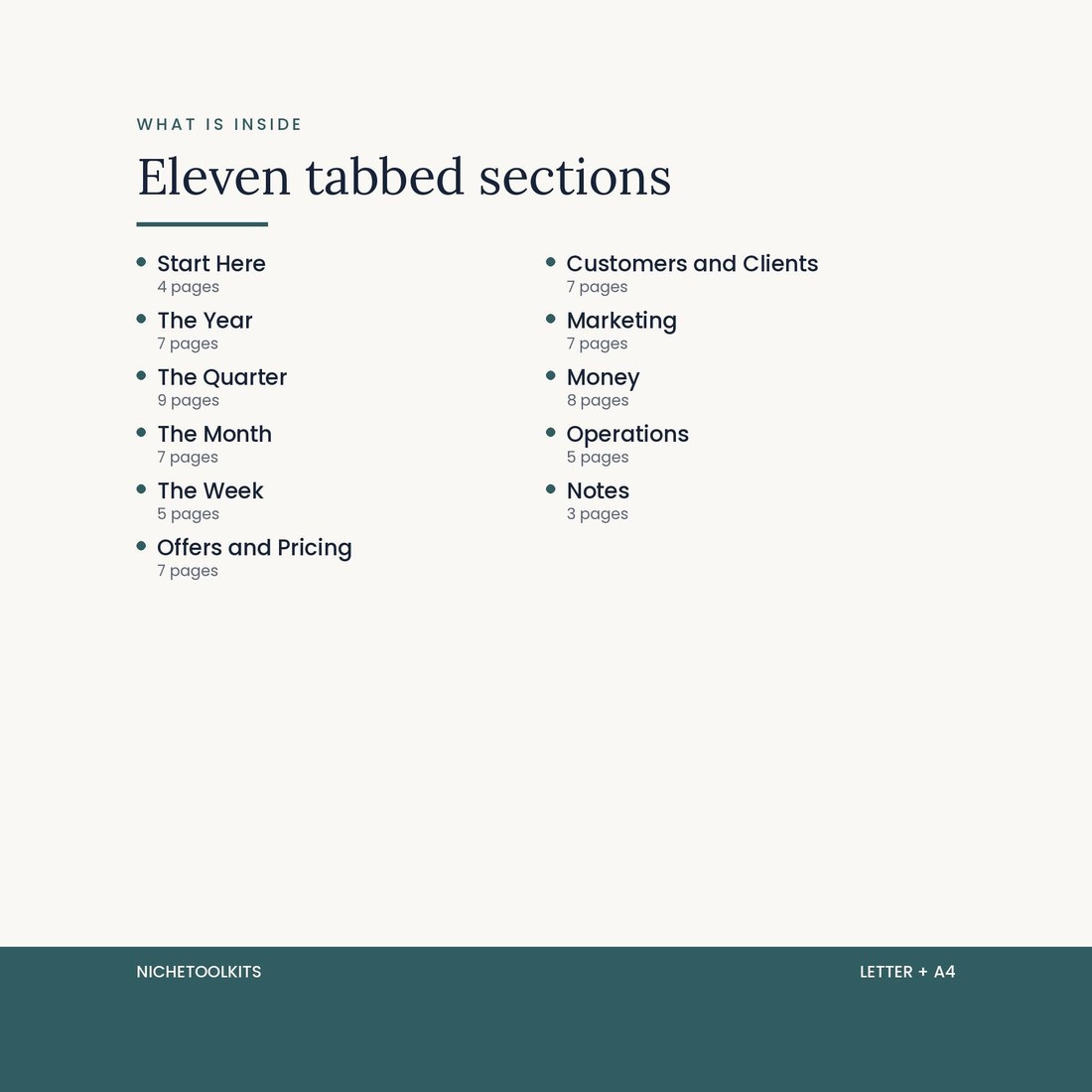
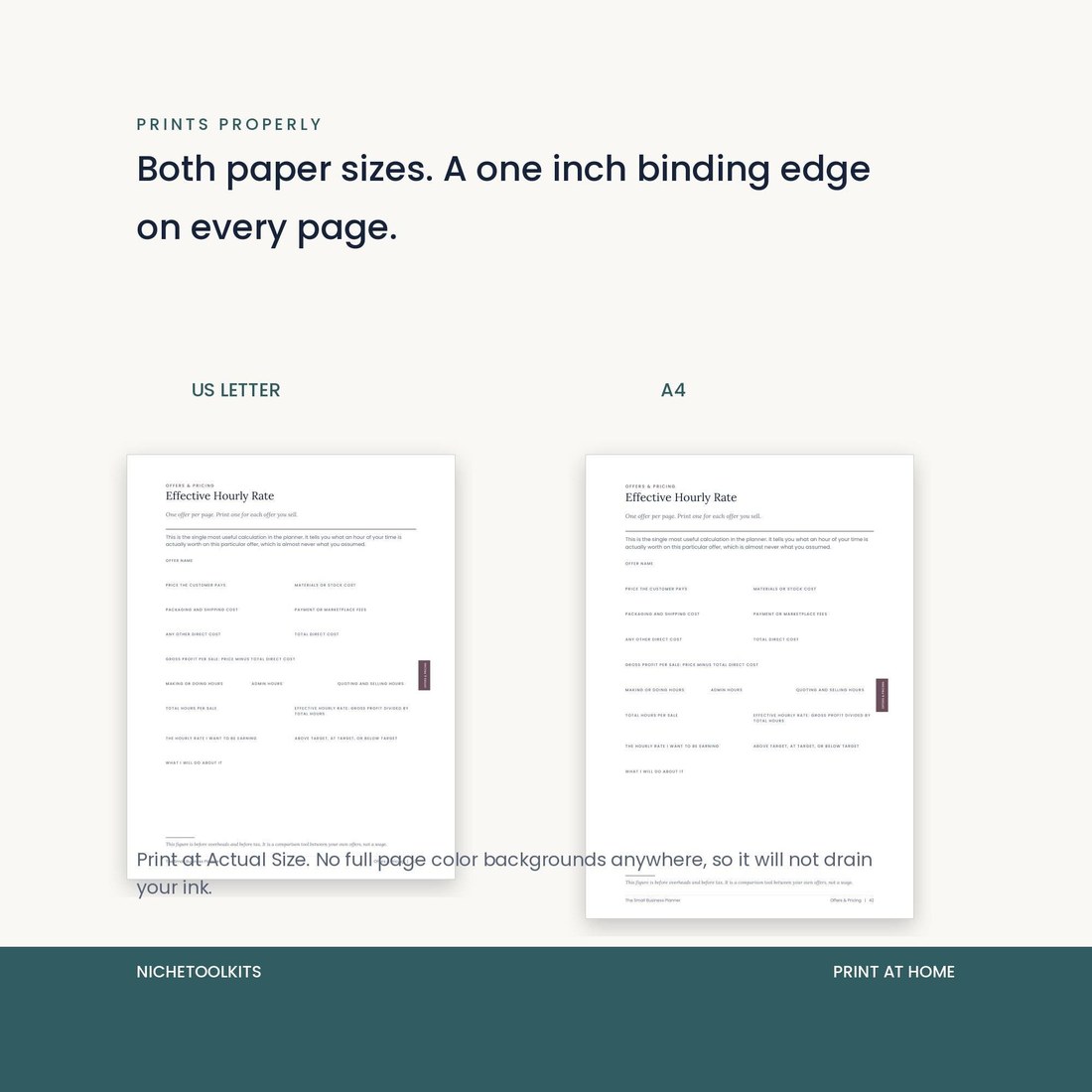
The Small Business Planner is 80 pages per edition across eleven tabbed sections: Start Here, The Year, The Quarter, The Month, The Week, Offers and Pricing, Customers and Clients, Marketing, Money, Operations, and Notes. It is completely undated. No year is printed anywhere in the file, so it never goes out of date and you are not waiting for January to begin. Every box is a real form field, 3,073 of them, so you can type on a computer in the free Adobe Reader, save, and update anytime, or print it blank and fill it in by pen. Both paper sizes ship in the download, every page carries a one inch binding edge, and there are no full page color backgrounds anywhere, so printing the whole planner at home will not drain your ink. A filled example file and a refill pack of the pages you reuse each quarter come with it.
What's Included
Five files, 80 pages per planner edition:
- The Small Business Planner, 80 pages per edition, in US Letter and A4, as a fillable PDF
- Eleven tabbed sections running from the year down to the week, then offers, customers, marketing, money and operations
- A START HERE guide covering how to print, how to assemble, how to choose your planning rhythm, and which three pages to fill in if you only ever fill in three
- 4-FILLED-EXAMPLE.pdf: twelve pages of the planner completed for a real-shaped business, so you see what a finished page looks like
- 5-REFILL-PACK.pdf: the quarter, month and week pages as a separate file, so a new quarter costs a few sheets rather than a reprint
- Five PDF files, instant download: type in the free Adobe Reader or print and handwrite
Key Benefits
Why this one
Effective Hourly Rate is the single most uncomfortable calculation in the planner, and the reason it exists. Cost to deliver and time to deliver come first, so the rate is built from your numbers rather than guessed at, and a Should You Raise This Price page walks the decision that follows.
A quarter gets three goals maximum, each with the reason it matters, how you will know it worked, and the one you would keep if you could only keep one. Then, on its own page, an explicit list of what you are not doing. That second list is the one that actually works.
Month on Month Tracking is one line per month: revenue, costs, profit, new customers, hours worked. Keep it at the front of the binder rather than behind a divider, and after three months the pattern is visible in a way no single month ever shows you.
No year is printed anywhere in the file. Start in January, start in July, start on a Tuesday in October. Nothing about this planner becomes stale on the first of the year, and the refill pack means the quarter pages restart without reprinting the book.
Income log, expense log by category, a simple profit page, a tax set aside tracker, invoices and payment chasing, a subscription and tool audit, a break even worksheet, and a page called What You Actually Paid Yourself. That last one is the page most owners avoid, which is why it is printed.
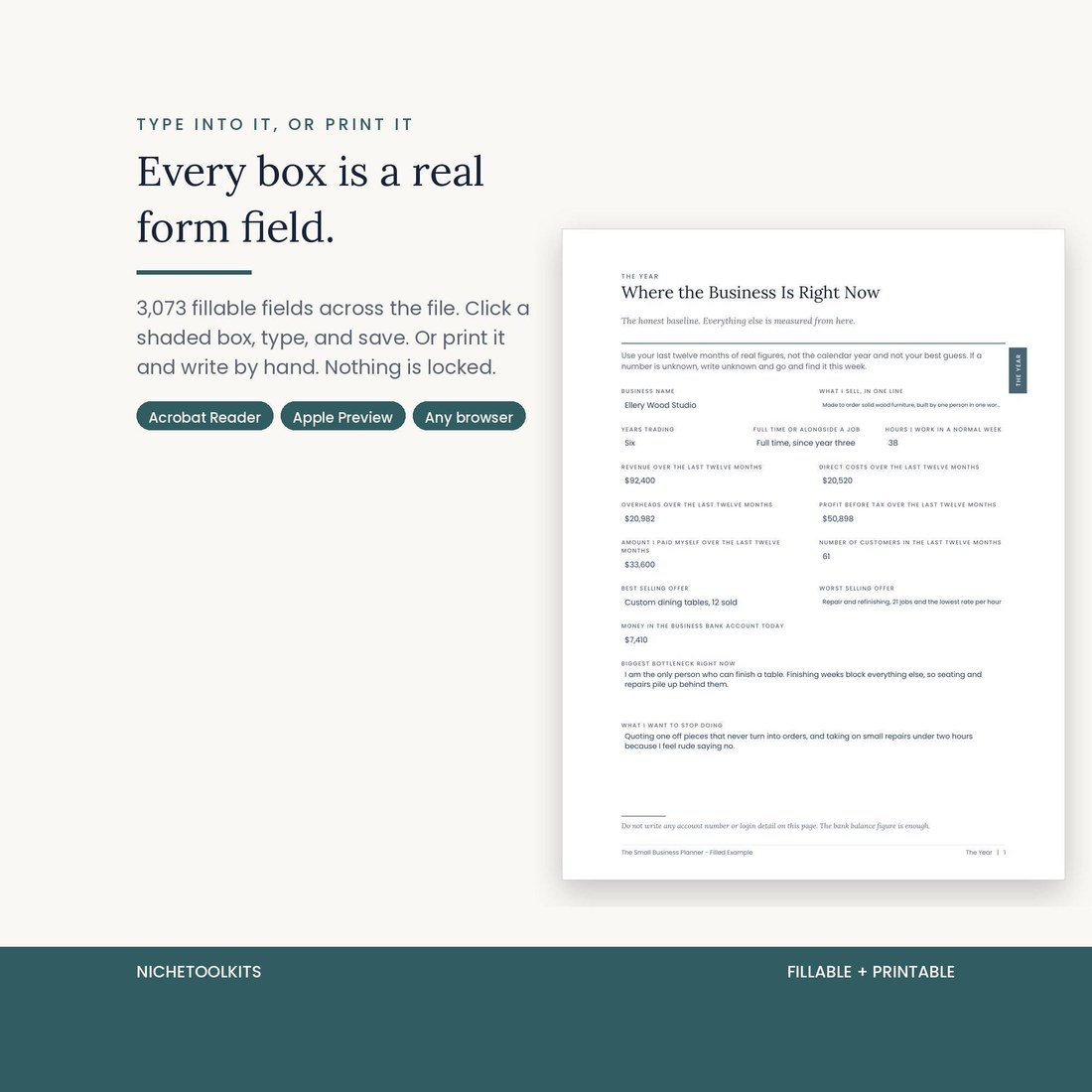
3,073 real form fields. Click a shaded box, type, and save in Acrobat Reader, Apple Preview, or a browser. Nothing is locked, there is no software to sign up for and no account to make. Or print it and write by hand.
Who It's For
Built for
- One person running a real business: a trade, a service, a shop, a studio, a side hustle that has started paying for itself
- Owners who can tell you last month's revenue but not last month's profit, and who have never worked out what an hour of delivery actually earns
- Anyone who has abandoned a dated planner in February and would rather have one that does not care what month it is
- Solo operators who want paper on the desk rather than another subscription, another login, and another dashboard nobody opens
How It Works
Up and running in minutes
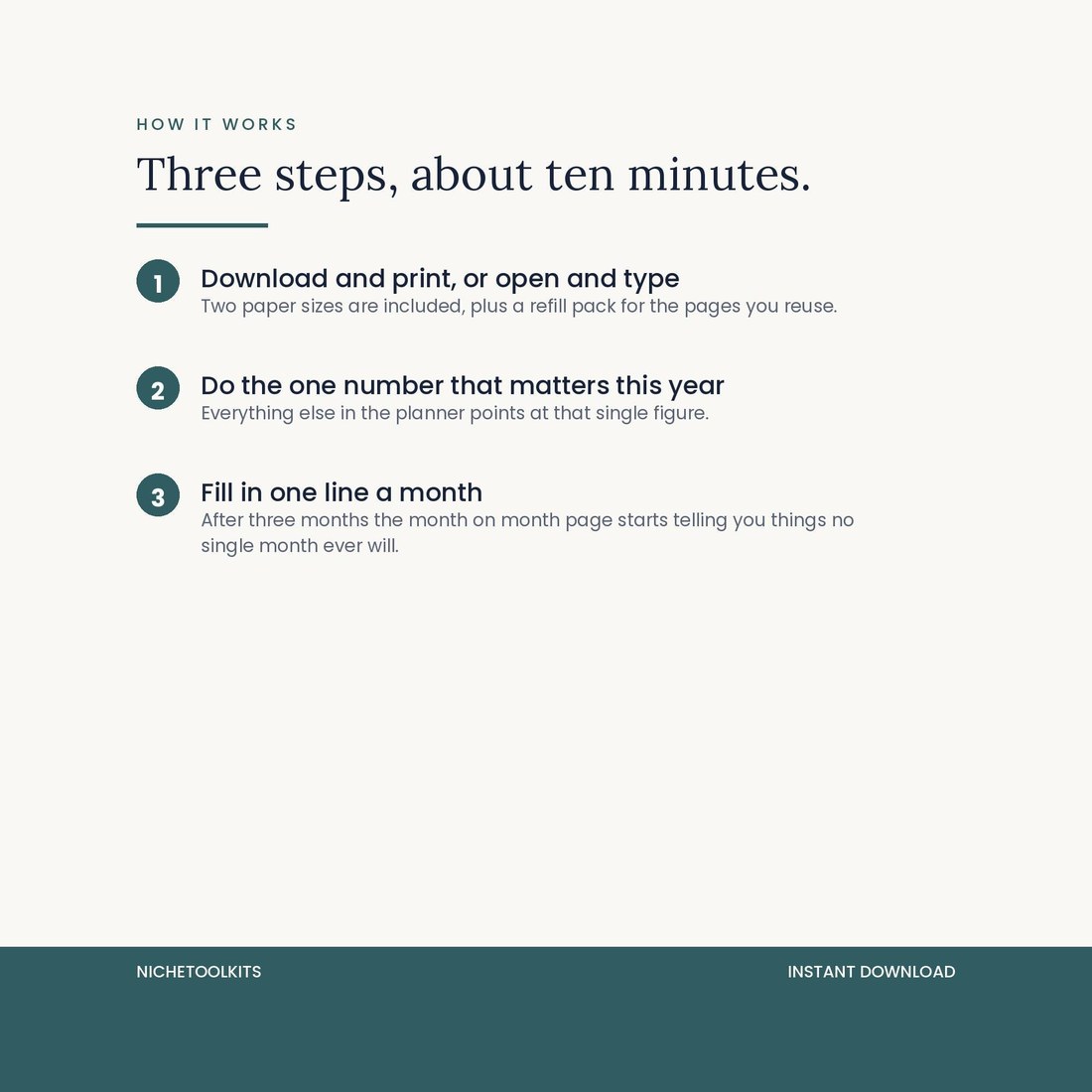
The planner in US Letter and A4, the START HERE guide, the filled example, and the refill pack. Instant download, nothing ships.
Page four asks how often you will actually sit down with this. Weekly, monthly or quarterly are all valid; pretending it will be daily is how planners get abandoned.
The Year section asks for a single figure, and everything downstream points at it. If you only ever fill in three pages, the planner tells you which three on page five.
Cost to deliver, time to deliver, then Effective Hourly Rate. Expect a surprise. The Should You Raise This Price and What to Retire pages are the two decisions that follow.
Month on Month Tracking takes about two minutes. Do that and nothing else, and by the third month the planner has already paid for itself in things you can see.
Why It's Different
Not another template
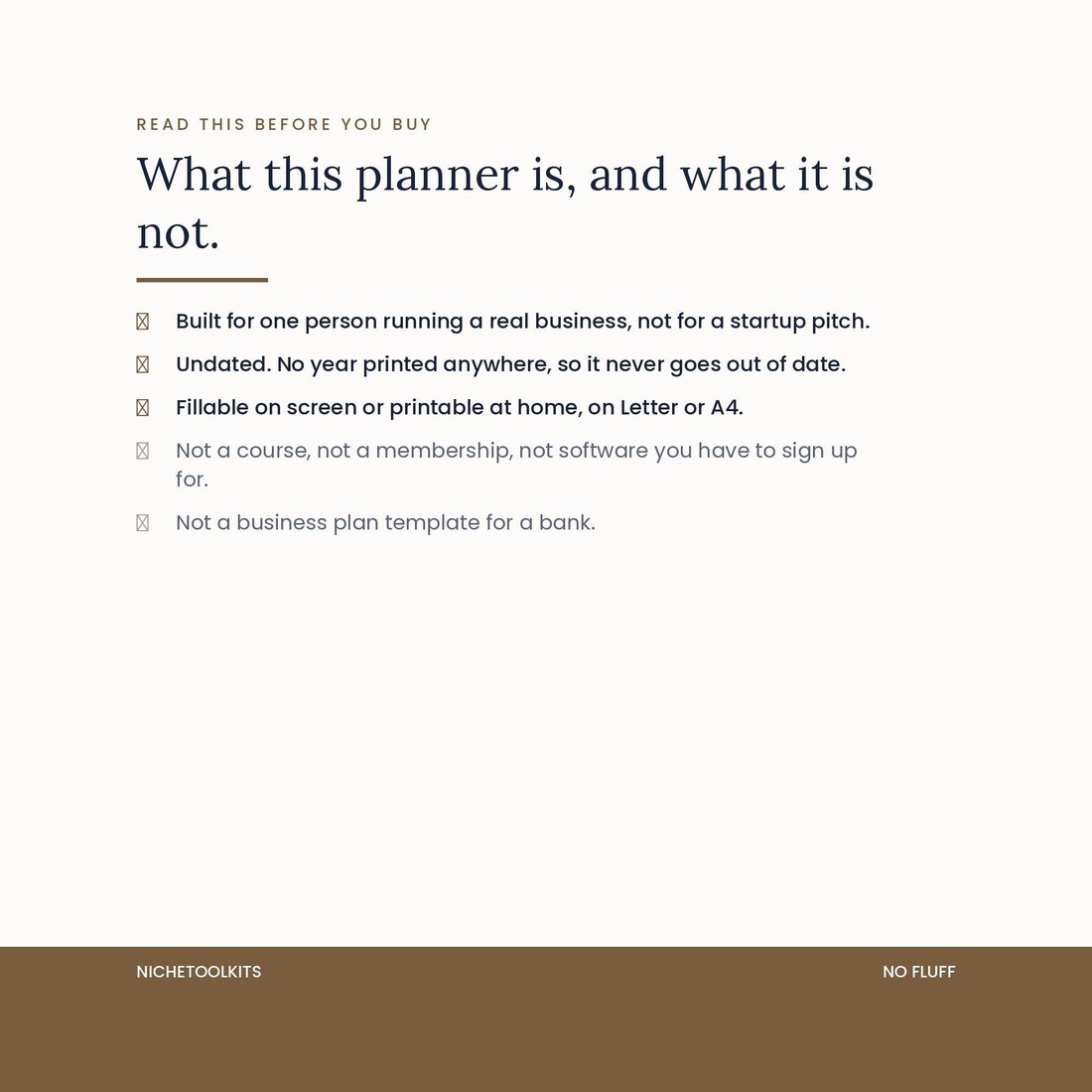
The business planner shelf is mostly two things: dated books that expire, and startup workbooks written for someone pitching a bank. This is neither. It is undated on purpose, so it never goes stale and never makes you wait for January, and it is written for a person who already has customers rather than a person with a deck. The spine of it is one uncomfortable page, Effective Hourly Rate, and the sections either feed that page or act on what it tells you: cost and time to deliver in front of it, should you raise this price and what to retire behind it, and a twelve line month on month table keeping score. It is also honest about its limits and says so on a page inside: not a course, not a membership, not software you sign up for, and not a business plan template for a bank. There is even a page in Operations stating plainly that your passwords are not in this planner, on purpose.
Delivery & Compatibility
Instant, and it prints on anything
As soon as your order is complete you get instant access to download your files, so you can open the filled example tonight and work out your real hourly rate before bed.
Fillable PDFs in US Letter and A4. Type your answers in the free Adobe Acrobat Reader on any computer, save, and update anytime, or print the planner blank and fill it in by pen. Black and white printing is fine and no page carries a full page color background. This is a digital download; nothing is shipped. Nothing in this planner is financial, tax or legal advice.
FAQ
Questions, answered
Is it dated? Do I have to wait for January?
No to both. No year, no month and no week number is printed anywhere in the file. Start today. The quarter, month and week pages also ship again in a separate refill pack, so beginning a new quarter costs you a few sheets of paper rather than reprinting the whole book.
What is the Effective Hourly Rate page, exactly?
It is the price a customer pays, minus what it costs you to deliver that offer, divided by the hours the offer actually takes. Cost to Deliver and Time to Deliver are the two pages in front of it, so the number is built rather than guessed. Most owners find at least one offer earning far less per hour than they assumed.
Can I type into it instead of printing?
Yes. Every box is a real form field, 3,073 of them across the file, and both editions are fully fillable in the free Adobe Acrobat Reader on Windows or Mac, in Apple Preview, or in a browser. Type, save, and update anytime. Or print it blank and fill it in by pen.
Is this a business plan template for a loan or an investor?
No, and it says so plainly on a page inside. This is a working planner for someone already running the business: pricing, quarters, customers, marketing, money and operations. It is not a pitch document and it is not formatted for a lender.
I have abandoned planners before. Why would this one stick?
Because it is built to survive a bad week. Page five is titled If You Only Fill In Three Pages, Fill In These, and Month on Month Tracking asks for one line a month. The full eleven sections are there when you want them, but the planner names its own minimum so a missed fortnight does not end the habit.
Will printing it use a lot of ink?
No, and that was a design constraint. There are no full page color backgrounds anywhere in the file, so black and white printing is entirely fine. Every page also carries a one inch binding edge with no ink inside it, so a hole punch never cuts through anything you have written.
Does it ask me to write down passwords or account numbers?
No. There is a page in the Operations section titled Passwords Are Not In This Planner, On Purpose, which explains why and points you at where that information belongs instead. The planner records how the business works, not the keys to it.
Is this a physical product?
No. It is an instant digital download of five PDF files. Nothing is shipped and no box arrives. You print what you want printed, or keep it entirely on screen and back it up like any other file.
Nothing in this planner is financial, tax or legal advice. For personal and single-business use only. © 2026 NicheToolkitHub — no resale or redistribution.