 ▶
▶

 ▶
▶2027 Reseller Inventory & Profit Tracker
Know what it made, after every fee.
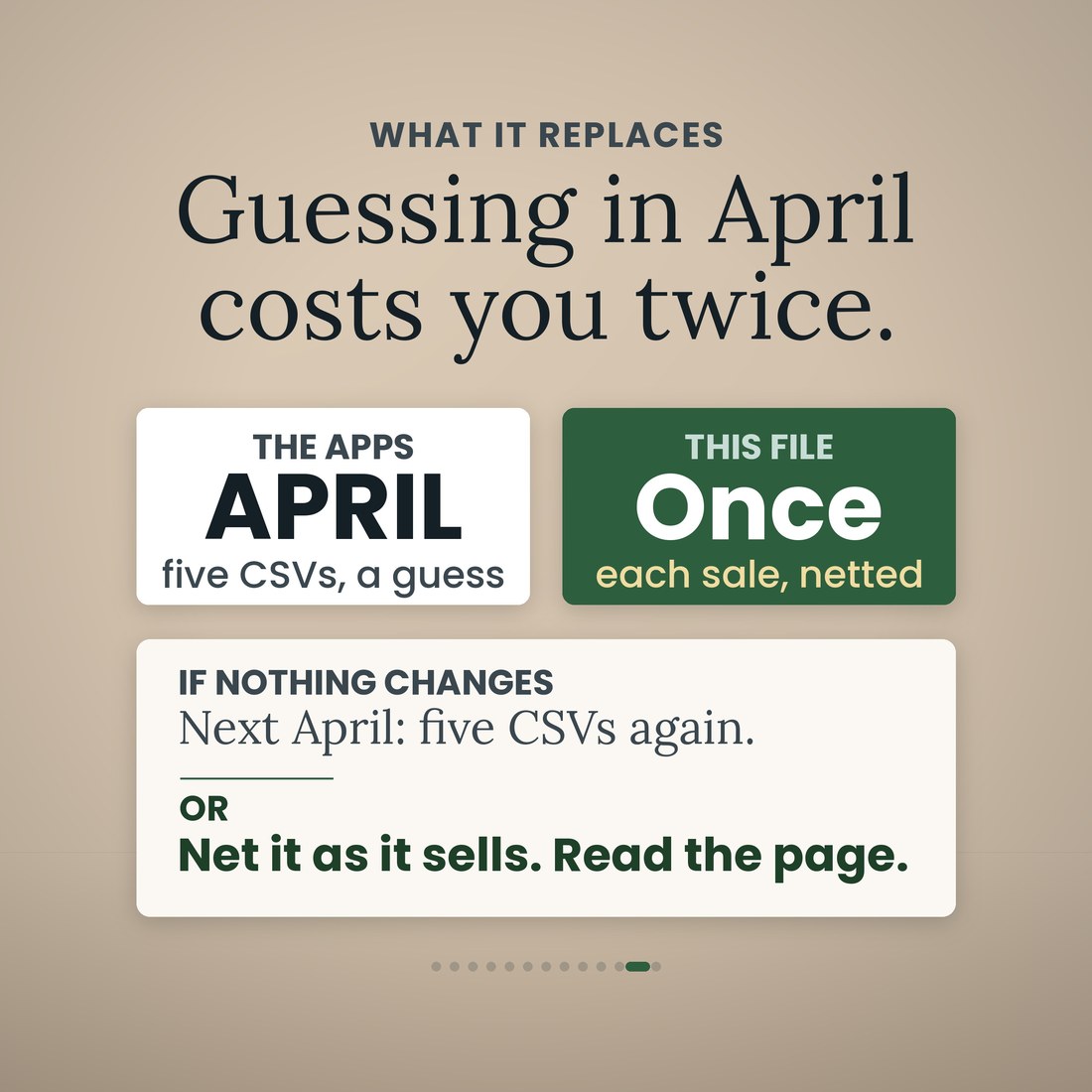
A thrift haul goes out on five apps, the payouts land in three accounts, and at the end of the month you know what you sold and not what you made. Then April arrives and the shoebox has the mailers, the storage unit, the labels, the fees you never saw, and a hundred items that were never really inventory because they never sold. This file costs every item once, nets every sale after the platform's fee and the label, ages what is still sitting, and puts every dollar on its Schedule C line as you go.
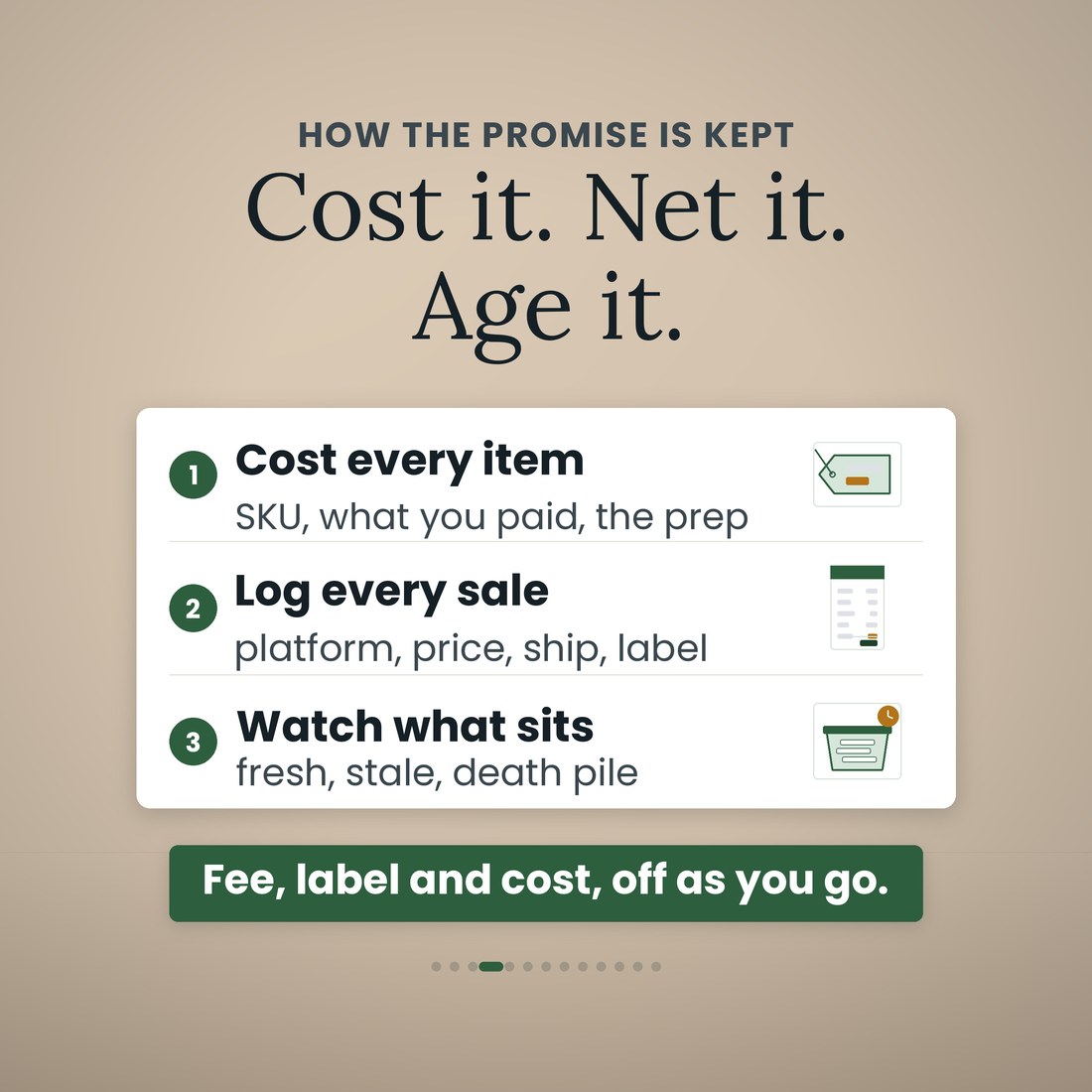
- Inventory, one row per item: SKU, what you paid, the prep, the source, the category, the listed date and price, then status, days sitting and a Fresh, Stale or DEATH PILE flag that ages every day on its own, with the sold date, price, profit and return on cost read back from Sales
- Sales, one row per sale: the platform fee is worked out from your own Setup fee table, then the payout, the cost of goods, the profit after the fee and the label, the margin, the return on cost and the days to sell
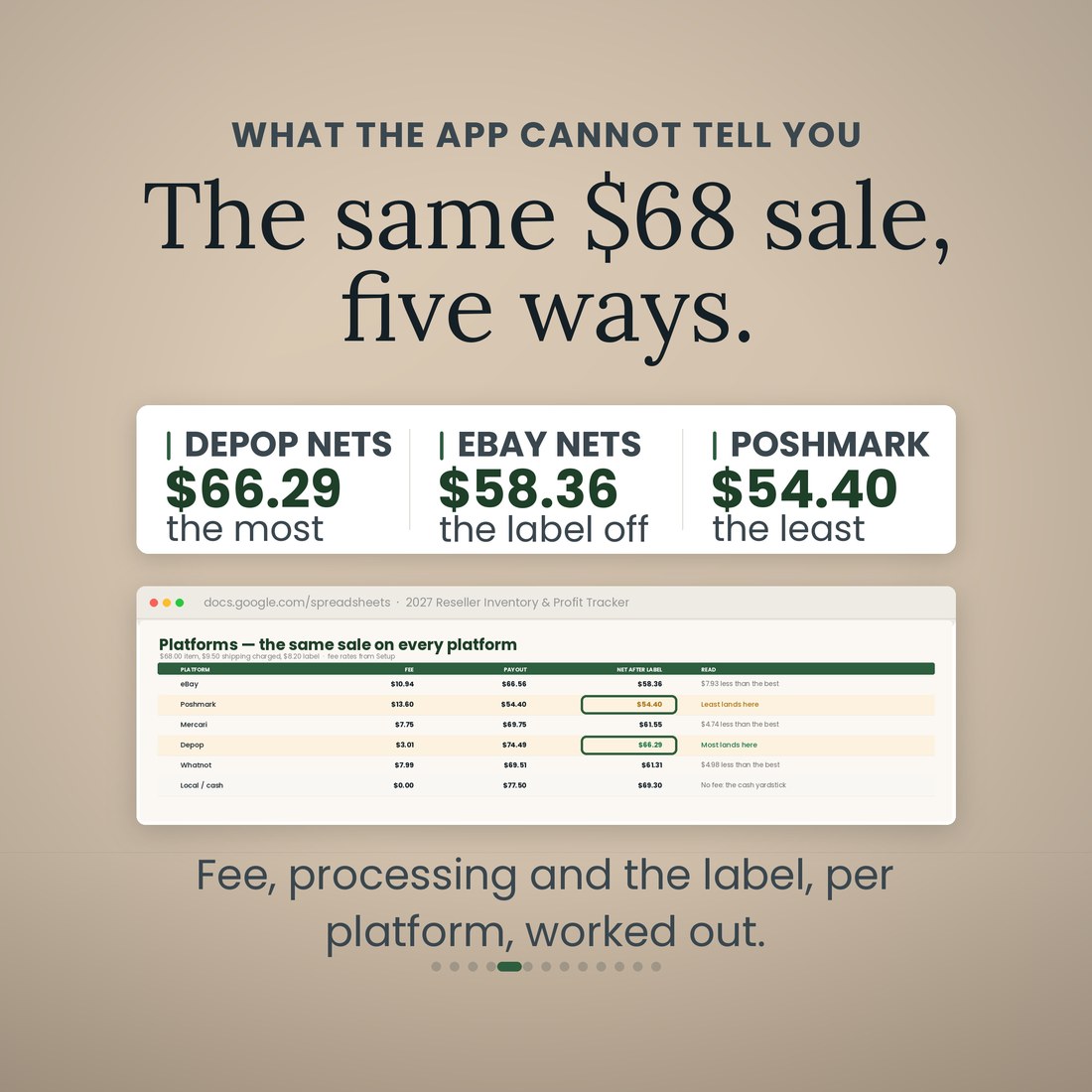
- Platforms: what each one actually took — sales, gross, fees, labels, payout, profit, margin, average sale, effective fee percent and a 1099-K test against the $20,000 and 200-transaction federal thresholds — plus the same sale priced on every platform side by side
- Quarterly Tax: the four IRS periods with their real due dates, profit, expenses, net, what to set aside at your own percentage, what you paid, what is still owed and a status that counts the days, with a self-employment tax estimate under it
- Schedule C (Form 1040), Part I lines 1 to 7, Part II lines 8 to 31 and Part III lines 33 to 42, with cost of goods sold built from your own shelves: beginning inventory, purchases less items withdrawn for personal use, ending inventory
Overview
Know what it made, after every fee.
A thrift haul goes out on five apps, the payouts land in three accounts, and at the end of the month you know what you sold and not what you made. Then April arrives and the shoebox has the mailers, the storage unit, the labels, the fees you never saw, and a hundred items that were never really inventory because they never sold. This file costs every item once, nets every sale after the platform's fee and the label, ages what is still sitting, and puts every dollar on its Schedule C line as you go.
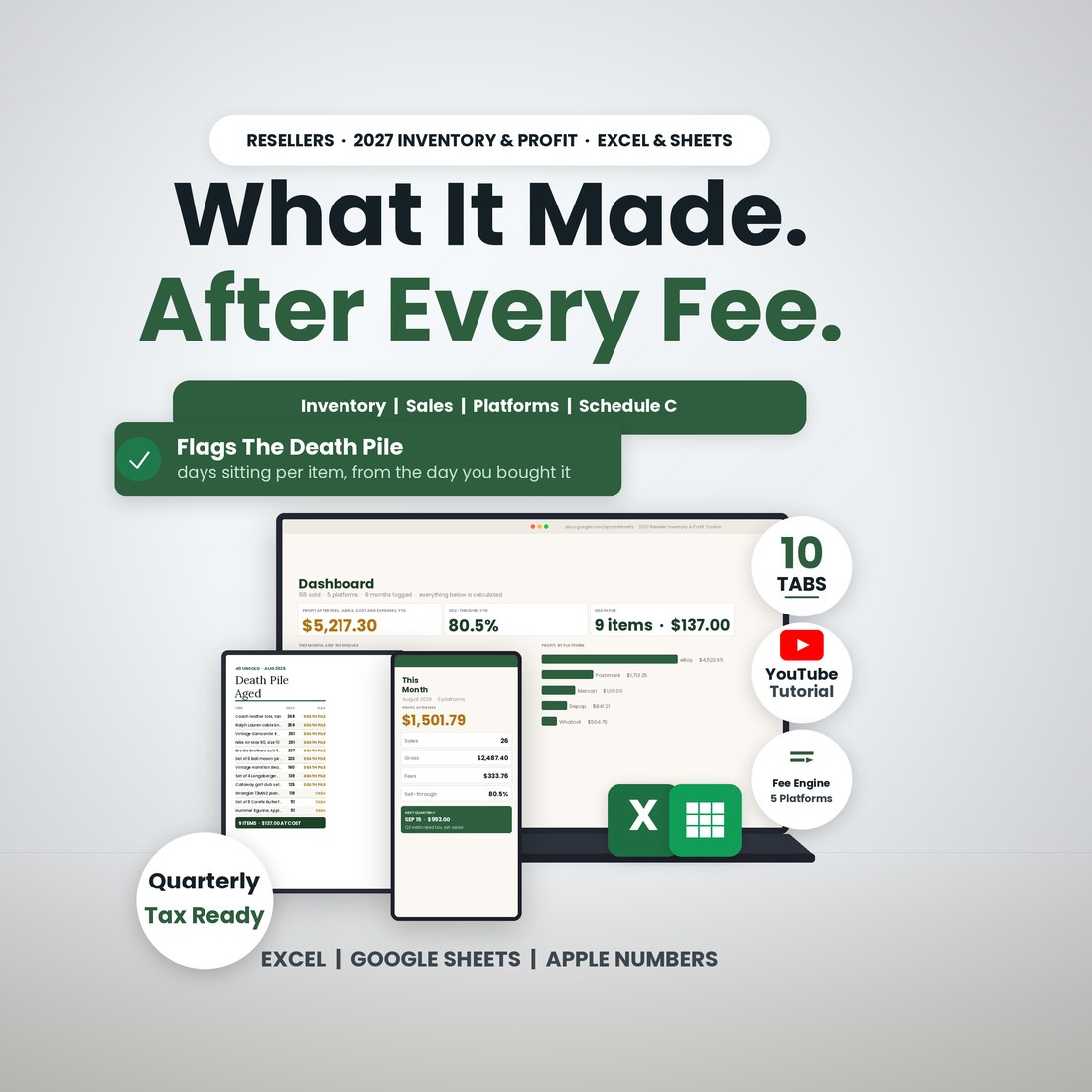
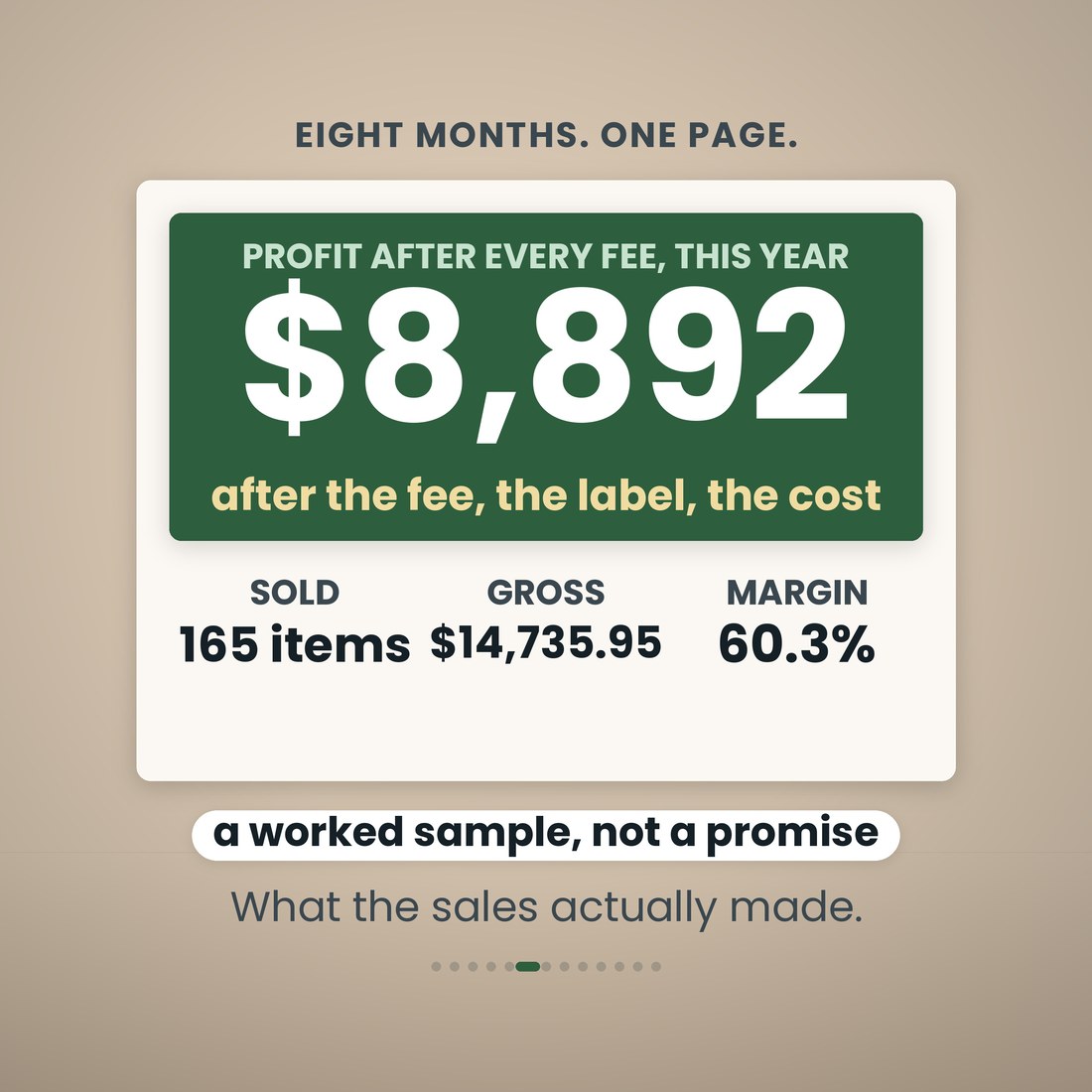
It is one workbook with 10 tabs and 10,438 formulas, and it opens the same way in Microsoft Excel, Google Sheets and Apple Numbers because every formula uses the portable function set — no add-ins, no macros, no login and nothing to install. You type in the cream cells only: your platforms and their fees once, then the SKU and what you paid on the day you buy an item, then the platform, the price, the shipping you charged and the label when it sells. The fee, the payout, the profit, the margin, the return on cost, the days sitting, the aging flags, the quarterly set-aside and the Schedule C lines are all read, never typed. One item is one row; the file holds 400 inventory rows, 400 sales rows, 300 expense rows and 60 mileage rows, with a fee table of eight platforms, six of them filled in for you. A worked sample ships inside — a one-person resale shop in Aurora, Colorado, 209 items logged and 165 sold across eBay, Poshmark, Mercari, Depop, Whatnot and local pickup from January to August 2026, $14,735.95 of gross sales, $1,963.45 of platform fees, $938.10 of labels and $8,891.86 of profit at a 60.3% margin — so every tab has something to show. Clear the sample rows and the formulas stay.
What's Included
One workbook, 10 tabs, in four color editions:
- 2027-Reseller-Inventory-Profit-Tracker.xlsx: the 10-tab workbook with 10,438 formulas, opening in Microsoft Excel, Google Sheets and Apple Numbers
- The same workbook in four color editions — Colorful, Light, Dark and Editorial — every one doing the same arithmetic
- A worked sample book inside: 209 items logged, 165 sales across six platforms, eight months, so every tab works on open
- The Schedule C page laid out the way the form reads, lines 1 to 42 with Part III cost of goods, ready to hand to your preparer
- A full narrated video walkthrough on YouTube, linked on your confirmation page
- Five .xlsx files in one ZIP, instant download. Nothing is shipped and there is nothing to install
Key Benefits
Why this one
The Platforms tab runs one sale through every fee table at once. The same $68.00 item, with $9.50 of shipping charged and an $8.20 label, nets $66.29 on Depop and $54.40 on Poshmark. That is $11.89 on one sale, and it is on the page before you choose where the item goes, not after the payout lands.
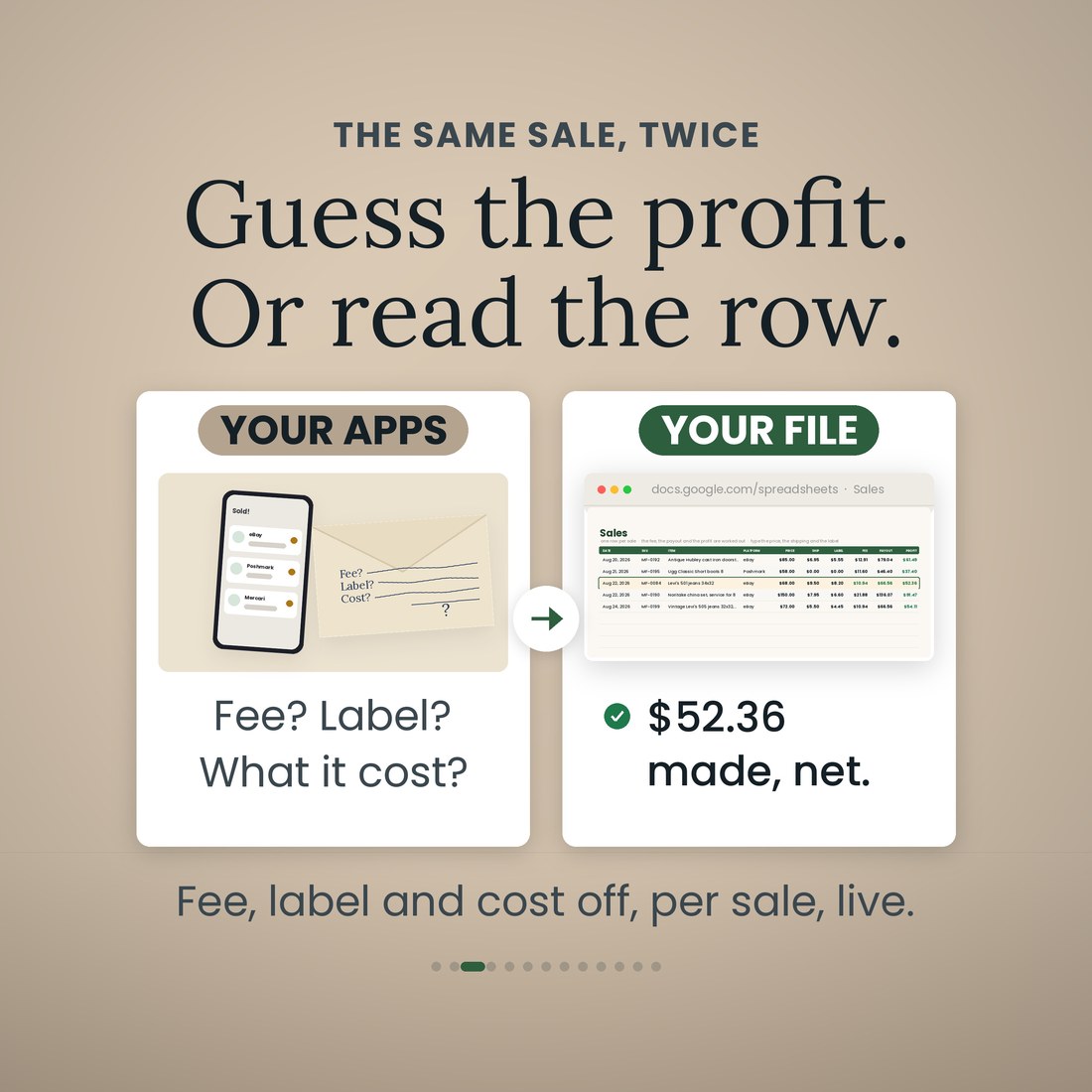
Sales nets every row from your own rate table. On the sample, MF-0084, a pair of Levi's 501 jeans bought for $6.00 at a thrift store and sold on eBay for $68.00 on August 22, carries a $10.94 fee, a $66.56 payout and $52.36 of profit — a 67.6% margin and 872.7% on what it cost, 105 days after it was bought. Nothing in that row is typed but the price, the shipping and the label.
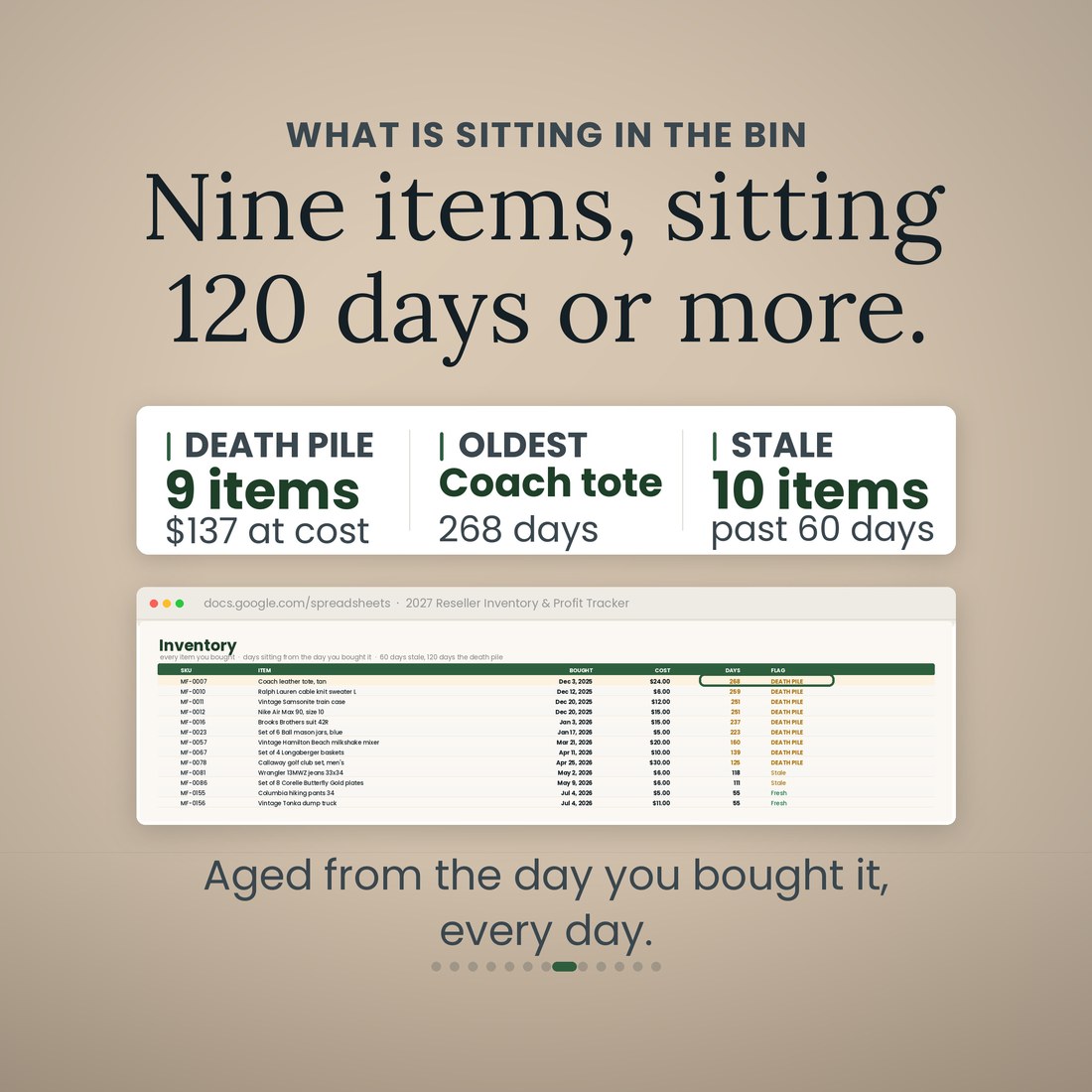
Every unsold item counts the days on its own and turns Stale at 60 and DEATH PILE at 120, both day counts yours to set. On the sample, nine items have sat 120 days or more, $137.00 at cost, and ten more are stale past 60 days. The oldest is a Coach leather tote bought December 3, 2025: 268 days on the shelf, and the Dashboard says so in a sentence.
Each expense is filed on a Schedule C line from a drop-down the day you enter it, with a box for whether you kept the receipt, plus a mileage log at the IRS standard rate. Platform fees and shipping labels are never typed here; they come off each sale and land on lines 10 and 27a on their own.
The Quarterly Tax tab splits the year the way the IRS does — January to March, April to May, June to August, September to December — and works out what to set aside from each period's net at your own percentage. On the sample the next payment is $993.00, due September 15, with a self-employment tax estimate of $733.79 under it.
Microsoft Excel, Google Sheets and Apple Numbers. Every formula uses the portable function set, and the file was recalculated clean before shipping: 5,774 checks, no failures. No add-ins, no macros, no login, no app subscription and nothing connected to a platform or a bank.
Who It's For
Built for
- Working resellers, not weekend declutterers: a hundred sales a year and up, listed across eBay, Poshmark, Mercari, Depop and Whatnot
- Thrift, estate-sale and garage-sale sourcers who buy by the bin and need to know which categories carry the shop and which ones sit
- Sellers who file a Schedule C, pay quarterly estimates and get a 1099-K, and would rather hand a preparer one page than five CSV exports
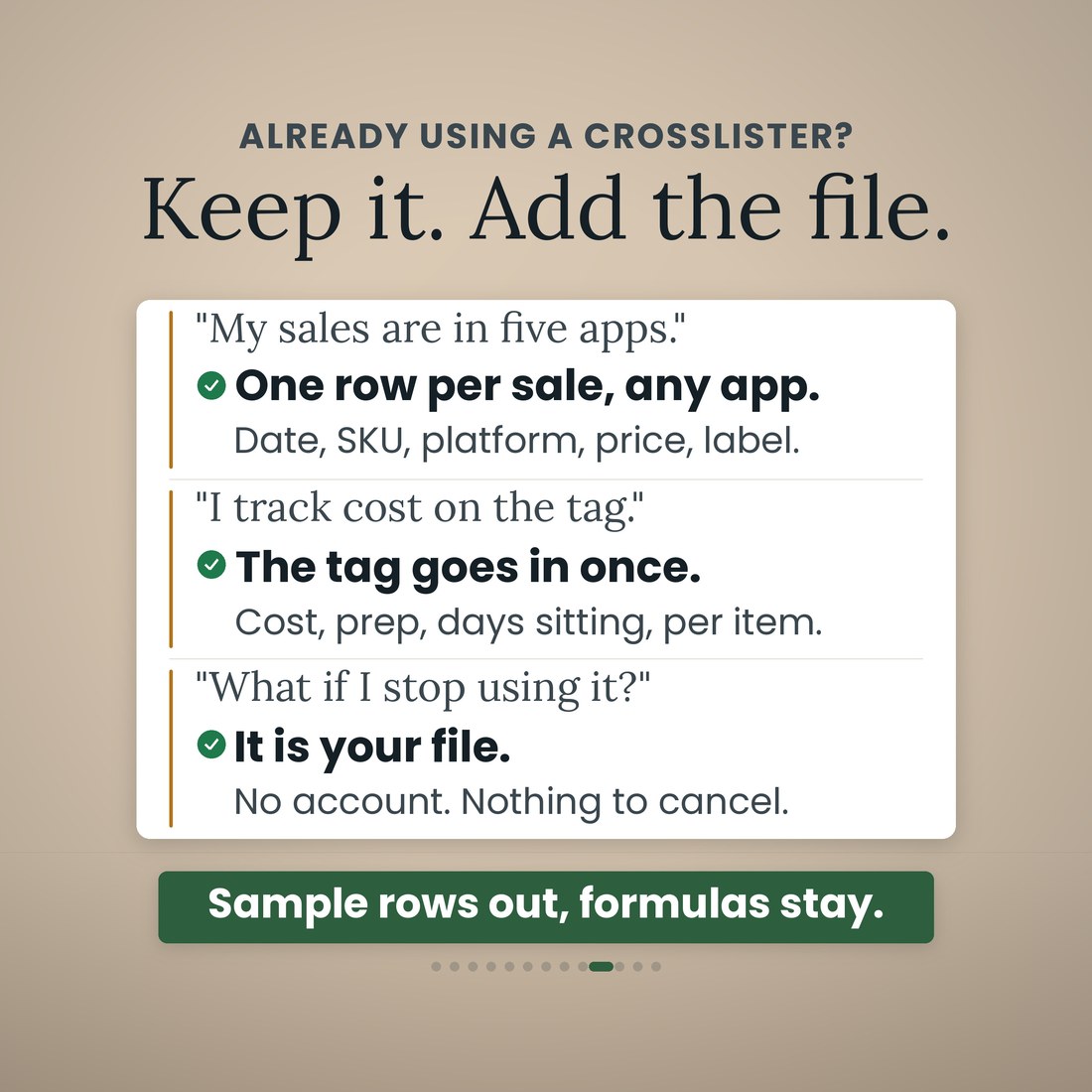
- Anyone with a bin of unsold items and no idea what it cost them, who wants the file on their own laptop with no account and nothing to cancel
How It Works
Up and running in minutes
The item fee and whether it also applies to the shipping you charged, the per-order fee, payment processing, a flat fee under a threshold, and whether the buyer pays the label. eBay, Poshmark, Mercari, Depop, Whatnot and a local cash row are typed in at their published US rates, and every rate is a cream cell.
SKU, what you paid, the prep, the source, the category, the listed date and the list price. One item is one row, and the days start counting from there.
Date, SKU, platform, price, the shipping you charged and the label you bought. The fee, the payout, the cost of goods, the profit, the margin, the return on cost and the days to sell are worked out for you.
One row per receipt on the Expenses tab with the Schedule C line picked from a drop-down, plus the mileage log at the IRS standard rate. Inventory purchases, fees and labels are never typed here; they come off the item and the sale.
Profit after every fee, sell-through, what is sitting in the death pile, what each platform took, and what to set aside next. In April the Schedule C page already reads lines 1 to 42.
Why It's Different
Not another template
Most reseller spreadsheets are a sales log with a fee column you fill in by hand, and Schedule C is left for April. This one is organized around the fee engine and the shelf from the first item. The platform fee is computed from a rate table you own — item percent, whether it applies to the shipping charged, the per-order fee, payment processing as a percent and a fixed amount, a flat fee under a threshold, and whether the buyer pays the label — so a sale is netted the moment you type the price, and when a platform changes a rate you change one cell and every sale re-nets. Every unsold item ages on its own, Stale at 60 days and DEATH PILE at 120, because the bin is the part nobody counts: on the sample that is nine items and $137.00 sitting still. The Platforms tab prices the same sale on every platform side by side, $66.29 on Depop against $54.40 on Poshmark, which is the number you want before you list. And Part III cost of goods is built from your own shelves rather than left as a note to the preparer. It is honest about its limits too: hobby-loss rules, inventory accounting elections, the qualified business income deduction and your state's 1099-K threshold are your preparer's call, and the file says so.
Delivery & Compatibility
Instant, and it opens in what you already use
As soon as your order is complete you get instant access to download the ZIP, so you can set your platforms up tonight and cost the next haul as it comes through the door.
Five .xlsx workbooks (2027-Reseller-Inventory-Profit-Tracker.xlsx plus the Colorful, Light, Dark and Editorial editions) delivered as one ZIP, instant download. Opens in Microsoft Excel, Google Sheets and Apple Numbers using the portable function set only — no add-ins, no macros, no login and nothing to install. The file ships with a worked sample book so every screen works on open; the images and video show that sample. Platform fee rates ship as the platforms' published US rates in August 2026 and mileage rates as the 2026 IRS standard rates, all in editable cells. This is a digital download; nothing is shipped.
FAQ
Questions, answered
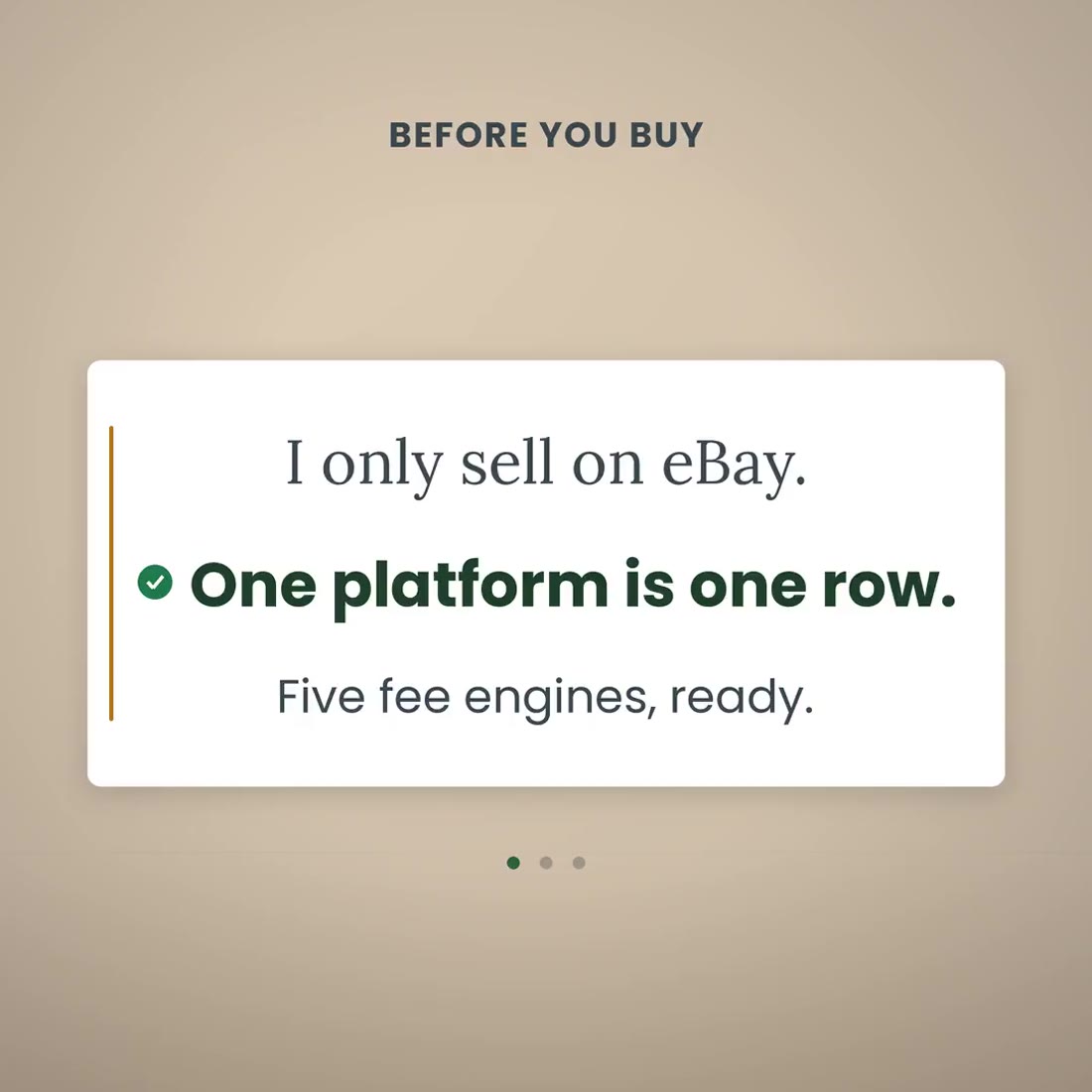
I only sell on eBay. Is this too much?
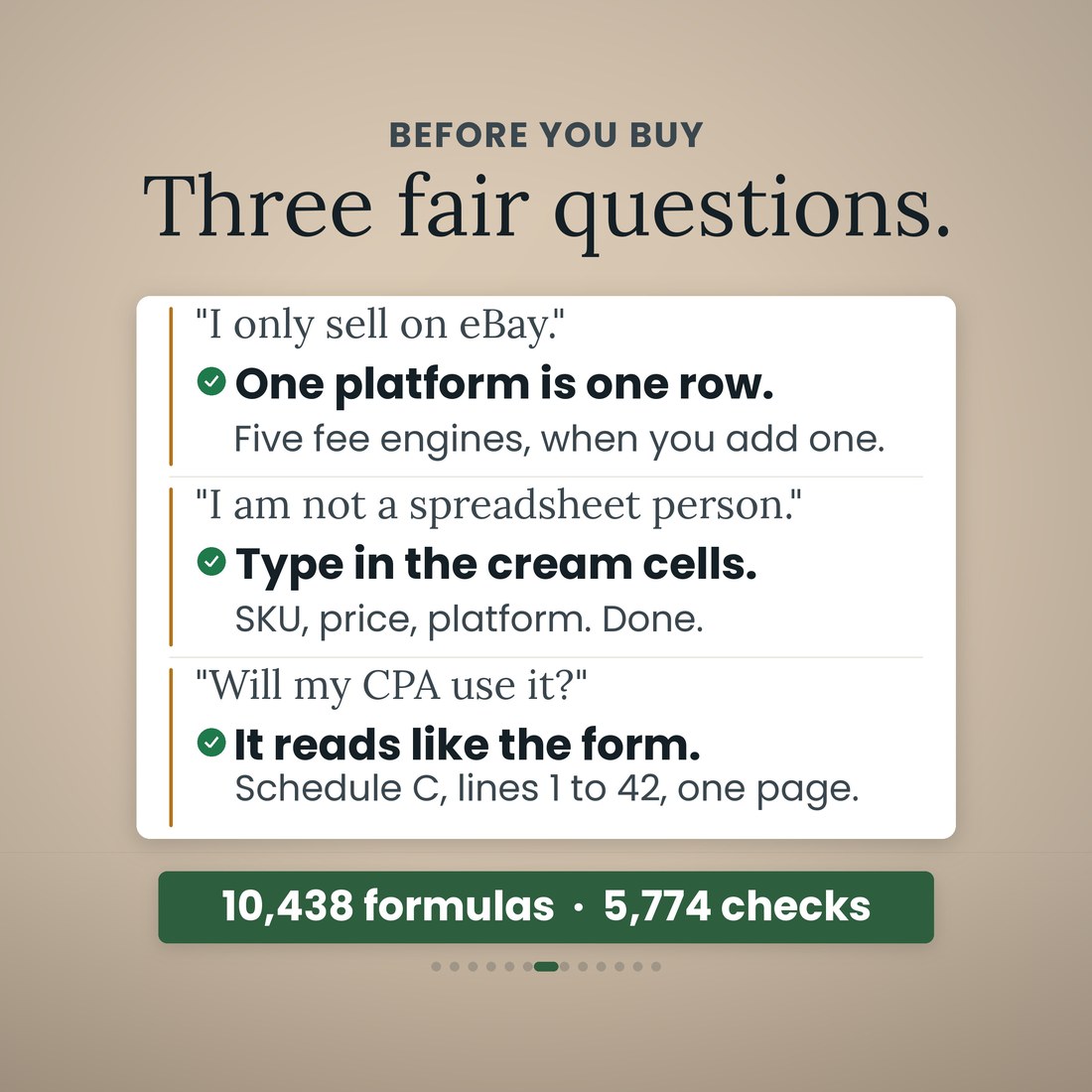
One platform is one row. The fee table ships with eBay, Poshmark, Mercari, Depop, Whatnot and a local cash row filled in at their published US rates, in eight rows so you can add one. With one platform you fill one row on Setup and read one column on the Platforms tab; the Inventory, Sales and Schedule C tabs do not care how many you sell on.
I am not a spreadsheet person. How much do I have to type?
You type in the cream cells only: the SKU and what you paid on the day you buy an item, then the platform, the price, the shipping you charged and the label when it sells. Every other cell is a formula, 10,438 of them. The fee, the payout, the profit, the margin, the days sitting, the aging flags and the Schedule C lines are read, never typed.
Will my CPA use it?
It reads like the form. Schedule C, Part I lines 1 to 7, Part II lines 8 to 31 and Part III lines 33 to 42, with cost of goods sold built from your own shelves: beginning inventory, purchases less items withdrawn for personal use, ending inventory. A reconciliation block shows why line 42 and the Sales tab's cost of goods differ, which is the cost of the items you donated or lost.
What are the ten tabs?
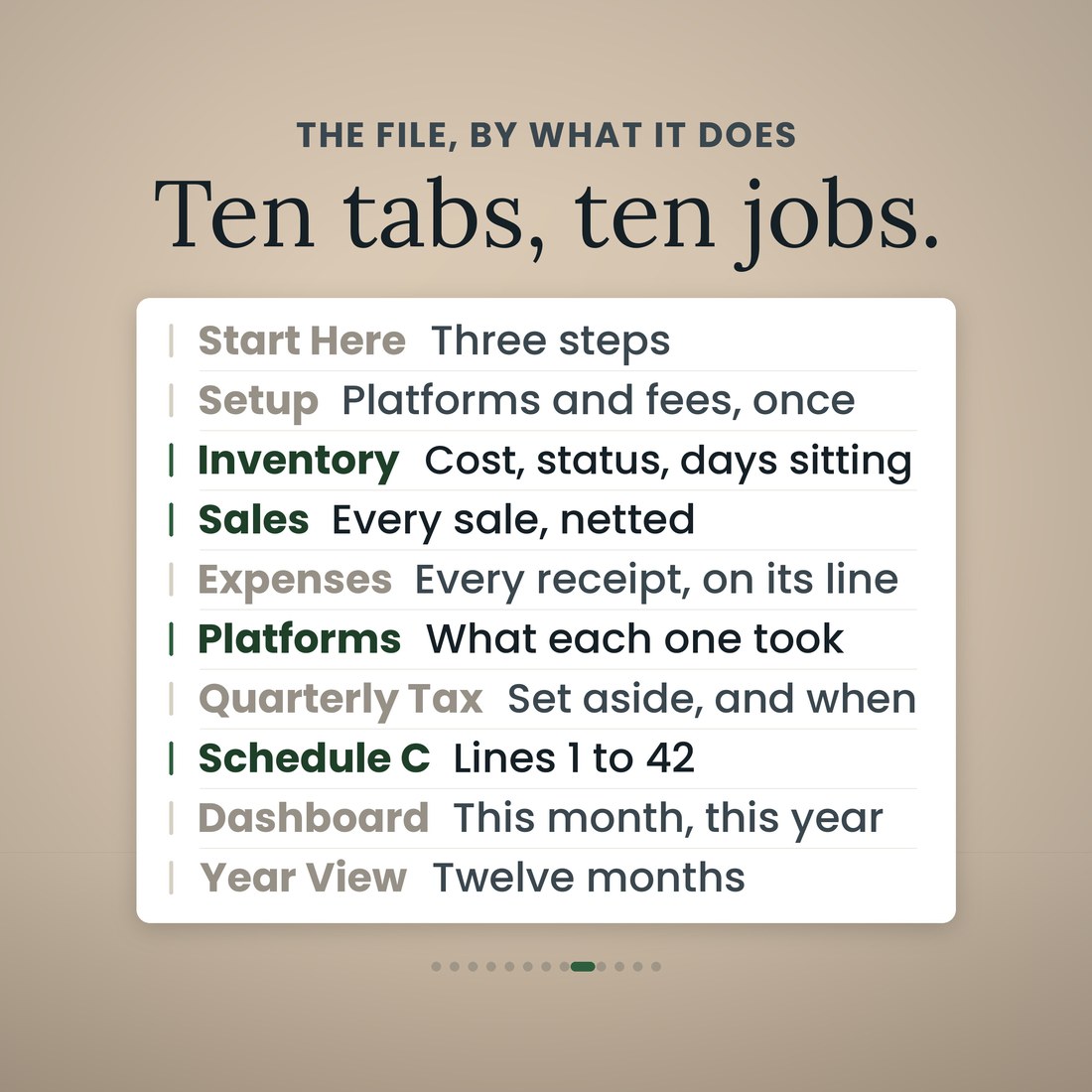
Start Here; Setup; Inventory; Sales; Expenses; Platforms; Quarterly Tax; Schedule C; Dashboard; and Year View. Each does one job.
Where do the fee rates come from, and what happens when a platform changes one?
Setup. Each platform gets a row: the item fee percent, whether it also applies to the shipping you charged, a per-order fee, payment processing as a percent and a fixed amount, a flat fee under a threshold, and whether the buyer pays the label directly. Every one is a cream cell. The rates shipped are the platforms' published US rates in August 2026; change the cell the day a platform changes the rate and every sale re-nets behind it.
What is the death pile, exactly?
Any item that has sat past the day count you set on Setup, 60 days for Stale and 120 for DEATH PILE out of the box. The Inventory tab counts the days from the date you bought it and flags every row on its own, and the Dashboard puts it in a sentence. On the sample that sentence reads nine items at 120 days or more, $137.00 at cost, the oldest a Coach leather tote bought December 3, 2025, at 268 days.
Does it track the mileage deduction?
Yes. The Expenses tab carries a mileage log at the IRS standard rate, with the 2026 rates loaded, 72.5 cents through June and 76 cents from July, in editable cells, so thrift runs, estate sales, storage and post-office trips land on line 9 at the right rate. On the sample that is 1,284 miles and a $941.62 deduction.
What is the difference between the four color editions?
Only the look. Colorful, Light, Dark and Editorial are the same 10-tab workbook with the same formulas in a different palette, and all four ship in the download.
Is this tax advice?
No. It is a record-keeping tool that does the arithmetic on the items, sales and receipts you enter; it is not tax, legal or accounting advice. The platform fee rates are the published US rates in August 2026 and are yours to update. Hobby-loss rules, inventory accounting elections, the qualified business income deduction and your state's 1099-K threshold are your preparer's call.
For personal use. A record-keeping tool that does the arithmetic on the items, sales and receipts you enter; not tax, legal or accounting advice. © 2026 NicheToolkitHub — no resale or redistribution.